
Allogeneic ("Off-the-Shelf") Cell Therapies-Part One
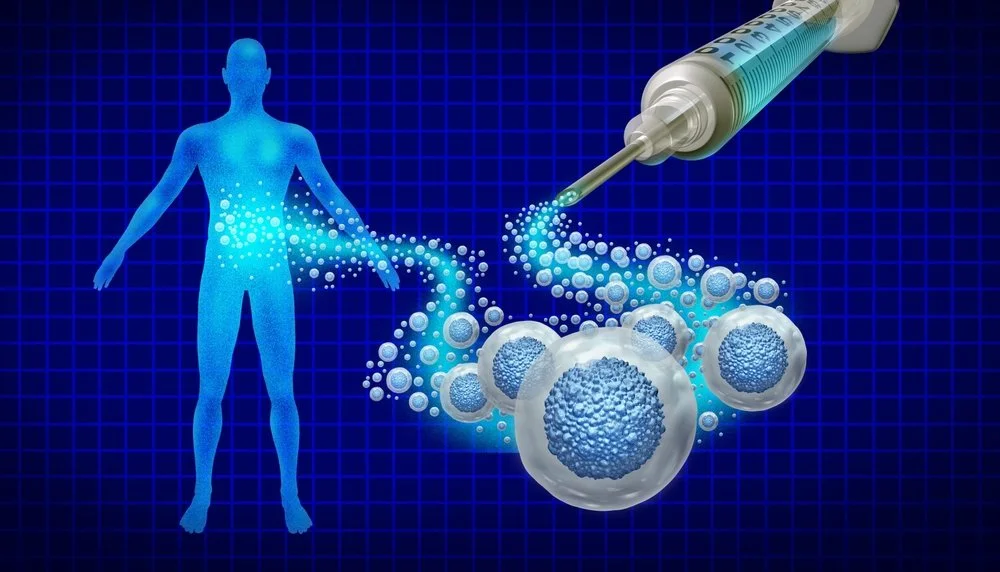
Allogeneic ("off-the-shelf") cell therapies are poised to revolutionize regenerative medicine by moving beyond the scaling, cost, and time bottlenecks of traditional autologous treatments. Read on to discover how gene editing and donor-derived platforms are unlocking the next era of accessible, mass-produced cellular medicine.
By Michael Bronfman
October 19, 2026
Allogeneic ("Off-the-Shelf") Cell Therapies. Gene and cell therapies are becoming core tools for treating cancer, rare diseases, autoimmune conditions, and degenerative disorders — but the main question facing the field is no longer whether these approaches can work, but how to scale them, manufacture them reliably, and deploy them in ways that are both clinically and economically feasible. Cure. Allogeneic platforms are central to solving that problem.
Medicine is undergoing a massive shift. For decades, treatments relied on chemical pills or biological proteins. Today, doctors use living human cells as medicine. These living drugs seek out sick tissues, repair damage, and fight off diseases like cancer. The first wave of these breakthrough treatments used a process called autologous cell therapy. In autologous care, medical teams extract cells from a patient, alter them in a specialized laboratory, and infuse them back into the exact same person. While this method delivers life-saving results, it comes with extreme bottlenecks. It is slow, extraordinarily expensive, and difficult to scale up for millions of sick people worldwide.
This bottleneck has created an acute need for a better solution. That solution is allogeneic cell therapy, often referred to as off-the-shelf cell therapy. Instead of creating a custom drug for every single individual, scientists harvest healthy cells from carefully screened donors. They modify those donor cells in massive bioreactors to create thousands of ready-to-use doses from a single batch. When a doctor needs to treat a patient, they simply order a pre-made dose from a medical freezer and administer it immediately.
The transition from custom patient batches to mass-produced donor therapies constitutes a major turning point within contemporary healthcare. It moves advanced medicine out of boutique academic research hospitals and delivers it directly to local medical centers around the globe. Understanding how these off-the-shelf platforms work, why they lower costs, and how engineers overcome biological rejection reveals why allogeneic science is the future of regenerative medicine.
The Limitations of Individualized Autologous Medicine
To understand why off-the-shelf therapies represent such a major leap forward, it helps to examine how personalized autologous therapies operate. In a standard autologous treatment process, a patient suffering from blood cancer or a severe autoimmune disorder must undergo a blood filtration procedure called leukapheresis. Medical equipment extracts immune cells, typically T cells, directly from the patient.
After collection, technicians ship these fragile cells across the country in specialized cold containers to a central manufacturing plant. Inside cleanrooms, technicians use viral vectors or gene editing tools to reprogram the cells. They add new genetic receptors, such as Chimeric Antigen Receptors, which teach the T cells to track down and kill cancer cells. After multiplying the newly engineered cells over several weeks, the manufacturer conducts rigorous quality checks and ships the custom batch back to the clinic.
This custom process creates four major hurdles for global health systems:
Extreme Wait Times: The entire manufacturing loop, often called vein-to-vein time, usually takes anywhere from three to six weeks. For a patient with rapidly progressing leukemia or late-stage cancer, waiting a month for a custom drug can be fatal. Many patients become too sick to receive the treatment while waiting for their personalized batch to arrive.
Astronomical Costs: Personalized manufacturing requires dedicated cleanrooms, customized viral vectors, and round-the-clock technician care for a single dose. As a result, commercial autologous treatments frequently cost between three hundred thousand and five hundred thousand dollars per patient, excluding hospital admission fees.
Variable Cell Quality: Patients who have undergone multiple rounds of heavy chemotherapy often possess weak, exhausted immune cells. Manufacturing a high-quality drug from damaged starting material is difficult and sometimes impossible. On occasion, the manufacturing process fails completely, leaving the patient with no therapeutic options.
Severe Bottlenecks: A single autologous manufacturing facility can only produce a limited number of patient batches per year. Scaling up production requires building identical, highly expensive cleanroom facilities rather than expanding batch sizes.
These constraints restrict autologous therapies to a small fraction of the people who actually need them. Off-the-shelf allogeneic platforms eliminate these barriers by rethinking the source material entirely.
How Off-the-Shelf Allogeneic Platforms Function
Allogeneic therapy shifts the paradigm from individual patient manufacturing to a traditional pharmaceutical batch model. Scientists start by selecting healthy young donors who possess robust, energetic immune systems. A single tissue or blood donation from one healthy donor contains high-quality cells that can be expanded into hundreds or even thousands of therapeutic doses.
The manufacturing process takes place in large-scale automated bioreactors rather than small individual culture bags. Technicians place the donor cells into fluid-filled vessels that continuously supply oxygen, nutrients, and growth factors. High-tech sensors monitor temperature, pH levels, and cell density in real time to ensure every cell grows under optimal conditions.
Once the cells reach high volumes, scientists utilize precise gene editing tools, including CRISPR, to make targeted genetic modifications. They introduce therapeutic genes that allow the cells to destroy target tissues, while simultaneously removing key cell surface proteins to prevent immune system rejection.
After gene editing, the cell population undergoes thorough purification steps. Automated systems filter out any improperly edited cells to ensure a pure, uniform final product. Technicians then divide the massive cell batch into individual vials, add specialized preservative solutions, and freeze them at ultra-low temperatures using liquid nitrogen tanks.
These frozen vials can be stored safely in regional distribution centers for extended periods. When an oncologist or specialist diagnoses a patient, they do not need to schedule a blood extraction or wait weeks for laboratory development. They order a vial directly from the pharmacy, thaw it at the bedside, and infuse it into the patient within hours.
Overcoming the Biological Wall of Graft Versus Host Disease
While the economic and supply benefits of off-the-shelf cells are massive, using one person's living cells to treat another person creates a serious biological challenge: immunological rejection.
The human immune system has evolved over millions of years to recognize and destroy foreign material. Every cell in your body displays surface proteins called Human Leukocyte Antigens. These markers act as biological identity cards. When donor cells enter a recipient's bloodstream, two major immune hazards arise:
1. Host Versus Graft Rejection
The patient's active immune system immediately spots the foreign Human Leukocyte Antigen markers on the donor cells. Recognizing them as foreign invaders, the host immune system unleashes T cells and antibodies to wipe out the donor drug before it can deliver any therapeutic benefit.
2. Graft Versus Host Disease
This second hazard is even more dangerous. Donor T cells possess their own active T Cell Receptors. When infused into a recipient, these donor T cells look around, perceive the patient's entire body as foreign tissue, and launch an all-out attack on the host's skin, liver, and digestive system. Graft-versus-host disease can cause severe organ damage and prove fatal if unmanaged.
To make allogeneic therapies safe and long-lasting, bioengineers use sophisticated gene-editing strategies to camouflage and protect donor cells.
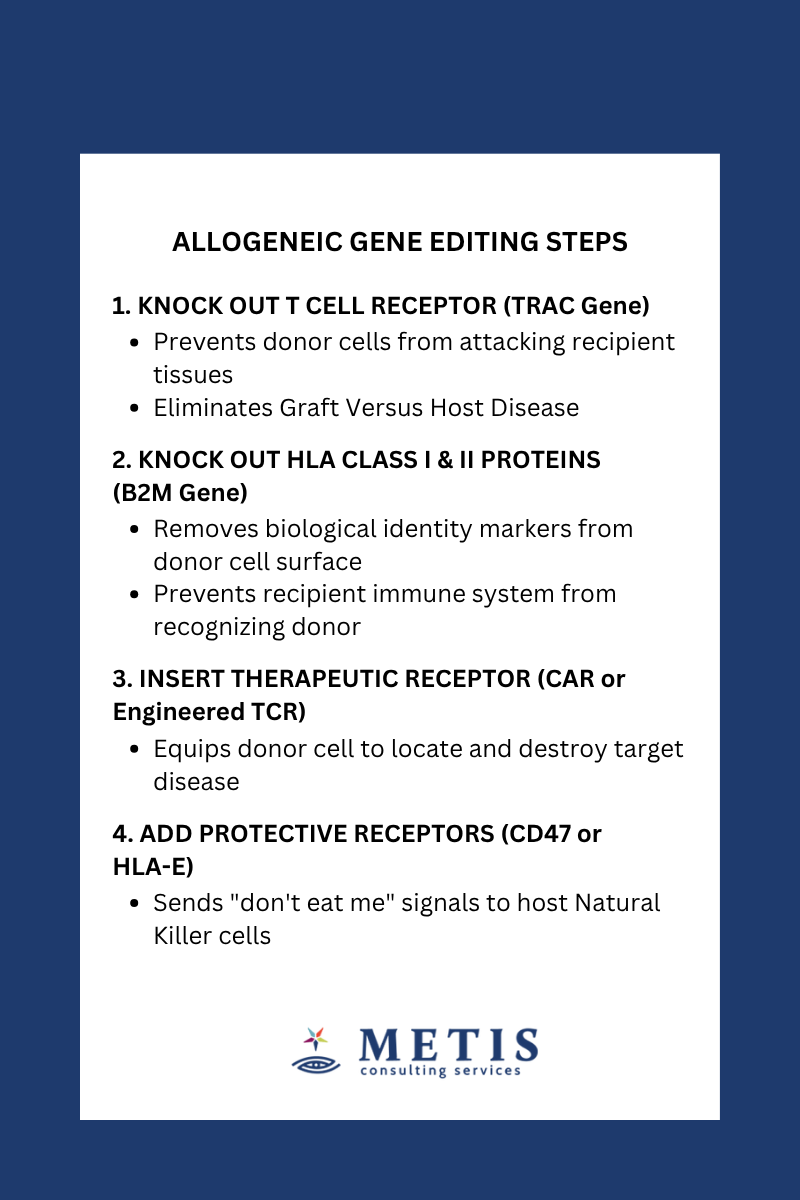
By knocking out the gene responsible for the standard T Cell Receptor, scientists turn off the donor cell's ability to trigger
“graft-versus-host-disease.” To prevent “host-versus-graft rejection,” they knock out genes like beta-2 microglobulin, which stops the cell from displaying surface markers.
However, removing all surface identity markers creates a new problem. The human body contains Natural Killer cells that inspect body tissues. If a Natural Killer cell finds a cell completely lacking identification markers, it destroys it instantly. To bypass this "missing self" response, scientists insert stealth signals like CD47 or HLA-E onto the cell surface. These engineered stealth molecules signal the host Natural Killer cells to leave the therapeutic cells alone, allowing them to circulate safely and destroy disease targets.
(Tune in next week to explore the future of industrial living therapeutics! Discover how advancements are slashing production costs from estimated $300,000+ per patient down to $10,000, while expanding beyond cancer into breakthrough treatments for autoimmune diseases, diabetes, cardiac repair, and severe viral infections.)
Resources:
1. Learn more about global regulatory systems by reading guidelines on the European Medicines Agency Advanced Therapies Section.
2. Track global regulation updates and clinical developments directly through the U.S. Food and Drug Administration Cellular and Gene Therapy Center.
3. Researchers document breakthrough clinical trials involving gene-edited donor cells via the National Institutes of Health Clinical Trials Database.
At Metis Consulting Services, we help innovative biotech and pharmaceutical companies optimize production, streamline compliance, and bring ground-breaking treatments from the lab to the patient. Contact Metis Consulting Services today
