
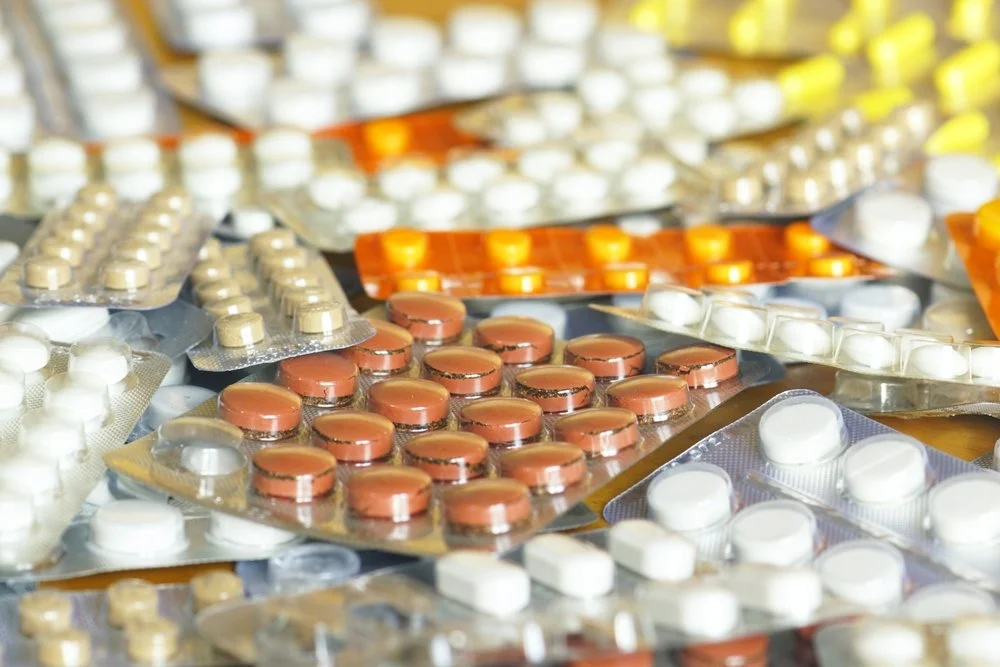
The Big Shift in Medicine: Why Tracking Every Pill Just Became Law
As of late 2025, every individual package of brand-name or generic medicine moving through the United States must be tracked at the unit level. This shift transforms how biotechnology and pharmaceutical firms manage operations. For companies like DES Pharma, building a bulletproof, highly visible supply chain is no longer solely a smart business strategy—it is the law.
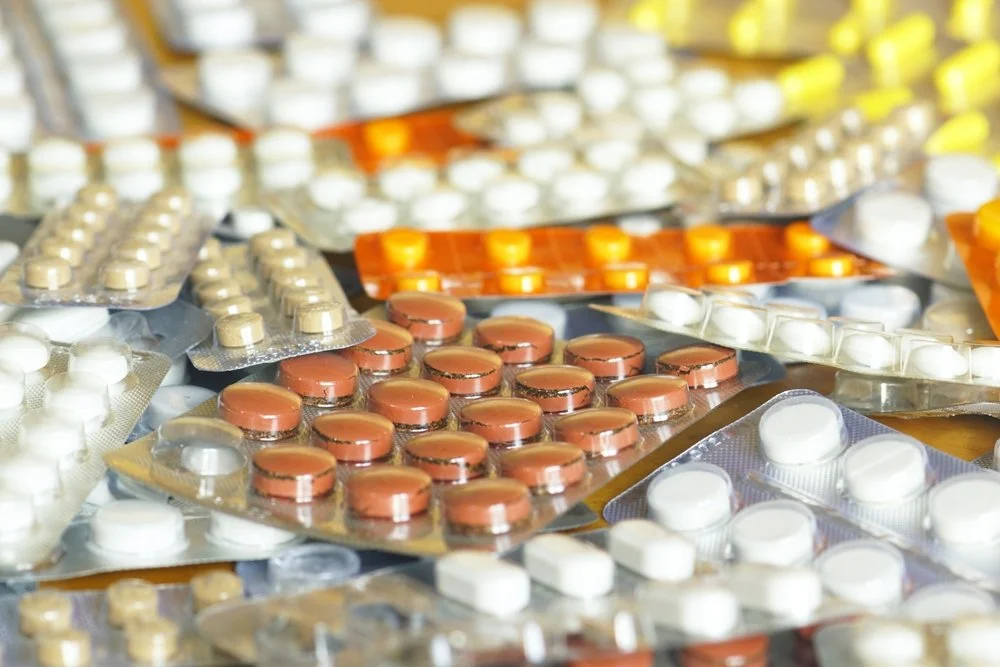
This week in the Guardrail, explore how the final enforcement of the Drug Supply Chain Security Act (DSCSA) is reshaping the pharmaceutical landscape. We break down why full unit-level serialization is no longer just a smart operational strategy, but a strict legal. mandate
By Michael Bronfman
June 22, 2026
Visualize walking into a pharmacy to pick up a life-saving prescription. You hand over your script, the pharmacist hands you a small bottle, and you take your dose without a second thought. You trust that the medicine inside that bottle is exactly what the label says it is. You trust that it is not a fake, that it has not been tampered with, and that it was kept at the right temperature from the moment it was made in a lab to the moment it reached your hands.
For a long time, keeping that promise required a massive, invisible network of security. Today, that network just got a lot tighter.
Over the last year, the United States prescription drug industry crossed a major historical finish line. A federal law called the Drug Supply Chain Security Act, or DSCSA, moved into its final stage of full enforcement. For years, companies along the medicine highway had special hall passes, known as exemptions, that gave them extra time to prepare their technologies.
Those hall passes are officially gone.
As of late 2025, every single package of brand-name or generic medicine moving through the United States must be tracked at the individual unit level. This sea change is completely modifying how biotechnology and pharmaceutical firms manage their operations. For companies like DES Pharma, building a bulletproof, highly visible supply chain is no longer solely a smart business strategy. It is the law.
Understanding the Drug Supply Chain Security Act
Let us look at what the supply chain actually is. The medicinal supply chain is the entire journey a medicine takes. It starts as raw chemical ingredients, turns into a finished pill or liquid at a manufacturing plant, travels to massive storage warehouses, moves to local distributors, and finally lands at hospitals, clinics, and neighborhood pharmacies.
Before the DSCSA was passed by Congress, tracking medicine was mostly done by pallet or by the giant cardboard shipping box. If a manufacturer shipped a crate containing one thousand bottles of allergy medicine, they tracked the crate.
The DSCSA changed the rules by demanding unit-level serialization. This means every single individual bottle, blister pack, or vial gets its own unique identity. It is like giving every single bottle of medicine its own digital passport.
The Missing Piece: What is a Serialized Barcode?
Every package now carries a special 2D data matrix barcode. This barcode contains four critical pieces of information:
The National Drug Code, which identifies the medicine.
A unique serial number, which is a randomized string of characters identifying that exact package.
The batch or lot number shows exactly when and where it was mixed.
The expiration date.
When a company scans this barcode, they are not just ringing up a sale. They are connecting to a massive, secure digital network to verify that this exact bottle was made by the real manufacturer and has not been stolen, copied, or altered.
The Expiration Timeline: How the Hall Passes Ran Out
This high-tech tracking system transition did not happen overnight. The government knew that forcing thousands of companies to change their software, buy expensive scanners, and retrain workers simultaneously would cause chaos. The Food and Drug Administration (FDA) established a rolling timeline of exemptions to give companies a temporary break while they upgraded their systems.
Those timelines finally hit their absolute deadlines in 2025:
May 2025: Manufacturers and Repackagers
The first big wave hit the creators. Pharmaceutical manufacturers, the companies that actually formulate the drugs, and repackagers, the companies that take bulk medicine and put it into patient-ready bottles, lost their exemptions. They had to ensure that 100% of the products leaving their facilities were perfectly serialized and that the digital data matched the physical boxes.
August 2025: Wholesale Distributors
Next came the middle management of the medicine world. Wholesale distributors buy large quantities of drugs from hundreds of manufacturers and consolidate them into mixed shipments for pharmacies. In August, their extra time ran out. Distributors can no longer accept any medicine that lacks the proper digital passport, nor can they ship it to pharmacies without passing along that digital data.
November 2025: Dispensers and Pharmacies
The puzzle’s final piece fell into place at the end of the year. Large dispensers, including major hospital networks, supermarket pharmacies, and national drugstore chains, lost their exemptions. Pharmacies received a box of medicine today, but the electronic tracking data does not match the box's barcode, so the medicine cannot be sold. It must be set aside and investigated as a suspect product.
Now that these deadlines have passed, the entire United States pharmaceutical industry is operating under full unit-level enforcement. The safety net is officially active.
Why Serialization Matters for Biotechnology and Pharma Firms
For a mature pharmaceutical giant with billions in revenue, setting up these tracking systems is expensive but manageable. For younger biotechnology and pharmaceutical firms actively developing new therapies, these rules represent a major hurdle that can make or break their future.
When a biotech firm advances a product through regulatory approval, it is operating in a high-risk race against time. They are trying to prove to the FDA that their new molecule is safe and effective. This process entails multiple stages of clinical trials, in which real patients test the treatment under strict observation.
In this environment, supply chain resilience is absolutely essential. A single mistake anywhere in the logistics chain can cause a catastrophic domino effect.
Delayed IND Clearances
Before a company can even begin testing a new drug in humans, it must file an Investigational New Drug application, or IND. The FDA reviews this application to ensure the drug is safe enough to test in volunteers. If the biotech firm cannot prove exactly where its raw ingredients came from, or if its initial test batches do not follow strict tracking and serialization guidelines, the FDA will issue a clinical hold. This delays the IND clearance, stalling the research for months and costing millions of dollars.
Stalled BLA and NDA Reviews
Once a drug successfully completes all clinical trials, the company files a Biologics License Application (BLA) for complex biological drugs, such as vaccines, or a New Drug Application (NDA) for traditional chemical drugs. This is the final job application for the medicine.
During this review, the FDA considers more than just scientific experiments. They inspect the entire manufacturing process and the supply chain plan. Under the newly enforced DSCSA rules, if a company cannot demonstrate a flawless, fully compliant serialization system, the FDA will simply stall the BLA or NDA review. The drug cannot launch, investors lose confidence, and patients who desperately need the new treatment are left waiting.
The Hidden Dangers: Supply Chain Risks That Threaten Drug Development
Achieving compliance with the law is only half the battle. Biotechnology firms must also protect their supply chains from physical disruptions. Because modern medicine is incredibly complex, the journey from raw ingredients to finished product is fragile. Three major risks keep pharma executives awake at night:
1. Single Supplier Failures
Specialized medicines require rare, highly specific chemical ingredients or biological components. Often, there is only one factory in the entire world that makes a particular specialized ingredient. If that single supplier experiences a factory fire, a power outage, or a regulatory violation that forces them to shut down, the entire global production of that drug grinds to a halt. Biotech firms must diversify their sources so that one accident does not destroy years of research.
2. Raw Material Shortages
Global supply chains are interconnected. Making single vials of medicine requires chemists to do more than just add the active drug ingredient. They need medical-grade glass vials, specialized rubber stoppers, chemical stabilizers, and precise labels. Factory production freezes occur from basic item shortages just as easily as a shortage of the drug itself.
3. Cold Chain Breaches
Many modern biotechnology products, especially biologics and gene therapies, are made from living organisms or sensitive proteins. These medicines are highly fragile. They must be kept within strict, freezing temperature ranges from the moment they are created until they are injected into a patient. This temperature-controlled procedure is called the cold chain.
If a shipping container sits on a hot airport runway for 2 hours due to a logistics delay, the temperature inside might rise. This is a cold chain breach. The proteins inside the medicine can break down, rendering the expensive drug completely useless or, worse, dangerous. Under DSCSA serialization, tracking data must often be paired with temperature monitoring to demonstrate that the medicine remained safe throughout its entire journey.
How Serialization Strengthens Supply Chain Resilience
While the new tracking regulations require significant effort and expensive technology, they are not purely a bureaucratic burden. Serialization actually provides pharmaceutical companies with the exact tools they need to fix their supply chain weaknesses.
Prior to serialization, a manufacturer discovered that faulty machines accidentally contaminated a batch of medicine, and the manufacturer issued a massive, sweeping recall. They would have to tell pharmacies across the country to pull thousands of boxes off their shelves, even if only a few dozen boxes were actually defective. This caused massive drug shortages and cost millions of dollars.
With unit-level serialization, the game changes completely. Every bottle has its own digital identity. A manufacturer pinpoints the exact 25 bottles affected by a specific machine error. They will track those specific serial numbers to the exact warehouses or pharmacies where they are currently sitting.
Manufacturers issue highly targeted recalls, stopping those specific dangerous bottles from reaching patients while allowing the rest of the safe medicine to stay on the market. This exact control protects patient safety while preventing unnecessary drug shortages.
The Way Ahead for Firms Like DES Pharma
For progressive organizations like DES Pharma, directing this new era entails a proactive strategy. Waiting for problems to arise is a recipe for failure. Companies must integrate their serialization data directly into their daily business choices.
First, firms must build deep digital relationships with their contract manufacturing organizations and logistics providers. Every partner in the chain must use software that communicates smoothly with each other, passing serialization data back and forth without errors.
Second, companies need to invest in end-to-end visibility. By using data generated by DSCSA tracking, companies can monitor their products moving across the globe in real time. This allows logistics staff to spot delays before they become disasters, rerouting shipments around bad weather or port strikes to keep clinical trials on schedule.
To learn more about how regulatory changes modify drug development, you can review the official guidelines on the Food and Drug Administration homepage atFDA.gov. For a deeper look at the history of these tracking laws and how they have been rolled out over the past decade, check out the full overview from theRegulatory Affairs Professionals Society.
The Ultimate Benefit: A Safer World for Patients
At the end of the day, all of these complex rules, high-tech barcodes, and strict government deadlines exist for one simple reason: to protect human lives.
The global pharmaceutical supply chain has long been a target for criminal organizations trying to flood the market with counterfeit, stolen, or illegally imported medicines. In some parts of the world, fake medicines are a massive crisis, causing untold harm to patients who think they are taking real cures.
By eliminating exemptions and enforcing full unit-level serialization nationwide, the FDA and the pharmaceutical industry have built an incredibly strong fortress. It is now nearly impossible for a counterfeit box of medicine to enter the legitimate supply chain, because it will not have a valid, pre-registered digital passport waiting in the national network.
The 2025 transition period was a trying time for many companies as they adjusted to the new, stricter reality. However, the result of that hard work is a highly secure, highly resilient network. For biotechnology firms advancing the next generation of cures, and for the families waiting to receive them, this new era of full serialization means greater safety, fewer shortages, and absolute trust in every single dose.
Navigating complex regulatory timelines and building a resilient, fully visible supply chain requires expert guidance. Seamlessly integrate your serialization data, secure your operations, and ensure your life-saving therapies reach the patients who need them most. Contact Metis Consulting Services today.