
The Grand Convergence of Compliance and Cutting-Edge Science
How the intersection of strict regulatory enforcement and breakthrough molecular science is redefining the modern pharmaceutical business model. This week in the Guardrail, we discuss The Grand Convergence of Compliance and Cutting-Edge Science
How the intersection of strict regulatory enforcement and breakthrough molecular science is redefining the modern pharmaceutical business model. This week in the Guardrail…
By Michael Bronfman
July 27, 2026
The global pharmaceutical landscape is undergoing a massive shift. For decades, drug discovery and commercial operations existed in separate silos. Scientists designed molecules in quiet laboratories, and supply chain managers built delivery pipelines in isolation, while legal teams handled regulatory compliance only after clinical data emerged. That disconnected era is officially over. Today, regulatory strategy, end-to-end tracing, and molecular design are merging into a single interconnected science.
As we progress through twenty twenty-six, developers face a dual challenge. They must navigate some of the strictest operational enforcement mandates in history while simultaneously scaling highly complex, personalized therapies that do not fit traditional manufacturing or licensing models. From the sudden end of drug tracing exemptions in the United States to clinical trials that target chronic diseases with “one-and-done " genetic edits, the rules of commercialization are being rewritten. The organizations finding success in this landscape are those that treat supply chain resilience and local regulatory intelligence not as administrative hurdles, but as core elements of their research and development strategy.
Supply Chain Risk and Serialization: The End of DSCSA Exemptions
In the United States, the safety net of regulatory grace periods has officially vanished. The Drug Supply Chain Security Act, a long-standing federal effort to protect patients by creating an interoperable electronic tracing system for prescription drugs, has entered its final era of absolute enforcement. The phased rollout reached a critical milestone when exemptions for manufacturers and repackagers expired in May 2025, followed closely by the expiration of wholesale distributor exemptions in August 2025.
The final transition occurred when dispenser exemptions for larger organizations ended in November 2025, pushing the entire domestic market into full unit-level serialization. Today, every single trading partner must possess the infrastructure to electronically trace, verify, and exchange transaction data at the individual package level. A helpful breakdown of these hard boundaries and the necessary internal tracking milestones is here: Intelliguard DSCSA Compliance Guide.
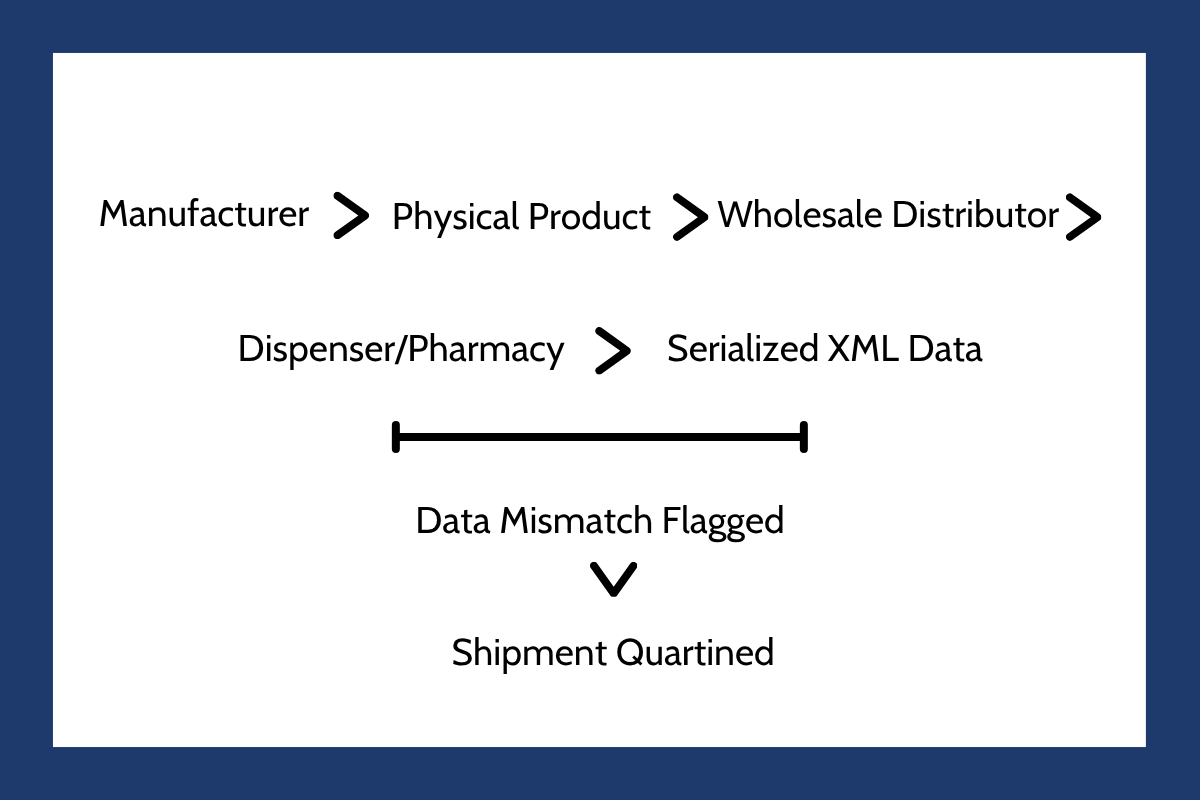
This complete transition to unit-level serialization has exposed a deep vulnerability in global logistics. The modern pharmaceutical pipeline is incredibly fragile. A single supplier failure, raw material bottleneck, or cold chain temperature excursion can instantly halt clinical progression. Under the current strict rules, the stakes are even higher. If physical drug packages arrive at a distributor or pharmacy but their accompanying digital data contains a clerical error, the entire shipment must be quarantined.
Even physically perfect, safe medicines are routinely blocked from distribution because of minor electronic data mismatches. For a detailed look at how organizations must update their standard operating procedures to handle these digital bottlenecks, the Two Labs DSCSA Exception Handling Analysis highlights the operational necessity of treating serialization data as a product-critical asset.
Because of these tight restrictions, biotech firms advancing candidates through clinical trials must construct highly resilient logistics networks years before submitting a Biologics License Application or New Drug Application. If a developer cannot guarantee the integrity of their data or the security of their active pharmaceutical ingredients, they risk sudden clinical holds or devastating launch delays. Supply chain resilience is no longer a post-approval operational concern; it is a primary metric that regulators evaluate during initial product reviews.
Base Editing and the Dawn of One and Done Chronic Disease Therapies
While compliance teams secure the physical supply chain, geneticists are shifting the boundaries of what is possible in preventative medicine. For years, the scientific community viewed genomic medicine through the lens of oncology and ultra-rare genetic mutations. However, a major paradigm shift is occurring as base editing moves into the domain of common, chronic diseases that affect millions of people globally.
Unlike early gene editing systems that rely on double-stranded DNA breaks, base editing allows scientists to make single-letter chemical transitions in a highly targeted, precise manner. This technology provides an incredibly clean way to silence specific disease-causing genes without triggering the cellular damage associated with double-stranded cuts.
The commercial reality of this science became undeniable following the landmark acquisition of Verve Therapeutics by Eli Lilly. At the center of this momentum is the base editing candidate known as VERVE one-hundred-two. Designed to permanently reduce low-density lipoprotein cholesterol, this therapeutic candidate has entered expanded Phase two clinical trials. The medicine functions by targeting and durably inactivating the PCSK9 gene directly within the human liver.
According to clinical updates published in the Eli Lilly PCSK9 Base Editor Press Release, a single infusion of the treatment achieved highly promising results, demonstrating an 88% reduction in PCSK9 protein levels and a sustained 62% drop in low-density lipoprotein cholesterol. This approach challenges the entire business model of chronic disease management. Historically, conditions like hyperlipidemia, hypertension, and cardiovascular disease required decades of daily oral pills or monthly subcutaneous injections. Compliance was notoriously poor, as patients frequently forgot doses or lost access to insurance. Transitioning to a “one-and-done genetic cure completely eliminates noncompliance.
However, it also presents an unprecedented challenge for drug developers, who must figure out how to manufacture, distribute, and price a single-dose therapy that permanently cures a common chronic disease. The manufacturing process relies heavily on lipid nanoparticles, requiring incredibly specialized raw materials that must be tracked under the newly enforced US serialization rules.
Epigenome Editing: The Next Reversible Frontier
As base editing demonstrates clinical success, another groundbreaking platform is rising to prominence. Epigenome editing is quickly emerging as the next major boundary beyond traditional CRISPR and base editing systems. While existing technologies focus on rewriting the physical letters of the genetic code, epigenome editing leaves the underlying DNA sequence completely untouched. Instead, it targets the molecular tags and histone modifications that dictate whether a gene is actively turned on or shut off.
This subtle approach is highly attractive to both drug developers and regulatory agencies because of one major feature: reversibility. Because the physical DNA sequence is never cut or permanently altered, the risk of permanent, dangerous off-target mutations is dramatically minimized. If an unexpected side effect occurs, or if a patient's biological requirements change over time, epigenetic modifications can theoretically be adjusted or reversed.
Pioneering biotechnology companies like nChroma Bio are actively developing proprietary epigenetic platforms to silence disease-causing proteins in real time. Because these therapies rely on complex post-translational modifications, their success hinges on extremely precise cellular delivery systems. Developers are investing heavily in customized chemical vectors that can reliably locate target tissues, dial down aberrant gene expression, and then safely exit the patient's system. This science offers a flexible middle ground between traditional small molecule drugs and permanent genetic modifications, establishing a highly versatile therapeutic class.
CAR-T Beyond Cancer: Resetting the Autoimmune System
The concept of cellular reprogramming is also sparking a major revolution within immunology. Chimeric antigen receptor T cell therapies, which were once reserved exclusively for terminal blood cancers, are proving to be exceptionally powerful tools for treating severe autoimmune disorders.
Under normal circumstances, autoimmune diseases like systemic lupus erythematosus and systemic sclerosis are managed with chronic immunosuppressive drugs. These conventional therapies do not cure the underlying disease; they merely suppress the entire immune system, leaving patients highly vulnerable to severe infections.
This dynamic is shifting rapidly. Early clinical data from trials running throughout 2026 have confirmed that CD19-targeted CAR-T therapies can achieve deep, durable remission in patients with severe autoimmune conditions. By collecting a patient's own immune cells, engineering them to target the CD19 antigen on aberrant B cells, and reintroducing them, clinicians can completely eliminate the autoantibody-producing cells responsible for the disease. Once these problematic B cells are cleared, the bone marrow naturally produces a fresh, healthy population of immune cells, effectively resetting the patient's immune system.
The clinical data supporting this profound shift has been highlighted by researchers globally. During presentations at the EULAR 2026 Congress CAR T Research Panel, clinical trial data demonstrated that dual target cell therapies could successfully clear skin fibrosis and stabilize progressive lung damage in systemic sclerosis patients. The safety profile of these therapies in autoimmune populations has also proven to be superior to that seen in oncology. Because the overall tumor burden is absent, the severe side effects that often complicate cancer treatments, such as severe cytokine release syndrome, are rarely observed in autoimmune cohorts.
This clinical expansion has triggered a scramble among biopharmaceutical companies to secure manufacturing capacity. Unlike oncology products, which are often produced in highly centralized facilities, autoimmune treatments require rapid, local delivery models to ensure that autologous cell products can be harvested, engineered, and returned to patients without operational delays.
Bespoke and Personalized Gene Editing: Baby KJ and N of 1 Paradigms
Perhaps the most inspiring and challenging frontier in modern medicine is the rise of bespoke, personalized gene editing. For decades, the pharmaceutical industry operated on a high-volume model, designing single therapies for millions of identical patients. However, for individuals suffering from ultra-rare genetic mutations, no commercial market existed. Developing a traditional drug for a population of one was simply too expensive and logistically impossible.
That paradigm changed forever with the historic treatment of an infant known as Baby KJ. Born with a lethal genetic condition that prevents the body from clearing toxic ammonia, called carbamoyl phosphate synthetase deficiency, his survival was highly unlikely.
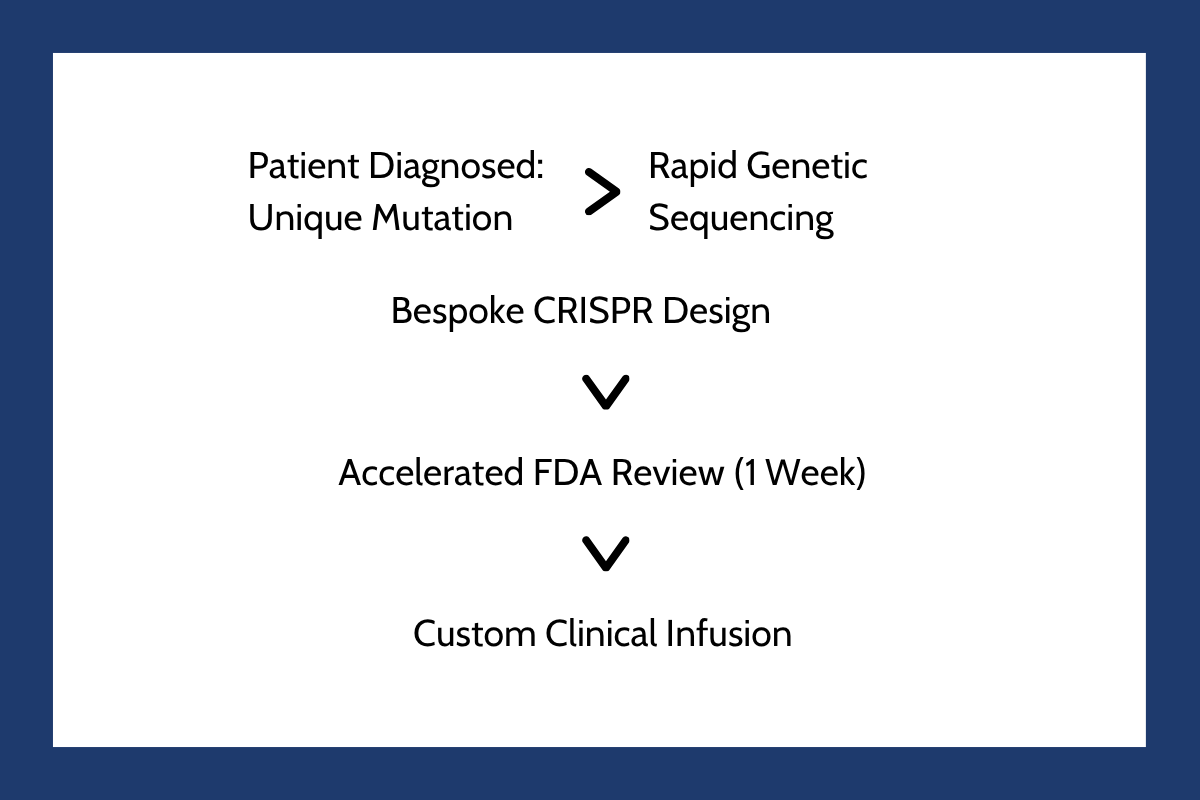
In an unprecedented collaboration, researchers at the Children's Hospital of Philadelphia and the University of Pennsylvania engineered a customized, first-of-its-kind base editing therapy designed to correct the exact, single-point mutation in his DNA. The timeline of this historic medical achievement is detailed in The Future of Personalized Medicine: KJ's Story.
The regulatory response was equally historic. Recognizing the immediate threat to the child's life, the Food and Drug Administration reviewed the investigational application on an accelerated timeline, granting clearance in just one week. The success of this custom therapy has proven the technical feasibility of “N of 1 medicine,” opening a brand new avenue for patients with highly specific genetic conditions. An analytical review of this rapid development pipeline is featured on the Friends of Cancer Research Personalized Medicine Portal.
However, scaling these bespoke treatments remains an immense challenge. Traditional drug licensing and safety evaluation protocols are built around large-scale, multicenter trials with thousands of participants. A personalized, “N of 1” therapy cannot undergo standard Phase three clinical testing because there are no other patients to enroll.
To prevent these life-saving scientific breakthroughs from becoming stalled in regulatory paperwork, regulatory bodies must adopt highly flexible, platform-based approval pathways. Under this proposed model, regulators would evaluate and approve the editing tool and delivery system itself, allowing clinicians to simply swap out the genetic guide RNA sequence to match an individual patient's unique mutation.
Balancing Agile Operations with Unprecedented Medical Innovation
As we move forward through this year and beyond, the pharmaceutical sector finds itself at an incredible crossroads. The scientific capabilities of gene editing, epigenetics, and cellular reprogramming are advancing faster than ever before. Yet, the physical and electronic pathways required to deliver these miracles to patients have never been more tightly regulated or logistically complex.
Whether an organization is scaling a major cardiac base editor to treat millions of patients, or engineering a custom cell therapy to cure a single child, success requires deep operational agility. By integrating regulatory compliance directly into the earliest phases of molecular research, managing supply chain data as a critical asset, and building flexible manufacturing models, the global medical community can ensure that these historic discoveries successfully make their way from the laboratory bench to the patient bedside.
Don't let complex serialization mandates or strict regulatory hurdles delay your life-saving therapies. Contact Metis Consulting Services today to build flexible, bulletproof quality operations that keep your cutting-edge science moving seamlessly from lab to patient.

The Big Shift in Medicine: Why Tracking Every Pill Just Became Law
As of late 2025, every individual package of brand-name or generic medicine moving through the United States must be tracked at the unit level. This shift transforms how biotechnology and pharmaceutical firms manage operations. For companies like DES Pharma, building a bulletproof, highly visible supply chain is no longer solely a smart business strategy—it is the law.

This week in the Guardrail, explore how the final enforcement of the Drug Supply Chain Security Act (DSCSA) is reshaping the pharmaceutical landscape. We break down why full unit-level serialization is no longer just a smart operational strategy, but a strict legal. mandate
By Michael Bronfman
June 22, 2026
Visualize walking into a pharmacy to pick up a life-saving prescription. You hand over your script, the pharmacist hands you a small bottle, and you take your dose without a second thought. You trust that the medicine inside that bottle is exactly what the label says it is. You trust that it is not a fake, that it has not been tampered with, and that it was kept at the right temperature from the moment it was made in a lab to the moment it reached your hands.
For a long time, keeping that promise required a massive, invisible network of security. Today, that network just got a lot tighter.
Over the last year, the United States prescription drug industry crossed a major historical finish line. A federal law called the Drug Supply Chain Security Act, or DSCSA, moved into its final stage of full enforcement. For years, companies along the medicine highway had special hall passes, known as exemptions, that gave them extra time to prepare their technologies.
Those hall passes are officially gone.
As of late 2025, every single package of brand-name or generic medicine moving through the United States must be tracked at the individual unit level. This sea change is completely modifying how biotechnology and pharmaceutical firms manage their operations. For companies like DES Pharma, building a bulletproof, highly visible supply chain is no longer solely a smart business strategy. It is the law.
Understanding the Drug Supply Chain Security Act
Let us look at what the supply chain actually is. The medicinal supply chain is the entire journey a medicine takes. It starts as raw chemical ingredients, turns into a finished pill or liquid at a manufacturing plant, travels to massive storage warehouses, moves to local distributors, and finally lands at hospitals, clinics, and neighborhood pharmacies.
Before the DSCSA was passed by Congress, tracking medicine was mostly done by pallet or by the giant cardboard shipping box. If a manufacturer shipped a crate containing one thousand bottles of allergy medicine, they tracked the crate.
The DSCSA changed the rules by demanding unit-level serialization. This means every single individual bottle, blister pack, or vial gets its own unique identity. It is like giving every single bottle of medicine its own digital passport.
The Missing Piece: What is a Serialized Barcode?
Every package now carries a special 2D data matrix barcode. This barcode contains four critical pieces of information:
The National Drug Code, which identifies the medicine.
A unique serial number, which is a randomized string of characters identifying that exact package.
The batch or lot number shows exactly when and where it was mixed.
The expiration date.
When a company scans this barcode, they are not just ringing up a sale. They are connecting to a massive, secure digital network to verify that this exact bottle was made by the real manufacturer and has not been stolen, copied, or altered.
The Expiration Timeline: How the Hall Passes Ran Out
This high-tech tracking system transition did not happen overnight. The government knew that forcing thousands of companies to change their software, buy expensive scanners, and retrain workers simultaneously would cause chaos. The Food and Drug Administration (FDA) established a rolling timeline of exemptions to give companies a temporary break while they upgraded their systems.
Those timelines finally hit their absolute deadlines in 2025:
May 2025: Manufacturers and Repackagers
The first big wave hit the creators. Pharmaceutical manufacturers, the companies that actually formulate the drugs, and repackagers, the companies that take bulk medicine and put it into patient-ready bottles, lost their exemptions. They had to ensure that 100% of the products leaving their facilities were perfectly serialized and that the digital data matched the physical boxes.
August 2025: Wholesale Distributors
Next came the middle management of the medicine world. Wholesale distributors buy large quantities of drugs from hundreds of manufacturers and consolidate them into mixed shipments for pharmacies. In August, their extra time ran out. Distributors can no longer accept any medicine that lacks the proper digital passport, nor can they ship it to pharmacies without passing along that digital data.
November 2025: Dispensers and Pharmacies
The puzzle’s final piece fell into place at the end of the year. Large dispensers, including major hospital networks, supermarket pharmacies, and national drugstore chains, lost their exemptions. Pharmacies received a box of medicine today, but the electronic tracking data does not match the box's barcode, so the medicine cannot be sold. It must be set aside and investigated as a suspect product.
Now that these deadlines have passed, the entire United States pharmaceutical industry is operating under full unit-level enforcement. The safety net is officially active.
Why Serialization Matters for Biotechnology and Pharma Firms
For a mature pharmaceutical giant with billions in revenue, setting up these tracking systems is expensive but manageable. For younger biotechnology and pharmaceutical firms actively developing new therapies, these rules represent a major hurdle that can make or break their future.
When a biotech firm advances a product through regulatory approval, it is operating in a high-risk race against time. They are trying to prove to the FDA that their new molecule is safe and effective. This process entails multiple stages of clinical trials, in which real patients test the treatment under strict observation.
In this environment, supply chain resilience is absolutely essential. A single mistake anywhere in the logistics chain can cause a catastrophic domino effect.
Delayed IND Clearances
Before a company can even begin testing a new drug in humans, it must file an Investigational New Drug application, or IND. The FDA reviews this application to ensure the drug is safe enough to test in volunteers. If the biotech firm cannot prove exactly where its raw ingredients came from, or if its initial test batches do not follow strict tracking and serialization guidelines, the FDA will issue a clinical hold. This delays the IND clearance, stalling the research for months and costing millions of dollars.
Stalled BLA and NDA Reviews
Once a drug successfully completes all clinical trials, the company files a Biologics License Application (BLA) for complex biological drugs, such as vaccines, or a New Drug Application (NDA) for traditional chemical drugs. This is the final job application for the medicine.
During this review, the FDA considers more than just scientific experiments. They inspect the entire manufacturing process and the supply chain plan. Under the newly enforced DSCSA rules, if a company cannot demonstrate a flawless, fully compliant serialization system, the FDA will simply stall the BLA or NDA review. The drug cannot launch, investors lose confidence, and patients who desperately need the new treatment are left waiting.
The Hidden Dangers: Supply Chain Risks That Threaten Drug Development
Achieving compliance with the law is only half the battle. Biotechnology firms must also protect their supply chains from physical disruptions. Because modern medicine is incredibly complex, the journey from raw ingredients to finished product is fragile. Three major risks keep pharma executives awake at night:
1. Single Supplier Failures
Specialized medicines require rare, highly specific chemical ingredients or biological components. Often, there is only one factory in the entire world that makes a particular specialized ingredient. If that single supplier experiences a factory fire, a power outage, or a regulatory violation that forces them to shut down, the entire global production of that drug grinds to a halt. Biotech firms must diversify their sources so that one accident does not destroy years of research.
2. Raw Material Shortages
Global supply chains are interconnected. Making single vials of medicine requires chemists to do more than just add the active drug ingredient. They need medical-grade glass vials, specialized rubber stoppers, chemical stabilizers, and precise labels. Factory production freezes occur from basic item shortages just as easily as a shortage of the drug itself.
3. Cold Chain Breaches
Many modern biotechnology products, especially biologics and gene therapies, are made from living organisms or sensitive proteins. These medicines are highly fragile. They must be kept within strict, freezing temperature ranges from the moment they are created until they are injected into a patient. This temperature-controlled procedure is called the cold chain.
If a shipping container sits on a hot airport runway for 2 hours due to a logistics delay, the temperature inside might rise. This is a cold chain breach. The proteins inside the medicine can break down, rendering the expensive drug completely useless or, worse, dangerous. Under DSCSA serialization, tracking data must often be paired with temperature monitoring to demonstrate that the medicine remained safe throughout its entire journey.
How Serialization Strengthens Supply Chain Resilience
While the new tracking regulations require significant effort and expensive technology, they are not purely a bureaucratic burden. Serialization actually provides pharmaceutical companies with the exact tools they need to fix their supply chain weaknesses.
Prior to serialization, a manufacturer discovered that faulty machines accidentally contaminated a batch of medicine, and the manufacturer issued a massive, sweeping recall. They would have to tell pharmacies across the country to pull thousands of boxes off their shelves, even if only a few dozen boxes were actually defective. This caused massive drug shortages and cost millions of dollars.
With unit-level serialization, the game changes completely. Every bottle has its own digital identity. A manufacturer pinpoints the exact 25 bottles affected by a specific machine error. They will track those specific serial numbers to the exact warehouses or pharmacies where they are currently sitting.
Manufacturers issue highly targeted recalls, stopping those specific dangerous bottles from reaching patients while allowing the rest of the safe medicine to stay on the market. This exact control protects patient safety while preventing unnecessary drug shortages.
The Way Ahead for Firms Like DES Pharma
For progressive organizations like DES Pharma, directing this new era entails a proactive strategy. Waiting for problems to arise is a recipe for failure. Companies must integrate their serialization data directly into their daily business choices.
First, firms must build deep digital relationships with their contract manufacturing organizations and logistics providers. Every partner in the chain must use software that communicates smoothly with each other, passing serialization data back and forth without errors.
Second, companies need to invest in end-to-end visibility. By using data generated by DSCSA tracking, companies can monitor their products moving across the globe in real time. This allows logistics staff to spot delays before they become disasters, rerouting shipments around bad weather or port strikes to keep clinical trials on schedule.
To learn more about how regulatory changes modify drug development, you can review the official guidelines on the Food and Drug Administration homepage atFDA.gov. For a deeper look at the history of these tracking laws and how they have been rolled out over the past decade, check out the full overview from theRegulatory Affairs Professionals Society.
The Ultimate Benefit: A Safer World for Patients
At the end of the day, all of these complex rules, high-tech barcodes, and strict government deadlines exist for one simple reason: to protect human lives.
The global pharmaceutical supply chain has long been a target for criminal organizations trying to flood the market with counterfeit, stolen, or illegally imported medicines. In some parts of the world, fake medicines are a massive crisis, causing untold harm to patients who think they are taking real cures.
By eliminating exemptions and enforcing full unit-level serialization nationwide, the FDA and the pharmaceutical industry have built an incredibly strong fortress. It is now nearly impossible for a counterfeit box of medicine to enter the legitimate supply chain, because it will not have a valid, pre-registered digital passport waiting in the national network.
The 2025 transition period was a trying time for many companies as they adjusted to the new, stricter reality. However, the result of that hard work is a highly secure, highly resilient network. For biotechnology firms advancing the next generation of cures, and for the families waiting to receive them, this new era of full serialization means greater safety, fewer shortages, and absolute trust in every single dose.
Navigating complex regulatory timelines and building a resilient, fully visible supply chain requires expert guidance. Seamlessly integrate your serialization data, secure your operations, and ensure your life-saving therapies reach the patients who need them most. Contact Metis Consulting Services today.