
Allogeneic ("Off-the-Shelf") Cell Therapies-Part Two
In Part Two, of Allogenic Off-the Shelf Therapies we t dive into the revolutionary biomanufacturing behind off-the-shelf cell therapies—from cryptopreserved banks to 2,000-liter automated bioreactors and Master Seed Stem Cell Banks
In Part Two of Allogeneic Off-the-Shelf Therapies, we dive into the revolutionary biomanufacturing behind off-the-shelf cell therapies—from cryopreserved banks to 2,000-liter automated bioreactors and Master Seed Stem Cell Banks
By Michael Bronfman
October 26, 2026
The Transformation of Biomanufacturing and Scaling
Moving cell therapy from manual laboratory operations to high-volume industrial biomanufacturing represents one of the most exciting shifts in modern biotechnology.
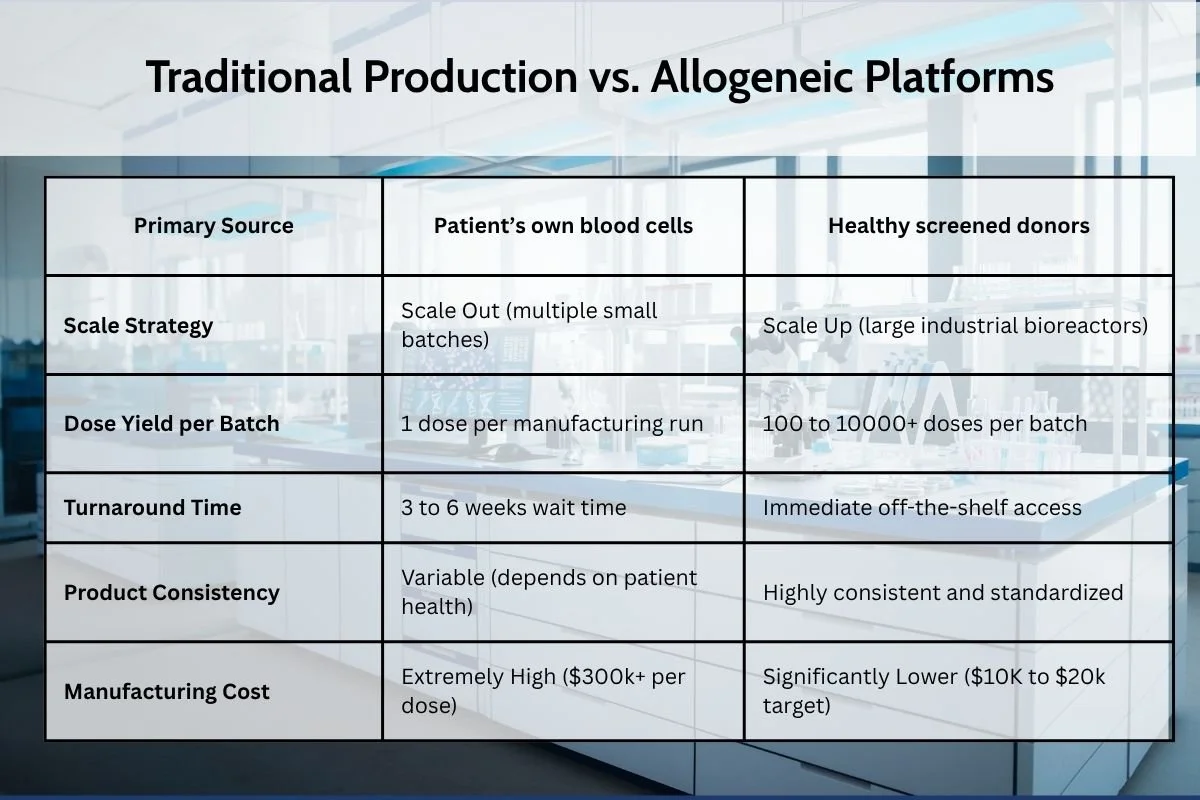
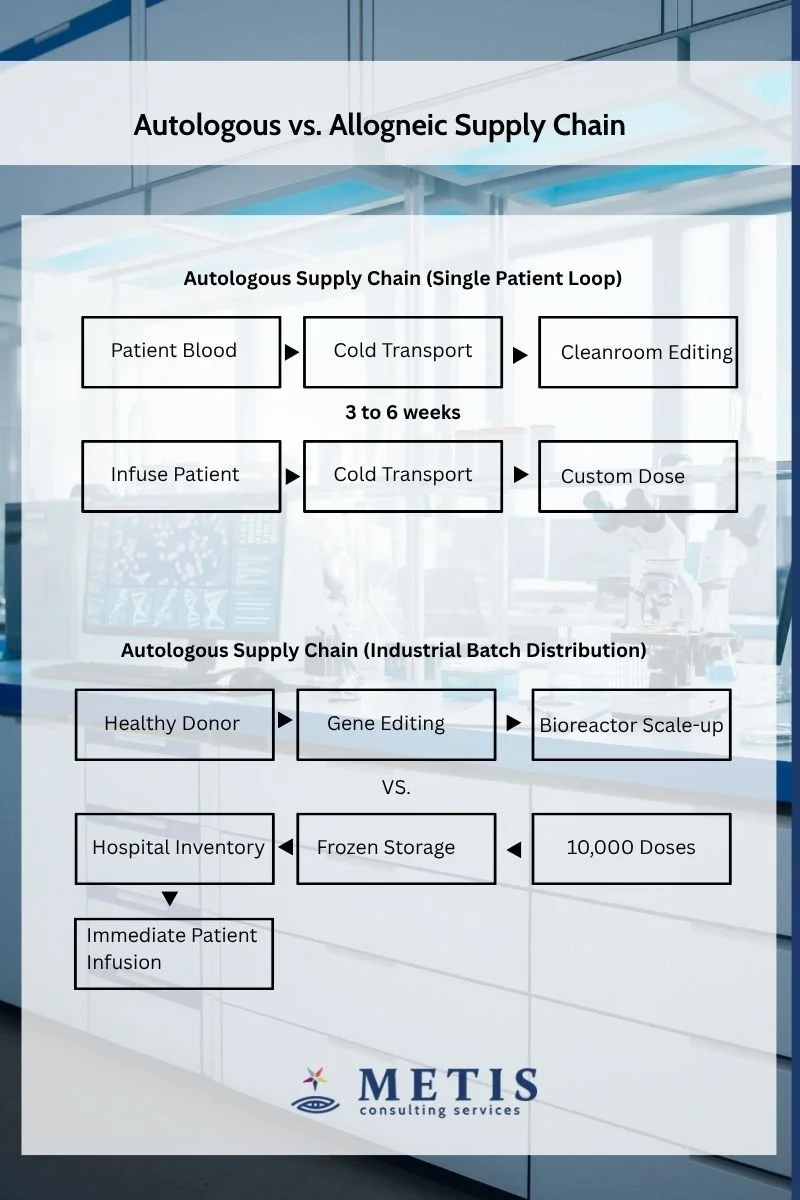
In traditional autologous production, scaling up means adding more small-scale equipment and hiring more laboratory staff to handle isolated patient samples. This process is known as scaling out. It is inefficient, highly prone to human error, and exceptionally costly.
Allogeneic platforms rely on scaling up. Instead of running hundreds of small individual dishes, manufacturers build large-scale bioreactors capable of holding fifty, two hundred, or even two thousand liters of cell culture suspension.
Scaling up provides notable engineering advancements:
Automated Bioreactors
Modern stirred tank and wave motion bioreactors maintain precise controls over fluid mechanics, nutrient provision, and gas exchange. Cells remain perfectly suspended without suffering mechanical damage from shearing forces. Automated sampling systems monitor cell density and vitality continually, adjusting liquid feeds without opening the vessel or risking microbial contamination.
Stem Cell Master Cell Banks
To build a truly reliable manufacturing pipeline, companies use induced Pluripotent Stem Cells or umbilical cord blood stem cells. Induced Pluripotent Stem Cells are adult cells reprogrammed back into an embryonic-like state. A single, well-characterized Pluripotent Stem Cell line can divide indefinitely. Scientists can perform gene edits on this central cell bank once, thouroghly verify its safety, and freeze thousands of identical master seed vials. Whenever production begins, a single seed vial is thawed and grown into thousands of therapeutic doses.
Cryopreservation and Cold Supply Logistics
Preserving living biological products requires advanced freezing techniques. Controlled rate freezers slowly drop the temperature of cell suspensions to prevent microscopic ice crystals from puncturing cell membranes. Specialized cryoprotectant formulations protect delicate cell parts during freezing and thawing cycles. Once frozen, these products ship through established commercial cold chains, maintaining temperatures below minus one hundred and thirty degrees Celsius until administration.
Expanding Horizons Beyond Oncology
Initial cell therapy innovations focused heavily on blood cancers like leukemia and lymphoma. However, the speed, scalability, and lower costs of off-the-shelf allogeneic platforms are letting researchers to apply living therapeutics across a far wider range of medical fields.
Autoimmune Conditions
Autoimmune diseases like Systemic Lupus Erythematosus, Multiple Sclerosis, and Severe Rheumatoid Arthritis occur when an overactive immune system attacks healthy tissues. Traditional treatments rely on broad immunosuppressive drugs that weaken the whole body. Off-the-shelf allogeneic CAR T cells and Regulatory T cells can be engineered to target and reset the specific immune cells causing the damage. By wiping out the disease-causing autoimmune memory cells, these therapies give the patient's immune system a chance to rebuild itself correctly.
Regenerative Medicine and Tissue Repair
Heart attacks, strokes, and spinal cord injuries cause mass cell death that the human body cannot naturally repair. Off-the-shelf stem cell-derived tissues offer a way to regenerate lost function. Scientists can differentiate allogeneic stem cells into specialized heart muscle cells, neural progenitor cells, or retinal cells. Surgeons can patch damaged heart walls or inject neural cells directly into injured nerve pathways to restore electrical signaling.
Diabetes Management
Type 1 diabetes occurs when the immune system destroys insulin-producing beta cells in the pancreas. Patients must track blood sugar levels constantly and inject insulin daily. Stem cell-derived pancreatic islet cells can be transplanted into diabetic patients. These engineered cells sense glucose levels naturally and release precise amounts of insulin in real time, potentially eliminating the need for daily injections.
Infectious Diseases
Patients with severely compromised immune systems, such as bone marrow transplant recipients, often suffer from deadly viral infections like Cytomegalovirus or Epstein-Barr virus. T-cells harvested from donors who possess natural immunity to these viruses can be banked and infused quickly to control acute infections.
Economic and Healthcare System Impact
The broad adoption of off-the-shelf cell therapies is predicted to transform the financial structure of advanced medicine. Autologous therapies put immense pressure on insurance providers, national health systems, and patients due to their high prices and complex delivery logistics.
Allogeneic platforms alter this equation significantly:
Dramatically Lower Manufacturing Costs: By producing thousands of doses in a single run, manufacturers spread the high costs of media, testing, and cleanroom facilities across many units. This economy of scale can lower the manufacturing cost per dose from hundreds of thousands of dollars to under twenty thousand dollars.
Increasing Access to Treatment: Autologous therapies require highly specialized academic medical centers equipped with complex processing facilities. Off-the-shelf cell products arrive as simple frozen vials. This allows regional hospitals, outpatient centers, and community clinics to administer advanced cell therapies without building specialized laboratory infrastructure.
Predictable Scheduling and Supply: Off-the-shelf inventories mean hospitals can keep doses stocked in onboard freezers. Doctors can schedule infusions immediately upon diagnosis, avoiding the stressful delays along with logistical disruptions associated with custom shipping.
As manufacturing efficiency increases, health policy experts expect cell therapy to shift from a luxury intervention of last resort to a front-line treatment option across numerous disease areas.
Managing Regulatory and Quality Control Standards
While off-the-shelf cell platforms deliver great potential, regulatory agencies, for example, the FDA and the European Medicines Agency, enforce strict safety standards to ensure patient protection. Living cellular products behave differently than inert chemicals, calling for sophisticated Quality Assurance measures.
Key regulatory priorities include:
Gene Editing Precision: When using gene-editing tools, including CRISPR, regulators require proof that the edits occur exclusively at the intended genetic locations. Unintended off-target edits could disrupt vital tumor suppressor genes, possibly causing new cancers. Advanced sequencing technologies now screen cell batches to verify genomic purity.
Potency and Consistency: Because donor cells constitute living entities, regulators require rigorous testing to ensure every batch performs with consistent strength and biological activity.
Sterility and Viral Safety: Off-the-shelf products derived from human donors undergo extensive screening to guarantee they are free from bacteria, fungi, viruses, and mycoplasma. Automated closed-loop manufacturing systems help maintain complete sterility throughout long culture cycles.
Donor Rejection Monitoring: Clinical trials carefully monitor host immune responses over long intervals to confirm that engineered stealth modifications prevent rejection without jeopardizing patient safety.
The Future of Living Therapeutics
The rise of allogeneic off-the-shelf platforms represents one of the most remarkable technical achievements in modern medical history. By merging advanced gene editing, automated biomanufacturing, and stem cell biology, scientists are actively solving the scaling and access challenges that formerly limited living drugs.
In the coming decade, off-the-shelf cell banks will become standard medical tools. Oncologists will select targeted immune cell mixes customized to a patient's exact tumor profile and have them delivered to the clinic within hours. Rheumatologists will use off-the-shelf cells to reset damaged immune systems in autoimmune patients. Cardiologists and neurologists will use banked stem cell products to repair damaged heart valves and brain tissues after acute injuries.
The capability to manufacture high-quality, affordable, ready-to-use cell therapies at scale converts cutting-edge biological research into dependable, everyday healthcare. Off-the-shelf cell therapies are bridging the divide between scientific possibility and global clinical reality, making certain that life-saving cellular cures reach every patient who needs them.
At Metis Consulting Services, we help innovative biotech and pharmaceutical companies optimize production, streamline compliance, and bring ground-breaking treatments from the lab to the patient. Contact Metis Consulting Services today
Resources:
For real-time updates on how biotechnology innovations are transforming patient care, check out the Biotechnology Innovation Organization Health Insights.
Learn more about global regulatory systems by reading guidelines on the European Medicines Agency Advanced Therapies Section.
Track global regulation updates and clinical developments directly through the U.S. Food and Drug Administration Cellular and Gene Therapy Center.
Researchers document breakthrough clinical trials involving gene-edited donor cells via the National Institutes of Health Clinical Trials Database.
Detailed technical frameworks regarding advanced therapy manufacturing standards can be explored through the International Society for Cell and Gene Therapy Resource Hub.