
This week in the Guardrail, explore how next-generation delivery vectors like engineered AAVs and lipid nanoparticles are overcoming medicine's greatest hurdles to revolutionize the future of gene therapy.
By Michael Bronfman
November 2, 2026
Gene editing tools like CRISPR have grabbed global headlines over the last decade. Scientists now possess molecular scissors capable of cutting, repairing, or changing DNA sequences with incredible accuracy. However, having a sharp set of molecular tools is only half the battle. If doctors cannot deliver those tools into the correct cells inside the human body, the treatment cannot work.
This delivery problem represents the single biggest hurdle in modern medicine. Traditional methods struggle with three main challenges: getting inside specific organs, escaping the immune system, and avoiding unintended DNA edits. Because of these hurdles, biotech companies are shifting their focus. The ultimate success of gene editing no longer relies solely on improving genetic chemistry. Instead, progress depends heavily on engineering advanced delivery vehicles known as vectors.
Two delivery systems lead this revolution: modified viruses called adeno-associated viruses (AAVs) and tiny fat bubbles called lipid nanoparticles (LNPs). Both technologies are undergoing radical redesigns to make gene editing safer, more effective, and accessible to millions of patients worldwide.
Understanding Delivery Vectors: The Microscopic Delivery Trucks
To understand why vector engineering is so vital, imagine your body as a massive city containing trillions of houses, which represent individual cells. Inside each house, a delicate master recipe book called DNA resides in the central room, or nucleus. When a person suffers from a genetic disease, one of those recipe instructions contains a dangerous mistake.
Gene-editing tools act like specialized mechanics who can drive into the city, enter the right house, and correct the mistake in the recipe book. However, those mechanics cannot walk across the city on their own. They need microscopic delivery vehicles to protect them from blood currents, shield them from immune system security guards, and drop them off at the exact street address.
Without a strong delivery vehicle, several dangerous scenarios can happen:
Immune attack: The immune system detects the therapeutic cargo as a foreign intruder and destroys it before it reaches its destination.
Off-target delivery: The vehicle lands in the wrong organ, such as the liver or kidneys, where editing could cause unwanted side effects.
Cargo destruction: Natural enzymes in the bloodstream break down fragile genetic material before it ever enters a cell.
To solve these issues, scientists rely on two primary vehicle models: modified viral shells and synthetic lipid particles.
Adeno-Associated Viruses: Nature's Repurposed Delivery Vehicles
Viruses have spent millions of years mastering the art of entering human cells. Adeno-associated viruses, or AAVs, are small, harmless viruses that do not cause disease in humans. Decades ago, scientists realized they could hollow out an AAV, remove its natural viral genes, and replace them with therapeutic genetic code.
AAVs offer several key advantages:
High efficiency: They excel at penetrating cell membranes and entering the cell nucleus.
Long-lasting effects: Once inside, they can provide long-term genetic instructions for cells that do not divide often, such as brain or heart cells.
Proven history: They serve as the foundation for several approved genetic treatments.
The Limits of First Generation AAVs
Despite their strengths, original AAV vectors face major roadblocks. First, natural AAVs possess an inherent tendency to travel directly to the liver, regardless of where scientists want them to go. If a patient needs treatment for muscular dystrophy, delivering the majority of the vector to the liver can cause dangerous liver inflammation while leaving muscle tissue untreated.
Second, because AAVs resemble natural viruses, the human immune system recognizes them. Many people carry natural antibodies from past exposure to wild AAV strains, which can neutralize the treatment immediately. Furthermore, once a patient receives an AAV dose, their body develops strong antibodies against that viral protein shell. This means patients usually get only one single dose in their lifetime; repeating the dose could trigger a severe immune reaction.
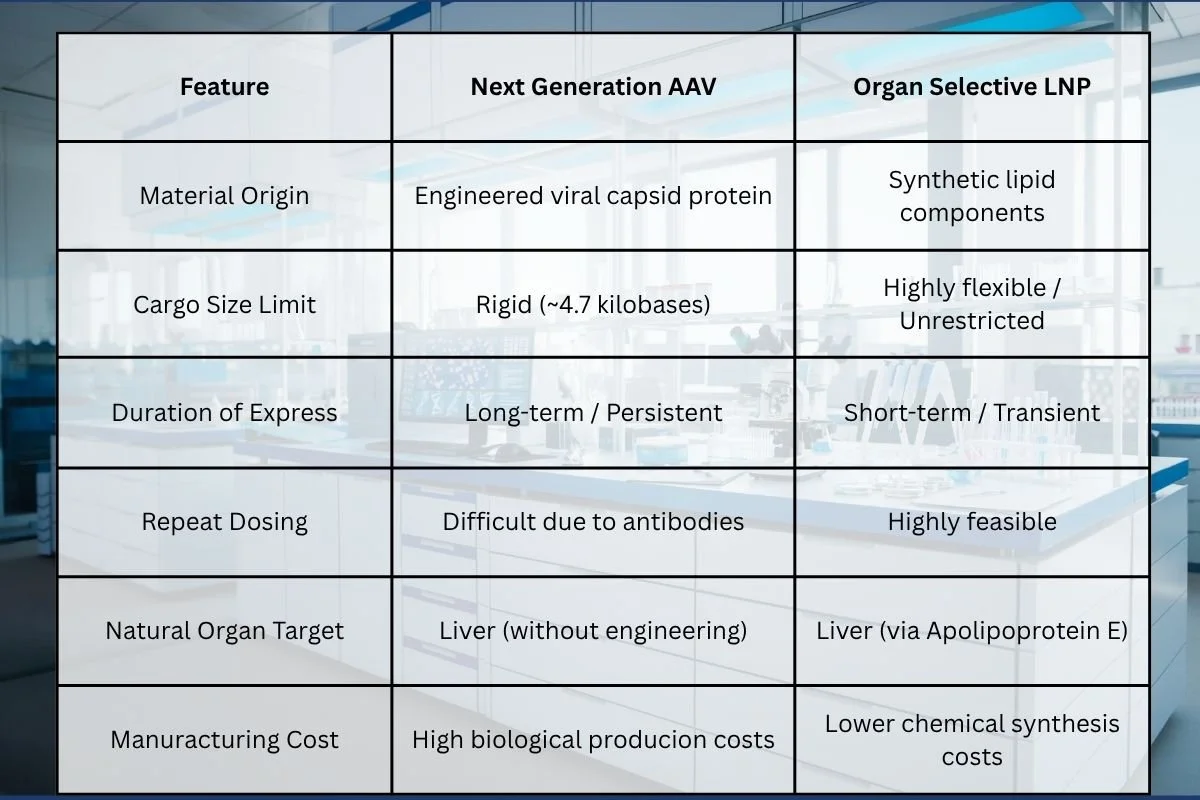
Finally, AAVs have a strict physical limit on cargo size. They can only carry about 4,700 genetic letters (kilobases) of DNA. Modern gene editing systems, such as bulky prime editors or base editors, often exceed this limit, making it impossible to fit the machinery inside a standard AAV shell.
Engineering Next Generation Capsids
To overcome these barriers, bioengineers are retooling the viral protein shell, known as the capsid. Instead of relying on wild viral strains, researchers use directed evolution and artificial intelligence algorithms to build novel capsids.
Scientists create millions of mutated capsid variants in laboratory settings, test them in cellular models, and select the few that display unique properties. AI models analyze these structural patterns to predict which protein shapes will avoid antibody detection while binding strictly to target receptors on target organs, such as skeletal muscle, brain tissue, or heart muscle.
These engineered capsids can bypass liver clearance, cross protective barriers like the blood-brain barrier, and enter specific cell types with high precision. By directing the viral vehicle away from non-target tissues, doctors can use significantly lower total doses, lowering overall toxicity and reducing manufacturing costs.
Lipid Nanoparticles: Synthetic Powerhouses for Genetic Freight
While viral engineers work to optimize AAV capsids, another major branch of biotechnology focuses on entirely synthetic particles. Lipid nanoparticles, or LNPs, are tiny microscopic spheres made from specialized fat molecules. LNPs gained global fame through the rapid deployment of mRNA vaccines during the COVID-19 pandemic. Today, researchers are adapting this flexible platform to deliver complex gene editing therapies.
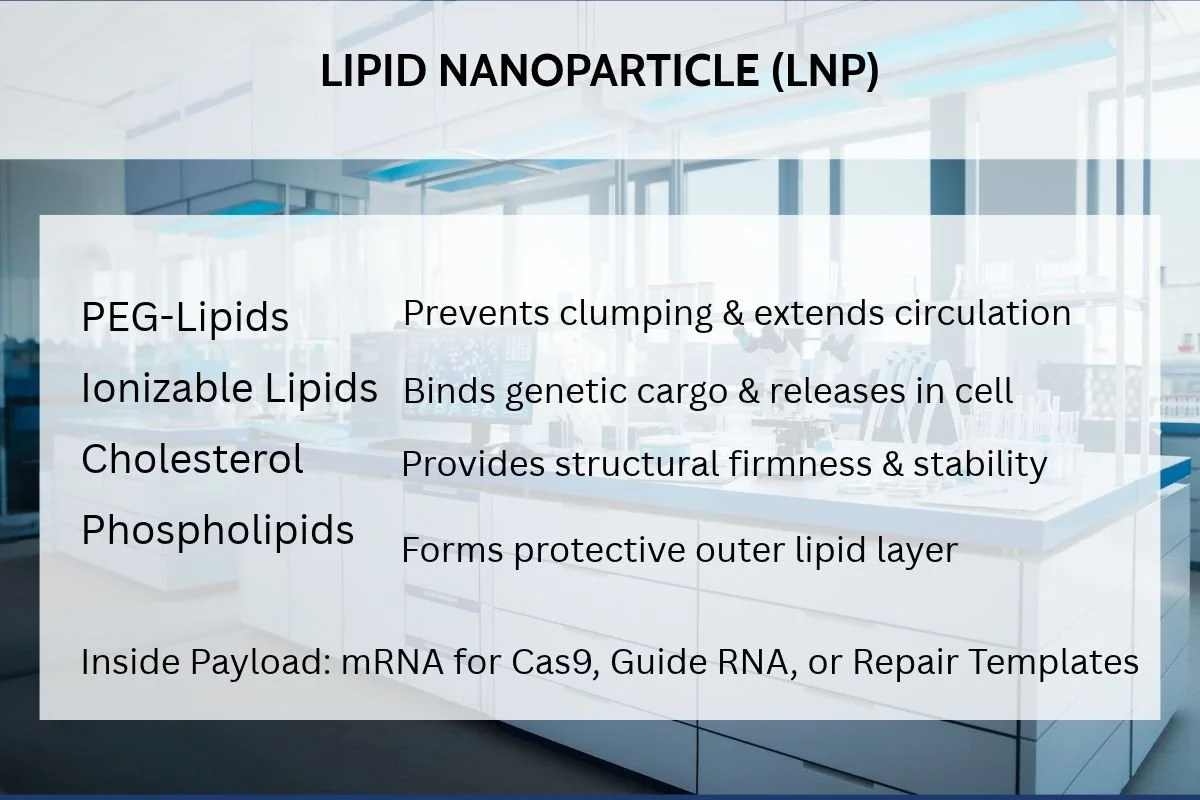
An LNP generally consists of four primary fat components working together:
Ionizable lipids: These custom molecules bind positively to negatively charged genetic cargo (like RNA or DNA) during assembly. They change charge based on pH levels, helping the particle release its payload once inside the cell endosome.
Helper phospholipids: Structural lipids that stabilize the sphere's outer membrane.
Cholesterol: Adds structural integrity and aids in fusing with target cell membranes.
Polyethylene glycol (PEG) lipids: An outer coating that keeps particles stable in blood circulation and prevents rapid aggregation.
Why LNPs Are Changing the Game
LNPs present several clear advantages over viral delivery platforms:
Massive payload capacity: Unlike AAVs, LNPs have virtually no strict physical size limit. They can encapsulate massive strands of mRNA, multiple guide RNAs, or complete protein editor complexes inside a single particle.
Low immunogenicity: Synthetic fat molecules do not carry viral capsids, making them far less likely to provoke adaptive immune memory.
Repeat dosing: Because patients do not produce long-term neutralizing antibodies against these lipid shells, doctors can administer multiple doses over time if the first attempt requires a boost.
Transient expression: LNPs deliver genetic material in the form of short-lived messenger RNA (mRNA). The cell uses the mRNA instructions to build the editing protein, makes the required genetic fix, and then degrades the mRNA. This temporary presence minimizes the risk of off-target editing elsewhere in the genome.
Streamlined manufacturing: Producing synthetic lipids via chemical synthesis is far faster, cleaner, and cheaper than growing viral vectors in biological cell vats.
Comparing Delivery Platforms
To highlight how these two primary vectors match up in gene editing applications, consider their key operational differences:
Organ Selective LNPs: Breaking Beyond the Liver
Despite their benefits, standard LNPs share a major limitation with original viral vectors: natural standard formulations travel directly to the liver. When standard LNPs enter the bloodstream, they absorb a natural blood protein called Apolipoprotein E (ApoE). Liver cells possess abundant receptors for ApoE, causing the liver to scoop up almost all circulating particles.
While this natural pathway works well for treating liver conditions, it blocks therapies intended for lung, heart, brain, or immune system diseases. To bypass this liver trap, researchers are pioneering organ selective LNP technologies:
1. Selective Organ Targeting (SORT)
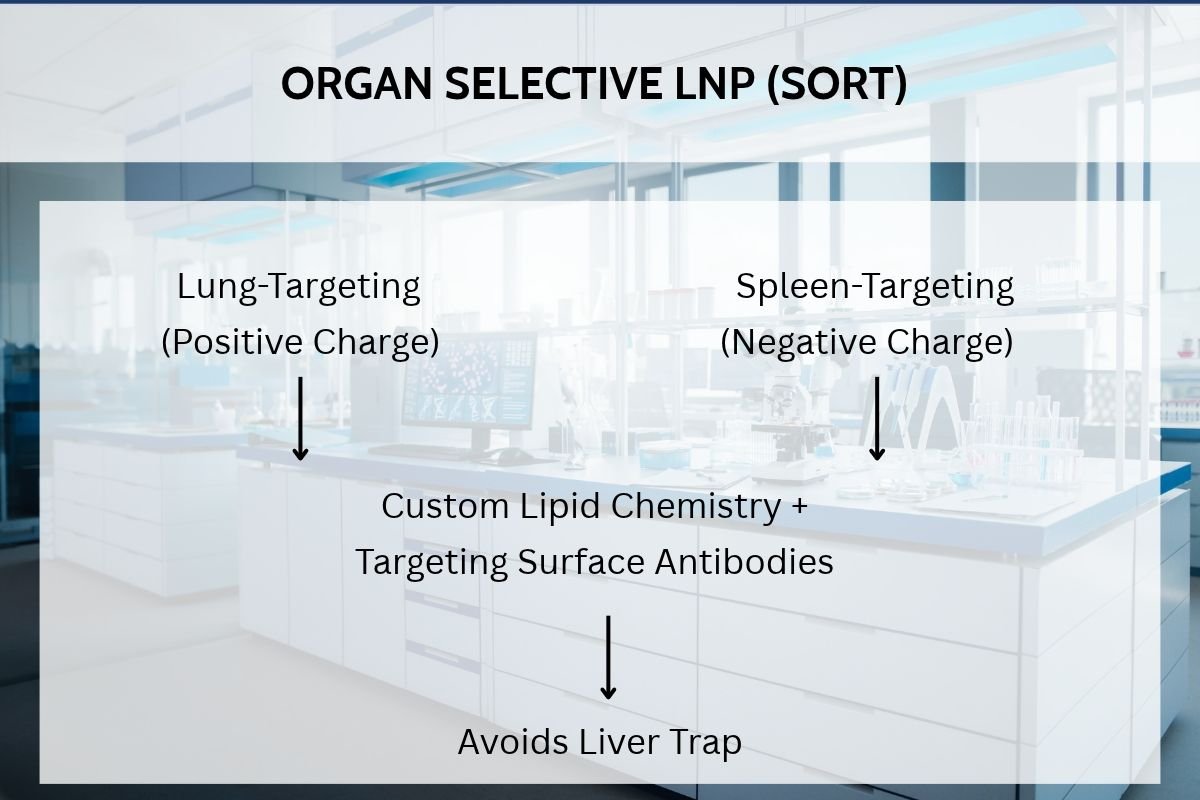
Scientists add a specialized fifth lipid component to standard LNP formulations. By carefully adjusting the chemical charge of this extra molecule, engineers can predictably redirect where the particles land:
Negatively charged molecules shift delivery toward the spleen, targeting cells in the lymphatic immune system.
Positively charged molecules alter protein binding in blood, directing particles straight to lung tissue.
Neutral or modified lipids allow particles to bypass liver filtering and accumulate in kidney or muscle tissue.
2. Surface Antibody and Ligand Conjugation
Engineers can attach biological homing beacons onto the outer surface of lipid nanoparticles. By studding the outer lipid coat with specific antibodies, peptides, or sugar molecules, the LNP acts like a heat-seeking missile. For instance, adding an antibody that targets T cell surface markers allows LNPs to edit immune cells directly inside a patient's body, opening up fast in vivo CAR T cell therapies for cancer.
Overcoming Key Biological Bottlenecks
Engineering new vehicle structures addresses organ targeting, but vector designers must also resolve subtle microscopic hurdles inside target cells.
Endosomal Escape: Leaving the Microscopic Recycling Bin
When a cell ingests an LNP or AAV vector, it swallows the particle into a small internal membrane bubble called an endosome. The endosome acts like a waste sorting center, fusing with acidic digestive enzymes to break down trapped material.
In standard LNP formulations, less than two percent of delivered genetic cargo manages to break out of the endosome before destruction occurs. The remaining ninety-eight percent gets degraded and wasted.
Next-generation vector research focuses heavily on improving this endosomal escape efficiency. Modern ionizable lipids are engineered to undergo swift structural changes as the endosome becomes acidic, disrupting the internal bubble wall and releasing fragile mRNA cargo safely into the main cell fluid (cytoplasm).
Controlling Immune Activation
Even if a synthetic vector lacks viral proteins, foreign RNA strands or synthetic lipids can trigger pattern recognition sensors inside human cells. When these sensors fire, the cell releases inflammatory signals that shut down protein production or kill the cell outright.
To quiet these internal alarm bells, scientists use chemically modified nucleotides inside mRNA payloads. Replacing natural building blocks with modified alternatives like N1-methylpseudouridine allows the therapeutic mRNA to slip past immune sensors undetected, permitting high editor production without triggering toxic cellular stress.
Practical Applications in Modern Medicine
The maturation of advanced AAV capsids and organ selective LNPs is transforming how doctors approach previously untreatable genetic conditions:
Cardiovascular Health
Traditional therapies for high cholesterol require lifelong daily pills or biweekly injections. Using organ selective LNPs, clinical researchers can deliver base editing tools directly to liver cells in a single infusion. The editor permanently turns off genes responsible for excess cholesterol production, offering lifetime cardiovascular protection through a single treatment.
Muscular Dystrophies
Conditions like Duchenne Muscular Dystrophy damage muscle tissue across the entire body, including the heart and diaphragm. First-generation delivery tools could not safely reach muscle groups without overloading the liver. Engineered AAV capsids now demonstrate a high affinity for skeletal and cardiac muscle, allowing therapeutic genes to repair muscle structure safely.
Neurological Disorders
Delivering therapeutics across the blood-brain barrier has challenged drug developers for generations. Engineered AAV vectors and neuro-targeted LNPs can now be administered through standard intravenous lines, crossing directly into the central nervous system to address rare neurodegenerative conditions, ALS, or Huntington's disease.
What Lies Ahead for Delivery Vector Engineering
The field of gene editing has reached an exciting turning point. As tools like CRISPR, base editing, and prime editing grow more refined, vector engineering stands out as the ultimate key to unlocking their full potential.
In coming years, expect to see hybrid delivery platforms that combine the best aspects of both viral and non-viral approaches. For example, scientists are testing virus-like particles (VLPs) that use viral assembly structures to enclose editor proteins while retaining synthetic outer shells that minimize immune reactions.
By solving organ-specific targeting, avoiding harmful immune responses, and maximizing cargo capacity, next-generation AAV capsids and organ-selective LNPs will help turn experimental laboratory breakthroughs into safe, everyday medicine. The era of true precision gene editing has arrived, driven by smart delivery vehicle engineering.
Additional research updates, market reviews, and technical comparisons regarding non-viral vector evolution
Industry Innovations
To explore technical deep dives, clinical trial tracking, and expert commentary on these delivery platforms, visit Drug Discovery News.
Additional research updates, market reviews, and technical comparisons regarding non-viral vector evolution Cell & Gene Therapy Review
Additional research updates, market reviews, and technical comparisons regarding non-viral vector evolution Dark Horse Consulting Group.
Nanoparticle formulations and precision editing payloads are routinely published by industry pioneers at DIVERSA Technologies a
Find life science education portals at Thermo Fisher Scientific.
You don't have to navigate this complex landscape alone. Contact Metis Consulting Services today and transform Your Biotech Pipeline, master advanced vector engineering, and bring life-changing genetic medicines to market with confidence.
