
What is Prime Editing? And How is it Used in Real World Applications?
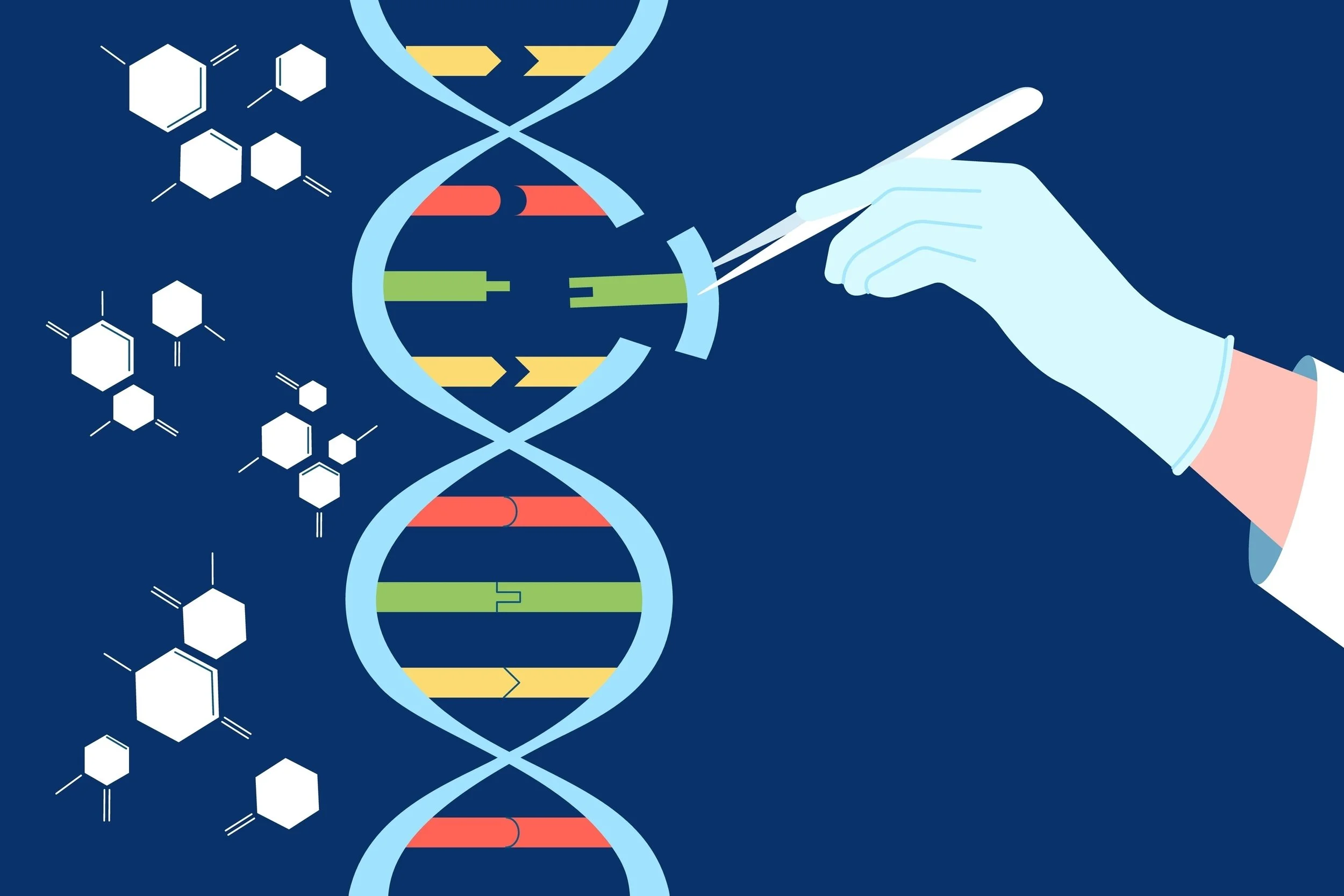
This week, check out a deeper dive into how next-generation prime editing brings true surgical precision to genetic medicine. Building on our September 7, 2026 post on early gene editing. "Prime Editing: Changing How We Fix Broken Genes"
By Michael Bronfman
September 21, 2026
In our last blog post, we looked at how early gene editing opened up brand new possibilities for fixing genetic conditions. Today, we build directly on that foundation. We are taking a much deeper, more comprehensive dive into how next-generation gene editing moves far beyond rough cellular cuts toward real surgical precision inside the human body.
In that previous article, we mentioned how scientists can now rewrite faulty genetic code directly inside living cells. Now, let us explore how that process works in real clinical environments, what makes it drastically safer, and where human clinical testing stands today.
What Is Prime Editing?
Think of prime editing as a search-and-replace tool for human DNA.
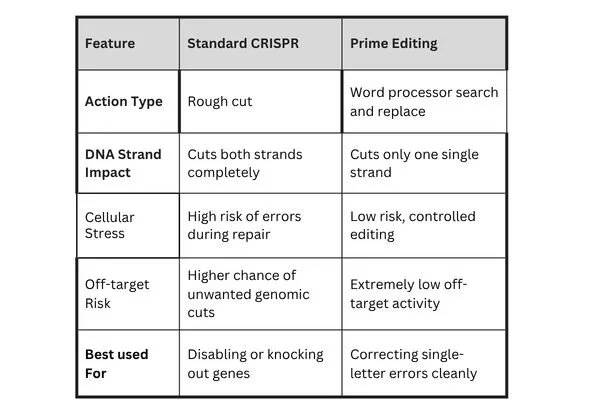
To understand why this technology represents a massive leap forward, it helps to see how older gene-editing tools work. For years, genetic medicine relied on standard CRISPR tools. Standard CRISPR acts like a pair of rough molecular scissors. It cuts through both strands of the DNA double helix at a targeted spot.
Once both strands are severed, the cell panics. It rushes to patch the broken ends back together using natural emergency repair mechanisms. Because that emergency fix is rushed, the cell often makes costly mistakes. It can accidentally delete important genetic information or mix up chemical letters. Worse, the scissors might accidentally cut DNA at the wrong spot elsewhere in the genome. Scientists call these accidental cuts off-target effects.
Prime editing fixes this major flaw. Instead of cutting through both strands of human DNA, prime editing cuts only one single strand. Leaving the second strand whole keeps the overall structure stable. The cell stays calm, making the whole repair process safer, cleaner, and more reliable for therapeutic applications.
How Search and Replace Works inside the Cell
To see how prime editing carries out a repair, we can break the machinery down into three main components.
1. The Target Site
Every cell in your body runs on instructions stored in DNA. These instructions use four chemical letters: A, T, C, and G. A single wrong letter among billions can cause a severe, life-altering genetic disease.
2. The Search Tool
Prime editing uses a modified Cas9 protein paired with a custom guide strand. This guide travels through the cell nucleus, scanning millions of letters until it locks onto the exact matching error in your genetic code.
3. The Replace Tool
Once the tool finds the target, an attached enzyme called reverse transcriptase gets to work. This enzyme reads new genetic instructions carried right on the guide strand. It then writes those corrected chemical letters straight into the single strand of DNA. The cell incorporates the new code, permanently fixing the original error without any random cellular guesswork.
Comparing Gene Editing Methods
Standard CRISPR works well if your goal is simply to break a harmful gene so it stops working. However, if you want to make a precise repair, prime editing is the superior choice for clinical safety.
Real World Medical Applications
Researchers are using prime editing to tackle some of the most challenging inherited diseases across multiple body systems.
Liver Diseases: The liver easily absorbs lipid nanoparticles, which are tiny protective bubbles used to carry fragile genetic medicines inside cells. Conditions like alpha-1 antitrypsin deficiency cause toxic, misfolded proteins to build up in liver cells. Prime editing can correct the single wrong letter responsible for the bad protein. Once corrected, the liver produces healthy proteins normally.
Lung Diseases: Lung tissue is tricky to reach, but new delivery systems are changing that. Conditions like cystic fibrosis stem from errors in genes that control salt and fluid balance in the lungs. Prime editing can rewrite those faulty sequences in lung stem cells, helping restore healthy mucus flow and clearing clogged airways.
Blood Disorders: Sickle cell disease and beta thalassemia come from single-letter mistakes in the hemoglobin gene. Prime editing rewrites those faulty letters back to normal. Because this method avoids double-strand DNA cuts, it lowers the risk of dangerous chromosome damage in blood stem cells.
Neurological Conditions: Researchers are beginning to adapt prime editing for non-dividing cells in the central nervous system. Disorders like Huntington disease feature repeated, toxic genetic sequences. Prime editing can delete these excessive repeats with surgical precision, offering hope for targeted treatments in brain tissue.
Muscular Dystrophies: Inherited muscle disorders often involve specific mutations across vast structural proteins. Prime editing allows researchers to insert larger corrected fragments without damaging surrounding tissue fibers, preserving long-term muscle function.
The Road Through Clinical Testing
Bringing a new genetic therapy out of the lab and into hospitals requires a strict, step-by-step evaluation process. Right now, prime editing is moving through human trials to confirm both safety and long-term performance.
1. Preclinical Phase: Lab testing in cell cultures and animal models.
Scientists test the editor inside human cells grown in lab dishes and in animal models. They measure how accurately the tool edits the target site and check for any accidental cuts across the entire genome.
2. Phase 1 Human Trials: Evaluating safety in small groups.
A small group of human patients receives the treatment. Doctors closely monitor patients to ensure the immune system does not react negatively to the editing machinery. Safety is the primary goal here.
3. Phase 2 Human Trials: Testing dosage and efficacy.
Researchers administer the therapy to a larger group of patients to evaluate efficacy. For liver and lung conditions, doctors check if organ function improves and if clinical symptoms disappear.
4. Phase 3 Human Trials: Comparison against standard care.
Large-scale trials compare the prime editing treatment directly against existing standard therapies. Successful results clear the way for official regulatory approval.
Engineering Hurdles Scientists Are Solving
Despite its immense promise, scientists are actively working to overcome a few remaining biological and technical challenges before these treatments become widespread.
Delivery Systems: Getting large molecular machines inside the correct human cells remains challenging. Researchers use microscopic lipid bubbles or modified viral shells to transport the tools. Ensuring these vehicles reach deep tissue in the lungs or liver without triggering immune inflammation is a major focus of active trials.
Size Limits: Prime editing tools are larger than standard CRISPR systems. The combined complex includes a modified cutting protein, a reverse transcriptase enzyme, and an extended guide strand. Packing all these parts into a single delivery vehicle requires advanced bioengineering.
Editing Efficiency: Prime editing works with impressive efficiency in fast-dividing cells. However, in non-dividing cells like mature heart, nerve, or brain cells, success rates can drop. Researchers continue modifying the guide structures and protein enzymes to boost performance across every tissue type in the human body.
Scalable Manufacturing: Producing high-purity, clinical-grade genetic machinery at a global scale requires specialized production infrastructure. Ensuring consistency across massive production batches is critical as these therapies progress toward commercial approval.
Off-Target Surveillance: While prime editing reduces unintended edits significantly, clinical developers must deploy long-read sequencing technologies to scan whole genomes, ensuring zero unexpected genomic rearrangements occur over time.
What Comes Next?
Prime editing represents a monumental step forward for modern medicine. By moving away from double-strand cuts and offering true search-and-replace capabilities, it opens the door to treating thousands of genetic conditions at their root source.
Over the next few years, human data from ongoing liver, lung, and blood trials will reveal how well this technology performs in real world medicine. If these trials succeed, prime editing could soon become the new gold standard for precise genetic cures.
Streamline your clinical development, navigate complex regulatory hurdles, and bring groundbreaking therapies from the lab to patients faster. Contact Metis Consulting Services today.
