
Digital Twins and AI-Driven Drug Discovery

This week in the Guardrail, we break down how predictive AI models and clinical digital twins are accelerating time to market, streamlining regulatory filings, and reshaping early-phase trial architecture.
By Michael Bronfman
October 5, 2026
The biopharmaceutical sector is undergoing a massive shift in how new medicines are discovered and brought to market. For decades, the industry relied heavily on experimentation: manual bench work, endless wet lab testing, and risky failure rates once molecules finally reached human trials. Today, that approach is rapidly changing. Modern drug design increasingly relies on predictive algorithms, molecular modeling, and virtual patient simulations to guide key decisions before physical testing begins.
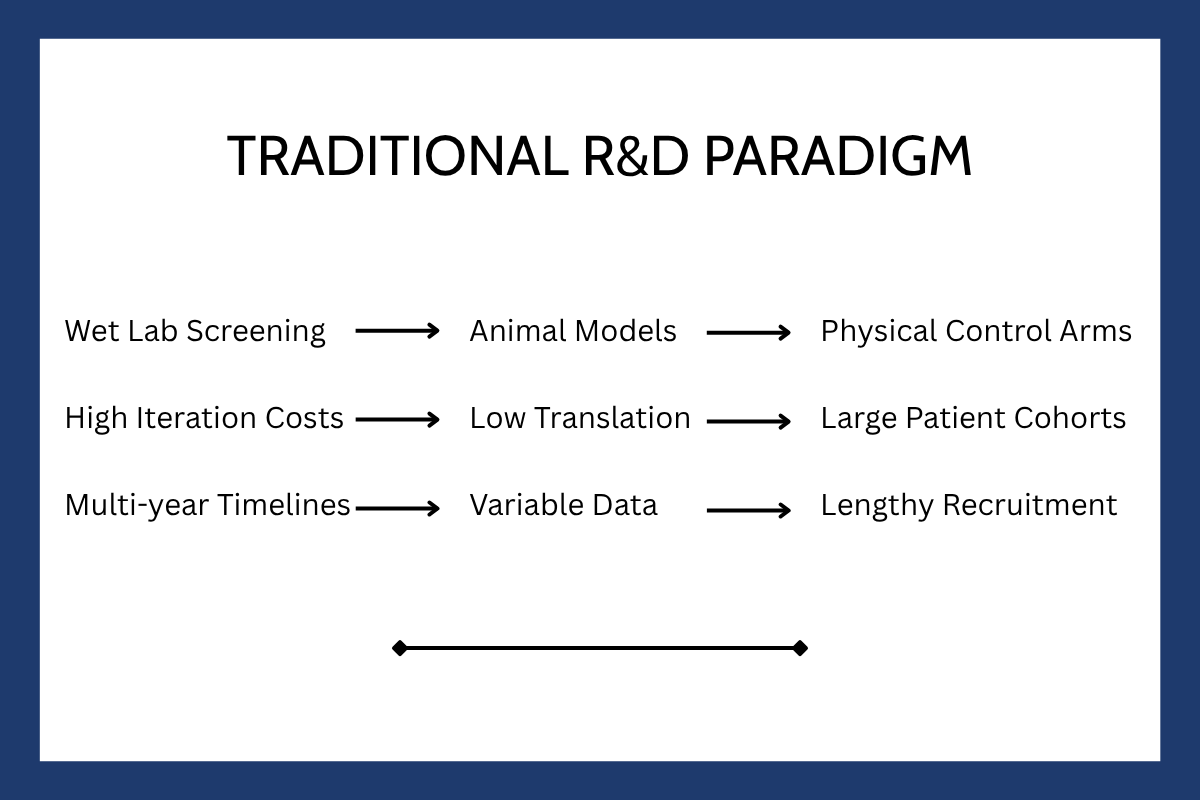
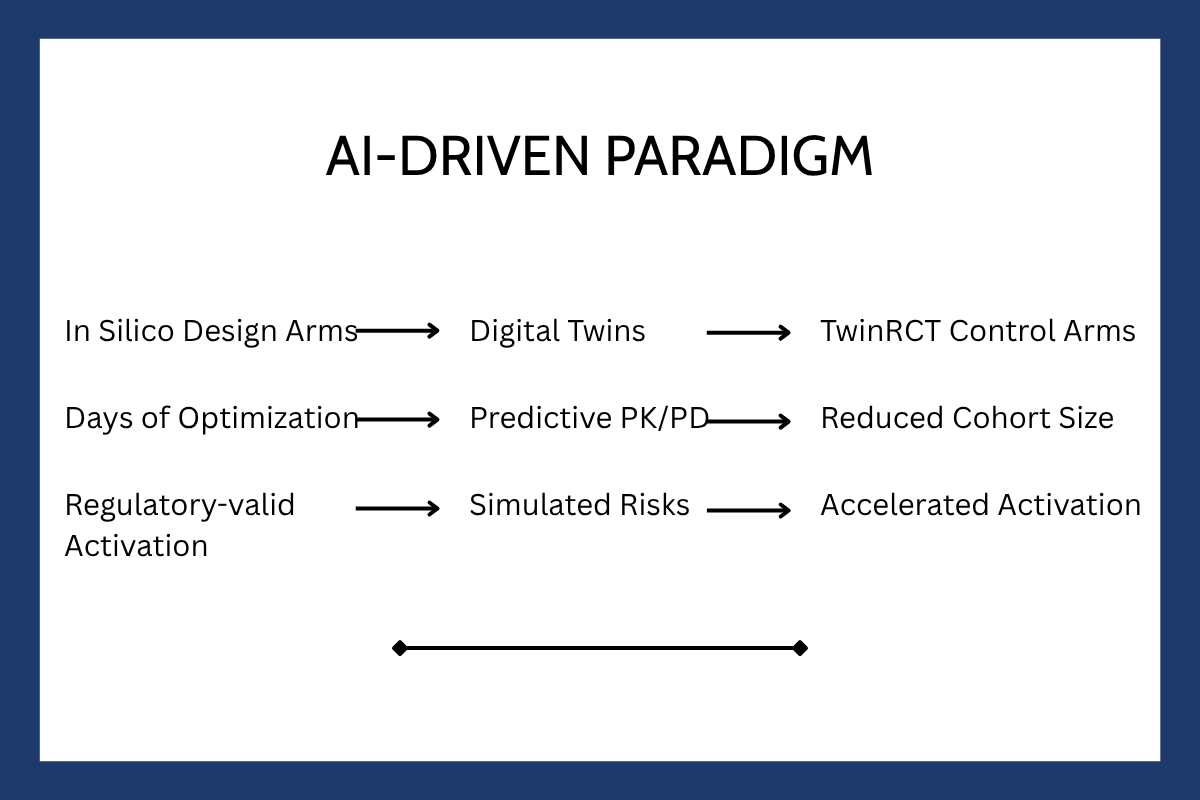
Biotech and pharmaceutical companies are shifting away from traditional trial-and-error methods toward a design-first scientific workflow. Instead of spending months on manual lab iterations, research teams can now optimize molecules computationally in just a few days. Artificial intelligence models are no longer treated as experimental side projects; they are routinely cited inside Investigational New Drug (IND) applications and Biologics License Applications (BLA) submitted to major regulators like the US Food and Drug Administration. At the same time, using digital twins in early-phase trial design has moved from a novel idea to a practical tool for managing trial data, site logistics, and patient cohorts.
Regulatory Reality: AI Models in IND and BLA Submissions
For a long time, the biggest barrier to using computer models in drug development was regulatory acceptance. Health authorities required proof from lab cultures and animal studies, treating computational predictions as secondary background information. That line has blurred significantly over the last few years. Regulators now regularly review AI-generated structural models, machine learning predictions, and algorithmic data packages as part of official filings.
Moving Beyond Basic Screening
Early computational tools were mostly used for simple screening, helping scientists filter massive collections of compounds down to smaller lists. Today, machine learning systems can design target-specific molecules from scratch, predict how tightly they will bind to proteins, spot potential off-target side effects, and forecast how a compound will move through the human body.
When biotechs submit IND filings containing AI-designed compounds, regulatory reviewers evaluate the algorithm's design, training data, and validation tests right alongside standard preclinical lab results. This change cuts down the time required to turn an initial hit into a lead compound. Instead of making and testing dozens of physical variations one by one, teams can test multiple chemical properties at once inside a computer model.
Regulatory Frameworks Supporting Computational Science
Health authorities around the world have updated their working policies to keep pace with these technologies. Regulatory initiatives like Model-Informed Drug Development (MIDD) and Quantitative Systems Pharmacology (QSP) give sponsors clear paths to include algorithmic data in formal applications.
These frameworks lay out rules for testing predictive software, making sure algorithms are transparent, tracking data sources, and checking machine learning outputs for accuracy. By setting clear standards, regulators give biotech companies a reliable way to use synthetic data and predictive models to justify starting doses in humans, map out metabolic pathways, and avoid unnecessary animal testing.
Digital Twins in Early Phase Clinical Trials
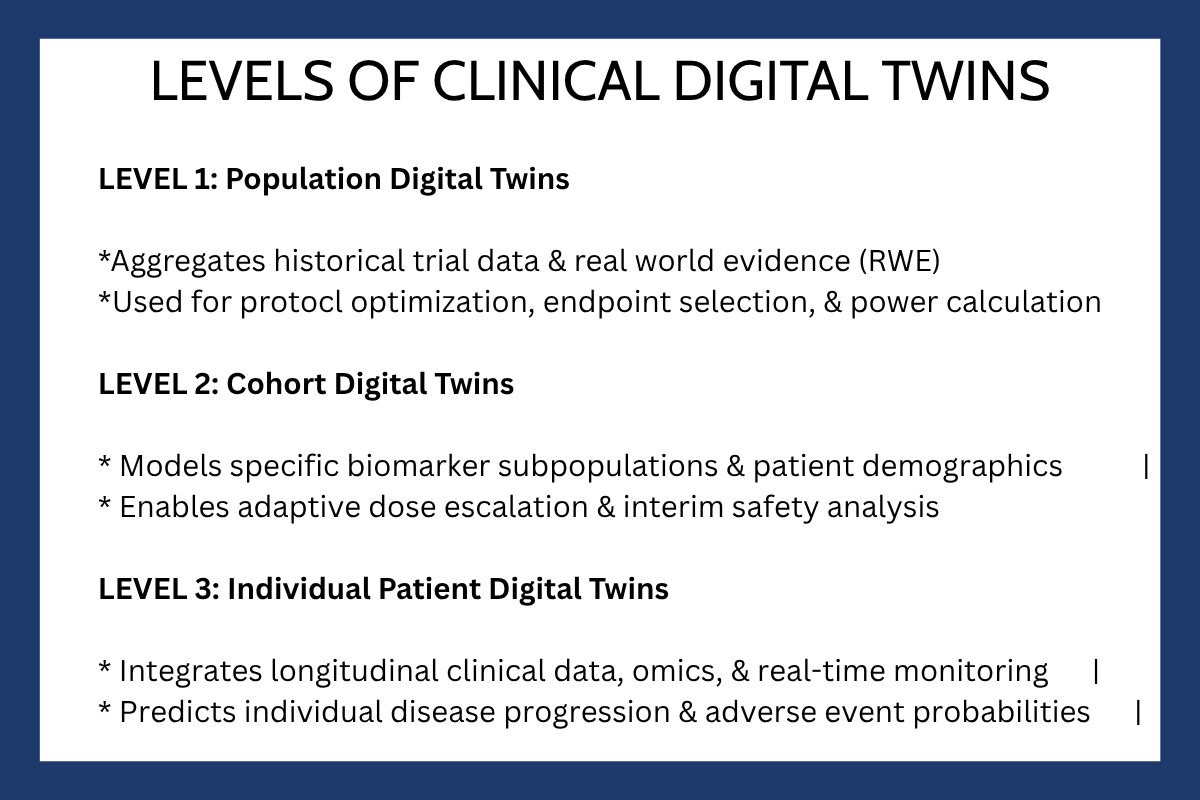
While AI algorithms handle molecule design, digital twin technology is helping reshape early-phase clinical trials. A clinical digital twin is a dynamic, detailed computer model of a biological system. It can represent a single organ, a disease pathway, or an individual patient participating in a trial.
In Phase 1 and Phase 2 trials, digital twin platforms pull in past trial records, real-world health evidence, genomic data, and patient tracking metrics. Using that information, the system simulates how different types of patients are likely to respond to a new treatment.
Building Synthetic Control Arms
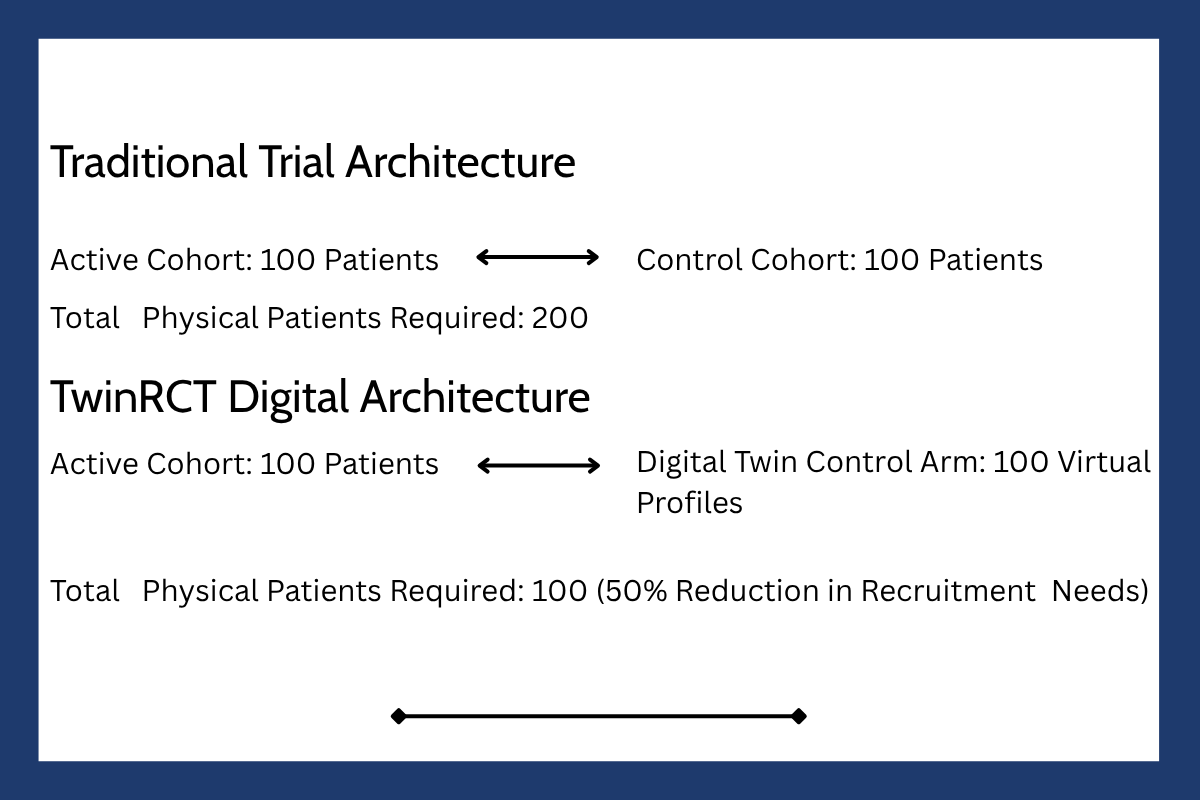
One of the most practical uses of digital twins is building synthetic or external control arms. Recruiting control patients for early-phase studies can be slow, expensive, and ethically tricky, especially when dealing with rare diseases or aggressive cancers where giving a placebo is hard to justify.
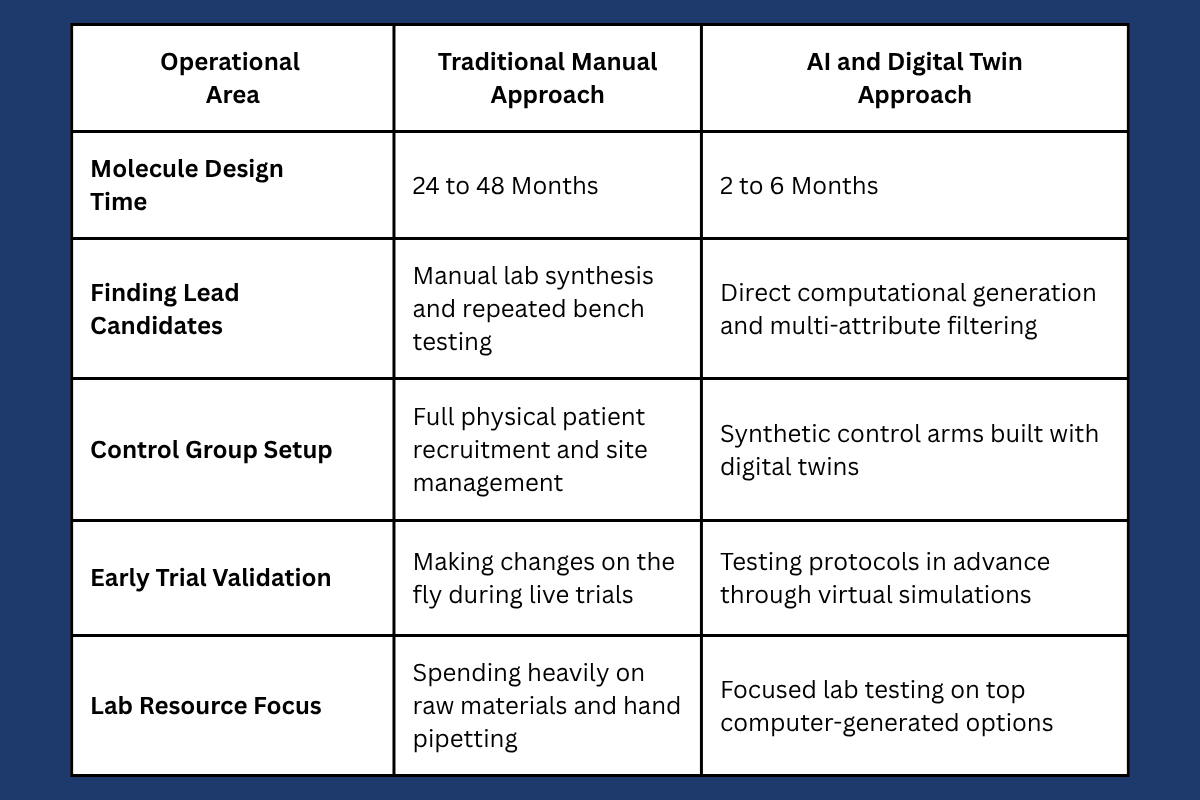
Digital twin software helps solve this problem by generating virtual control subjects matched to the real patients receiving the new treatment. Projecting how a patient's disease would normally progress under current standard care boosts the statistical strength of small studies without requiring companies to recruit large physical control groups. This approach, often called a TwinRCT, lets biotechs run smaller, faster trials that still meet strict regulatory standards for statistical proof
Improving Trial Protocols Before Enrolling Patients
Poorly designed trial protocols are a primary reason many drug candidates fail early in clinical testing. Problems like wrong dosing schedules, overly strict entry rules, or poorly chosen goals frequently derail promising drugs.
Digital twin simulations give research teams a risk-free way to test trial plans in advance. Teams can run thousands of virtual trial runs under different dosing schedules and rules long before the first real patient signs up. These virtual runs help highlight potential safety issues, find better dose levels, and spot places where patients might drop out. As a result, phase transitions go smoother, and teams have to make fewer costly changes once the trial is live.
Measuring the Impact: Manual Work vs Computational Design
Swapping manual lab work for computational design changes both the timeline and economics of early research.
Reducing the Wet Lab Bottleneck
In traditional drug discovery, chemists make a batch of compounds, test them in cell dishes, study the results, and tweak the chemical structures to fix issues with performance or safety. This loop usually takes years and still ends with high failure rates once molecules reach living organisms.
Computational design turns that model upside down. Deep learning models can evaluate millions of virtual structures at once, checking them for target fit, ease of chemical synthesis, safety risks, and body absorption. Instead of using the physical lab to explore endless possibilities, scientists use it to double-check top computer predictions. Lab teams can focus on making a small, high-quality set of optimized candidates rather than hundreds of random shots in the dark.
Keeping Supply Chains and Lab Logistics Up to Speed
When software cuts compound design times from months down to days, physical labs run into immediate supply bottlenecks if they cannot order testing supplies fast enough.
Modern research relies heavily on digital procurement networks to streamline how teams order chemicals, cell lines, and standard lab supplies. Automating supply ordering ensures physical testing keeps pace with fast digital output, preventing material shortages from slowing down discovery timelines.
Overcoming Practical Challenges to Adoption
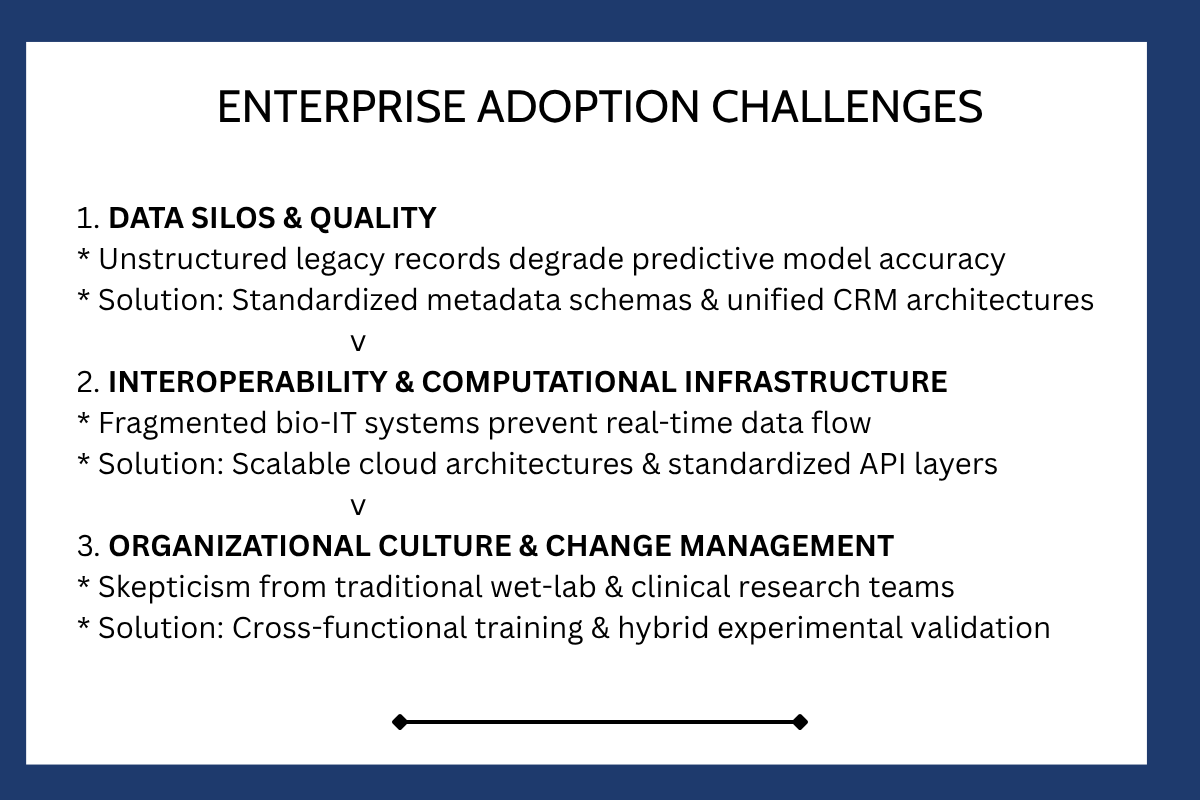
Even with clear benefits, adding AI models and digital twins to an existing pharma operation comes with real-world hurdles.
Data Quality and System Integration
An AI model or digital twin is only as reliable as the data used to train it. Messy historical records, poorly logged assay results, and missing trial details introduce errors into predictions. If a digital twin is built on incomplete or unbalanced trial data, its predictions will reflect those same flaws.
Companies need clear standards for managing their information. Setting up clean data formats, organizing electronic health records, and continuously gathering high-quality real-world evidence are necessary steps for building models teams can trust.
Connecting Lab Tools to Global Infrastructure
Linking computer models directly to daily trial operations requires solid software and infrastructure. IT departments must connect computational tools, lab data management software, and global logistical systems so information moves without friction.
Global management groups help biopharma organizations set up reliable operational frameworks, manage complex international logistics, and handle clinical trial supply chains across different countries. Ensuring software platforms talk to real-world logistics guarantees that digital discoveries transition smoothly into physical trial execution.
Bridging Team Gaps
Shifting to a predictive model requires cultural adjustments within research teams. There can sometimes be friction between computer scientists and traditional lab biologists or clinical staff. Lab veterans may feel skeptical of computer predictions, preferring physical test results they can see with their own eyes.
Overcoming this requires building mixed teams where computational scientists and lab staff work side by side throughout the project. When researchers see computer tools as helpful aids rather than replacements for human expertise, adoption happens naturally.
What This Means for Pharma Leadership
For executive teams, project leads, and clinical directors, adopting AI tools and digital twins is becoming a core practical requirement rather than a distant goal. Running multi-year discovery programs that end in high clinical failure rates is simply too risky and expensive for modern biotechs.
Smarter Spending and Risk Management
Developing new drugs takes enormous capital, with most of that money lost on clinical candidates that fail late in the process. Using digital twin simulations to stress test trial plans helps companies spot weak drug candidates much earlier.
Stopping dead-end projects early saves capital that can be redirected toward stronger candidates. In addition, using synthetic control arms cuts down on the number of physical patients needed for early trials, lowering recruiting costs and shortening trial setup times.
Key Steps for Building a Modern R&D Setup
To stay competitive, leadership teams should focus on three main operational goals:
Clean Up Data Pipelines: Build central data repositories that gather clean, organized trial and lab data from all internal teams and external partners.
Engage Regulators Early: Work with regulatory agencies early in the planning process using programs like MIDD to confirm computational methods and virtual control groups before launching trials.
Automate Operational Logistics: Connect computer design tools directly with digital ordering networks and automated lab hardware to keep physical testing moving at full speed.
Moving Toward Predictive Medicine
Combining artificial intelligence with digital twin models marks a permanent change in how drugs are researched and clinically tested. By including computational models inside IND and BLA regulatory packages and using digital twins to design smarter early-phase trials, life science companies are building a direct, efficient path to market.
Moving from manual experimentation to a design-first methodology lets companies swap months of slow trial and error for quick computational testing. Businesses that update their software systems, clean up their data pipelines, and connect their operational logistics will bring safer, more effective treatments to market with far fewer delays.
Sources:
Harvard, AI in Health Care: From Strategies to Implementation, Harvard Medical School, October 14, 2026
MIT, MIT Management Executive Education
Intglobal, Your Technology Sherpa
Clinical Digital Twins in Trial Design
Contact Metis Consulting Services to discover how we can help elevate your regulatory readiness and streamline your path to market.
