
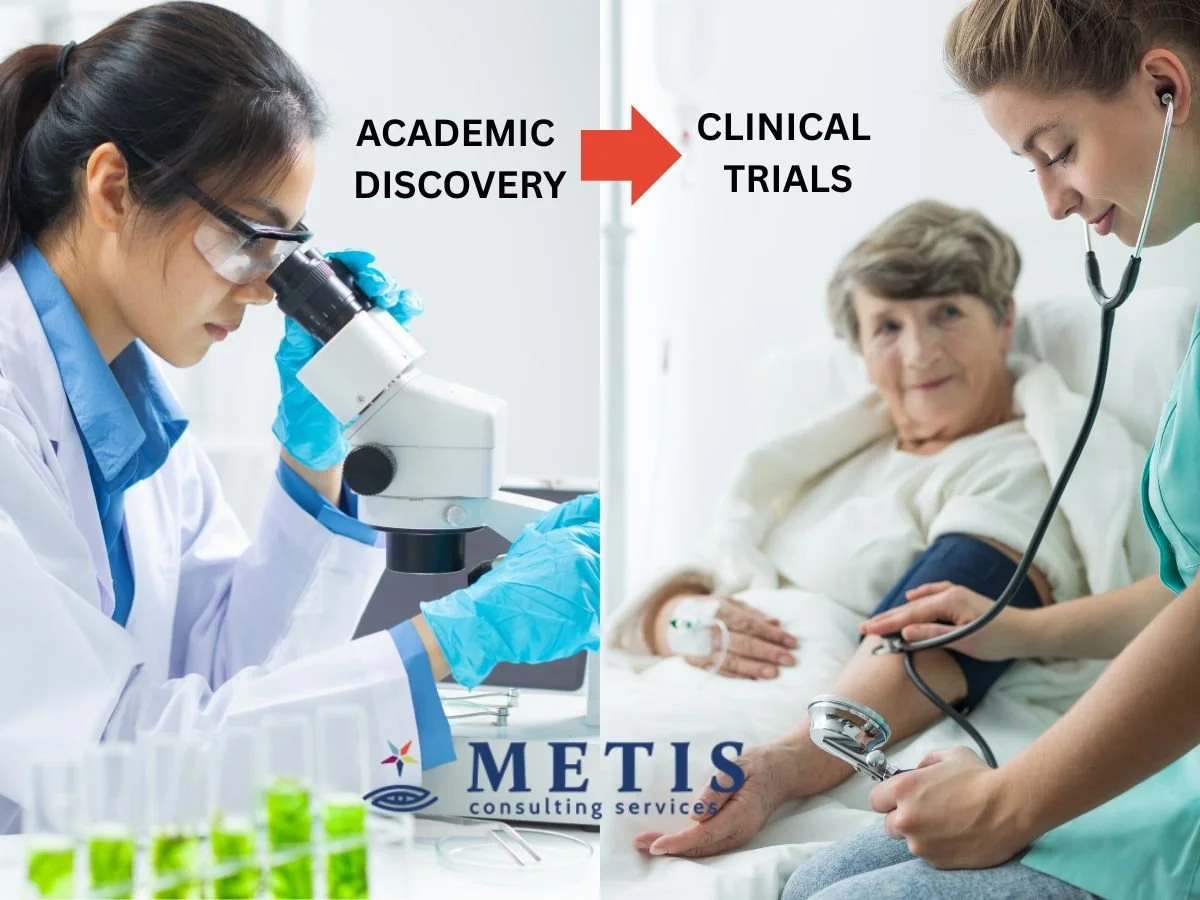
From Academic Discovery to Clinical Trials: Transitional Priorities
Moving a drug from academic discovery to clinical trials is one of the most critical phases in pharmaceutical development. Academic research often focuses on understanding disease mechanisms and identifying potential targets
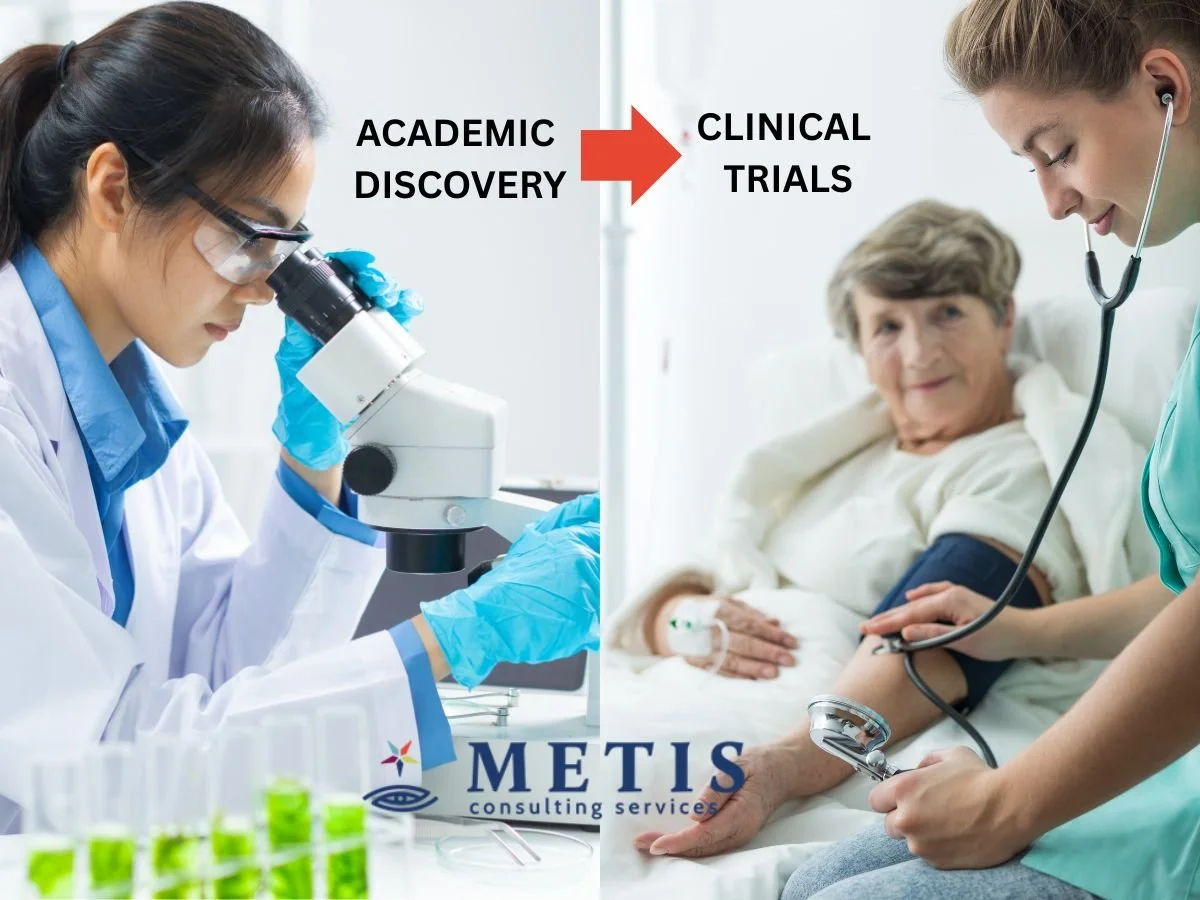
This week in the Guardrail, we explore the rigorous journey between bench-side innovation and bedside application. Read the article for the essential regulatory and manufacturing milestones necessary to successfully transition a drug from academic discovery into human clinical trials
By Michael Bronfman
March 9, 2026
Moving a drug from academic discovery to clinical trials is one of the most critical phases in pharmaceutical development. Academic research often focuses on understanding disease mechanisms and identifying potential targets. Translating those discoveries into therapies that can be tested in humans requires careful planning, rigorous validation, and a strong focus on regulatory and operational priorities.
The transition from academic discovery to clinical development is not automatic. Many promising compounds fail to progress because key priorities are overlooked. Companies that understand these priorities can increase the likelihood of successful trials and regulatory approval.
Understanding the Gap Between Discovery and Development
Academic labs are excellent at generating novel ideas and identifying biological targets. However, academic research is usually exploratory. Experiments may be small-scale, conditions controlled, and outcomes focused on understanding mechanisms rather than therapeutic benefit.
Clinical development requires a shift. Compounds must be reproducible, manufacturable, and safe for human testing. Regulatory requirements for documentation, quality, and ethics become central.
Filling this gap requires early planning for pharmacology, toxicology, and chemistry manufacturing and controls, known as CMC.
Establishing a Strong Preclinical Package
Before a drug can enter clinical trials, an extensive preclinical package is essential. Preclinical studies show safety and provide dosing guidance for first-in-human studies.
Key areas include:
Pharmacokinetics and pharmacodynamics, understanding how the drug behaves in the body and its mechanism of action
Toxicology, assessing possible harmful effects in relevant animal models
Formulation and stability, guaranteeing the drug can be reliably manufactured and stored
The FDA provides guidance on preclinical safety evaluation at https://www.fda.gov/regulatory-information/search-fda-guidance-documents/s6r1-preclinical-safety-evaluation-biotechnology-derived-pharmaceuticals
A strong preclinical package increases confidence for regulatory submission and trial planning.
Regulatory Engagement Early and Often
Early engagement with regulators is critical. Discussions with the FDA or EMA can clarify what data is needed to move into clinical trials.
Pre-IND (pre-Investigational New Drug (pre-IND) meetings or Scientific Advice meetings with EMA allow sponsors to present plans and receive feedback. This reduces the risk of surprises during submission review.
Regulatory guidance and meeting information can be found at:
Translating Academic Findings Into Clinical Protocols
Academic studies often use models that may not fully reflect human disease. Translating findings into a clinical protocol calls for careful consideration.
Clinical trial design must define endpoints, patient populations, and dosage regimens. Safety monitoring must be rigorous. Feasibility and patient recruitment plans should be realistic.
Collaboration between discovery scientists, clinical experts, and regulatory professionals ensures that the transition maintains scientific integrity while meeting clinical standards.
Manufacturing and Quality Considerations
Academic labs rarely operate under Good Manufacturing Practice (GMP) standards. Moving into clinical trials requires that compounds be manufactured under controlled conditions.
GMP ensures consistency, purity, and traceability. Sponsors must validate manufacturing processes, control raw materials, and document production.
FDA guidance on GMP requirements is available at
Early attention to manufacturing reduces delays and supports regulatory confidence.
Intellectual Property and Commercial Considerations
Transitioning a compound to clinical trials also demands focus on intellectual property. Patents protect innovations and support investment in development.
Sponsors must assess freedom-to-operate, patent coverage, and potential competitor activity. These considerations impact strategy and partnerships.
Establishing Risk Management Plans
Clinical development entails inherent risk. Safety, efficacy, and operational risks must be identified and mitigated.
Developing a risk management plan includes monitoring safety signals, contingency planning, and guaranteeing compliance with regulatory requirements.
This proactive method supports smooth trial conduct and regulatory inspection readiness.
Building Cross-Functional Teams
Successful transition entails collaboration across multiple disciplines. Discovery scientists, clinical operations, regulatory affairs, quality, and commercial teams must work together.
Effective coordination and mutual objectives avoid misalignment and accelerate progress.
Training and clear role definitions are essential to uphold compliance and accountability.
Patient Considerations and Ethics
Moving from discovery to human trials introduces ethical obligations. Patients must be protected via informed consent, risk minimization, and oversight by institutional review boards or ethics committees.
Clinical study protocols must clearly define inclusion and exclusion criteria, monitoring procedures, and termination rules.
Ethical conduct is mandatory and foundational to regulatory approval.
Timeline Planning and Milestones
Transition planning includes realistic timelines and milestones. From preclinical studies to IND submission and first patient dosing, each stage has dependencies.
Delays frequently occur due to insufficient data, regulatory questions, or manufacturing issues. Detailed planning helps teams foresee obstacles and allocate resources optimally.
Project management tools, milestone tracking, and clear communication reduce bottlenecks and improve efficiency.
Documentation and Data Validity
Data from discovery and preclinical studies must be well documented. Traceability from raw data to reports supports regulatory review and internal decision-making.
Audit-ready records, standardized reporting, and quality checks guarantee that evidence can be defended during inspections.
FDA guidance on data validity can be found at https://www.fda.gov/inspections-compliance-enforcement-and-criminal-investigations
Partnerships and External Expertise
Many organizations rely on external partners to support the transition. Contract research organizations, academic collaborators, and consultants bring specialized expertise.
Sponsors must manage these relationships carefully. Contracts, oversight, and communication plans ensure that responsibilities are clear and quality standards are met.
Glancing Ahead
The transition from academic discovery to clinical trials is a defining phase in drug development. Attention to preclinical data, regulatory engagement, manufacturing, risk management, and team alignment sets the stage for successful clinical programs.
Organizations that plan deliberately, execute rigorously, and sustain compliance are more likely to advance therapies safely and efficiently to patients.
The transition from discovery to development is fraught with complexity, but you don’t have to navigate it alone. Contact Metis Consulting Services today to leverage our deep regulatory expertise and strategic oversight, ensuring your breakthrough therapy moves from the lab to the clinic with precision, speed, and total compliance.

Regulatory Pathways FDA and EMA – Are You Prepared for Ongoing AI Supervision?
Regulatory pathways in the United States and Europe are becoming more complex. The FDA and the EMA continue to raise expectations for data quality, transparency, and oversight. At the same time, regulators are expanding their use of advanced digital tools, including artificial intelligence, to review submissions, monitor compliance, and identify risk.

As regulators deploy advanced digital tools to scan for inconsistencies in real-time, pharmaceutical companies must redefine their approach to data integrity and organizational transparency to stay ahead of the curve. This week, the Guardrail analyses how the FDA and EMA are transitioning from milestone-based reviews to the new model of continuous AI-driven oversight.
By Michael Bronfman, for Metis Consulting Services
February 16, 2026
Regulatory pathways in the United States and Europe are becoming more complex. The FDA and the EMA continue to raise expectations for data quality, transparency, and oversight. At the same time, regulators are expanding their use of advanced digital tools, including artificial intelligence, to review submissions, monitor compliance, and identify risk.
For pharmaceutical companies, this shift changes how regulatory readiness should be defined. It is no longer enough to meet written requirements alone. Companies must be prepared for continuous supervision supported by AI-driven systems that can detect patterns, inconsistencies, and signals faster than traditional reviews.
Understanding how FDA and EMA pathways work today and how AI supervision fits into them is essential for long-term success.
Core FDA and EMA Regulatory Pathways
The FDA and EMA share the same goal of protecting public health, but their regulatory pathways differ in structure and process.
In the United States, drugs are typically approved through the New Drug Application or Biologics License Application process. These submissions include clinical, nonclinical, and manufacturing data. The FDA evaluates whether the product is safe, effective, and manufactured under appropriate quality standards.
FDA drug approval information is available at https://www.fda.gov/drugs
In Europe, the EMA oversees centralized marketing authorization for many products. A single approval allows access to all European Union member states. The review is conducted by scientific committees that assess quality, safety, and efficacy.
EMA regulatory guidance can be found at https://www.ema.europa.eu
While the pathways differ, both agencies expect robust data, strong quality systems, and ongoing compliance after approval.
The Shift Toward Continuous Oversight
Historically, regulatory oversight followed clear milestones. Sponsors submitted data. Regulators reviewed it. Inspections occurred at defined points. Today, oversight is becoming more continuous.
Post approval commitments, real-world evidence, and ongoing safety reporting mean that regulators receive data throughout a product life cycle. AI systems allow agencies to process large volumes of information efficiently.
This means issues may be identified earlier and more frequently. Trends that once took years to surface can now be detected in near real-time.
How AI Is Used by Regulators
Regulators use artificial intelligence in several ways. These tools help prioritize reviews, flag anomalies, and focus inspections on higher risk areas.
For example, AI can analyze adverse event reports to identify safety signals. It can review clinical datasets for unusual patterns. It can also examine manufacturing data to detect deviations or data integrity concerns.
The FDA has published information on its digital transformation efforts.
The EMA is also investing in advanced analytics to support regulatory science and supervision. More information. While AI does not replace human judgment, it guides attention and speeds decision-making.
What This Means for Regulatory Submissions
AI supervision changes how submissions are evaluated. Inconsistent data, unexplained outliers, and poor documentation are easier to detect.
Sponsors must ensure that datasets are clean, traceable, and well explained. Narrative justifications should align with underlying data. Discrepancies between modules or sections can trigger questions.
Regulators may compare current submissions with historical data from the same sponsor. Patterns of issues across programs may influence review focus.
This makes consistency and standardization across submissions more important than ever.
Data Integrity Under AI Review
Data integrity has long been a regulatory focus. AI-driven oversight raises the bar further.
Systems that automatically scan data can detect missing values, duplicate entries, or unusual trends. Manual workarounds and undocumented processes are more likely to be noticed.
Sponsors should ensure that data governance is strong across clinical, manufacturing, and pharmacovigilance systems. Access controls, audit trails, and validation remain essential.
Preparing for AI supervision means assuming that data will be examined at scale and in detail. FDA data integrity guidance is available for reference.
Clinical Trial Data and AI Scrutiny
Clinical trial data is a major focus of regulatory review. AI tools can evaluate consistency across sites, subjects, and time points.
For example, unusually similar data across different sites may raise questions. Unexpected enrollment patterns or protocol deviations may be flagged.
Sponsors should strengthen monitoring and quality control during trials. Early detection of issues allows corrective action before submission.
Clear documentation of deviations and decisions is critical. AI may identify the issue, but human reviewers will expect clear explanations.
Manufacturing and Quality Oversight
Manufacturing data is another area where AI supervision plays a growing role. Process data, deviation reports, and change records can be analyzed to identify trends.
Repeated deviations, delayed investigations, or weak corrective actions may draw attention. AI can also compare performance across sites or products.
Companies should ensure that quality systems are proactive rather than reactive. Trending and root cause analysis should be meaningful and timely. The FDA quality system expectations are clearly outlined on their site. Strong quality culture supports both compliance and operational performance.
Pharmacovigilance and Safety Monitoring
Post-market safety surveillance generates large volumes of data. AI helps regulators process adverse event reports more efficiently.
Signals may be detected earlier, leading to faster regulatory action. Sponsors must ensure timely and accurate reporting.
Safety databases should be validated and monitored. Follow-up procedures must be consistent and documented. Preparedness means having clear roles, trained staff, and reliable systems.
Here is a good description of FDA pharmacovigilance requirements
Transparency and Traceability Expectations
AI supervision increases expectations for transparency. Regulators may ask how conclusions were reached and how data was managed.
Traceability from raw data to final conclusions is essential. This applies to clinical analyses, manufacturing decisions, and safety assessments.
Documentation should be clear and accessible. Teams should be able to explain decisions without relying on informal knowledge.
This level of readiness supports inspections and builds regulator confidence.
Organizational Readiness for Ongoing Supervision
Preparing for AI-supported oversight is not just a technical challenge. It is an organizational one.
Leadership must support investment in systems, training, and governance. Teams must understand that oversight is continuous, not episodic.
Cross-functional collaboration becomes more important. Issues in one area may affect regulatory perception across the organization.
Training programs should emphasize data quality, documentation, and accountability.
Engaging With Regulators Proactively
Open communication with regulators remains important. Early discussions can help clarify expectations and reduce risk.
Sponsors should be prepared to explain how data is generated, managed, and reviewed. Transparency builds trust.
Regulatory science is evolving. Staying informed about guidance updates and regulatory initiatives helps organizations adapt. 1 2
Looking Ahead
AI supervision is becoming a permanent part of the regulatory landscape. It allows regulators to oversee more products, more data, and more activities with greater efficiency.
For pharmaceutical companies, this means readiness must be continuous. Quality, consistency, and transparency are no longer just best practices. They are essential expectations.
Organizations that embrace this shift and strengthen their regulatory foundations will be better positioned to navigate FDA and EMA pathways with confidence
Don’t wait to discover the gaps in your data integrity or submission strategy. Metis Consulting Services provides the expert governance frameworks and guidance you need to ensure your organization is not just compliant, but competitive.
Contact: hello@metisconsultingservices.com to fortify your regulatory foundation and navigate the complexities of FDA and EMA pathways with total confidence.

Pharma's Future: Addressing Political Challenges to DEI
As national debates over diversity, equity, and inclusion (DEI) continue to intensify, these conflicts are beginning to shape biomedical policy, clinical research, workforce development, and the long-term direction of American innovation.

This week in the Guardrail, Michael Bronfman analyzes the intensifying national debate surrounding diversity, equity, and inclusion (DEI) and how the rejection of these ideas by certain political movements is beginning to reshape biomedical policy, clinical research, and the pharmaceutical sector.
Written by Michael Bronf, for Metis Consulting Services
December 8, 2025
The pharmaceutical sector does not exist in isolation. It depends on public trust, scientific talent, federal research funding, and a stable regulatory environment. It also depends on a workforce that understands the needs of patients from many backgrounds. As national debates over diversity, equity, and inclusion continue to intensify, these conflicts are beginning to shape biomedical policy, clinical research, workforce development, and the long-term direction of American innovation.
Much of the current cultural debate centers on disagreement over who benefits from DEI programs. These frameworks often support groups that have historically faced barriers in education, employment, and health care. This list is wide because real patient populations are wide. It includes women, pregnant women, non binary people, transgender people, the LGBTQ+ community, young people, older adults, Black people, Indigenous people, Latinos, Asian Americans, Pacific Islanders, Middle Eastern communities, North African communities, mixed race individuals, people with disabilities, neurodivergent individuals, people with chronic illnesses, people with mental health conditions, military veterans, active duty service members, military spouses, military families, first generation college students, low income individuals, people from rural communities, formerly incarcerated individuals, people experiencing homelessness, religious minorities, Muslims, Jews, Sikhs, atheists, secular individuals, refugees, immigrants, working parents, caregivers, union workers, gig workers, and freelancers.
Critics argue that supporting such a broad list transforms DEI into an ideological system. Supporters argue that these are simply the people that the health care system already serves. These disagreements form the foundation of a cultural conflict that increasingly influences life sciences policy.
The Rise of Organized Opposition to DEI
DEI programs expanded across universities, hospitals, national laboratories, and scientific training programs over the past two decades. Supporters inside the biomedical and pharmaceutical sectors argue that these programs improve representation in clinical trials, strengthen the science workforce, and help reduce disparities in health outcomes. The National Institutes of Health has long published guidance supporting diverse enrollment to produce more reliable trial results.
Opponents offer a different view. Many state lawmakers and national political figures argue that DEI encourages selection based on identity rather than scientific merit. They say that these programs add unnecessary bureaucracy, restrict academic freedom, and fail to improve overall performance. A growing number of states, including Florida, Texas, and several Midwestern states, have passed laws that restrict or remove DEI policies from public universities and state agencies.
These policies now influence medical schools, residency training, and state research funding. Over time, they will affect the talent pathways that feed into pharmaceutical innovation.
How Opposition to DEI Connects to the Term Woke
The term “woke” has become a broad label for progressive cultural ideas, such as awareness of racial disparities, gender inclusion, and the ongoing effects of historical discrimination. Supporters argue that these concepts help organizations understand how policies may affect different communities. Critics argue that the term describes a rigid belief system that demands compliance and discourages open debate.
Several political commentators and media influencers have built large audiences by claiming that woke culture shapes hiring, education, and scientific research in ways that limit open inquiry. They argue that institutions should avoid cultural messaging and instead emphasize neutrality and performance.
The pharmaceutical sector now operates at the center of this conflict. Large companies depend on diverse global talent and international regulatory systems. However, many lawmakers want to limit or remove DEI practices from government agencies, universities, and medical systems. This tension will influence the scientific workforce for years to come.
Why Some Conservative Figures Criticize Senators Who Support DEI or Moderate Positions
Although many conservative senators strongly oppose DEI, others take more balanced positions or support limited forms of diversity programming. This has created friction within political movements that want a total removal of DEI from public institutions.
During election cycles, these disputes become more visible. Commentators often accuse moderate senators of being too close to universities, technology companies, or multinational corporations. They argue that these institutions promote cultural values that weaken national identity. They also say that these lawmakers fail to confront DEI programs inside medical research, federal grants, or regulatory agencies.
These disagreements matter for the pharmaceutical sector because the Senate controls agency confirmations, federal budgets, and the long-term direction of the National Institutes of Health and the Food and Drug Administration.
How Opposition to DEI May Affect Medical Research
Clinical trials offer the clearest example. Trial accuracy depends on participants who reflect real patient populations. Without broad enrollment, trial outcomes may not predict how a drug performs once it reaches the market. The Food and Drug Administration has reported that many trials still lack representation from Black, Latino, Indigenous, and rural populations.
Supporters of DEI programs argue that inclusive enrollment strategies protect public safety. Critics argue that these requirements slow development and add burdens to research sponsors. They also say that clinical trial design should focus on speed rather than representativeness.
This disagreement matters because the United States faces rising rates of heart disease, diabetes, cancer, autoimmune disorders, and neurodegenerative conditions. These conditions affect communities differently. If trial enrollment becomes less diverse, the accuracy of safety and efficacy data may weaken.
How DEI Shapes the Talent Pipeline
The life sciences sector faces a growing shortage of skilled workers in biomanufacturing, regulatory affairs, clinical operations, and data science. Many industry leaders argue that expanding opportunities for students from underrepresented backgrounds strengthens the long-term workforce.
Opponents of DEI argue that mentorship and training programs for specific groups create unfair advantages. They say that evaluation should occur without any consideration of identity. They also claim that DEI statements in hiring reduce open expression in academic and industrial settings.
If political pressure eliminates programs that support early interest in science and medicine, then the life sciences sector may face a long term talent shortage. Companies may struggle to hire clinical researchers, regulatory specialists, and biomanufacturing staff. This would slow the development of new therapies and increase costs.
How Cultural Conflict Shapes Public Trust
Public trust in health agencies has declined in recent years. Critics blame this decline on cultural conflict. They argue that agencies have adopted ideological messages that distract from their core mission. They claim that DEI training and cultural outreach weaken neutrality.
Supporters argue the opposite. They say that respectful communication builds trust, especially among communities that have experienced unequal treatment in the health system. A well-known example is the communication strategy used during the national COVID-19 vaccination campaign.
Pharmaceutical companies will need to understand how these debates influence risk perception, trial participation, and treatment acceptance.
The Objectives of the Anti-DEI Movement and Why They Matter to Pharma
Opponents of DEI describe three main goals.
Removal of identity-based programs from public institutions
Reduction of ideological influence in science and education
A shift toward what they call merit-based evaluation
If this movement succeeds, the pharmaceutical sector will see meaningful changes. Medical schools may cut DEI offices. Universities may remove diversity training from research programs. Federal agencies may reduce or eliminate expectations for inclusive clinical trial enrollment.
A deeper objective also exists. Many DEI critics want to move public institutions away from international collaboration and toward a nationalist approach to science in scientific research.
A nationalist model would limit the exchange of international talent, weaken cross-border research partnerships, and increase regulatory variability. All of these changes could raise development costs and slow progress toward new therapies.
What the Pharmaceutical Sector Should Watch in the Next Five Years
Several trends deserve close attention.
More states may restrict DEI in universities, teaching hospitals, and public research centers.
Congressional debates may influence whether the National Institutes of Health continues to fund diversity-based training grants.
The Food and Drug Administration may face political pressure to revise its trial diversity expectations.
Universities may adjust hiring practices due to legal challenges, reducing the academic pipeline that feeds industry research.
Cultural conflict may influence how patients interpret scientific guidance, which will affect enrollment, adherence, and overall health outcomes.
The debate over DEI and woke culture is more than a political argument. It is a policy struggle that directly affects pharmaceutical innovation, clinical research, workforce development, and public trust. Some political movements see DEI as a threat to fairness and national identity. They want to remove it from government, education, and scientific institutions. Their efforts are already reshaping state laws, federal debates, and the future of medical research.
The pharmaceutical sector depends on broad research diversity, a strong and reliable talent pipeline, and stable levels of public trust. As political movements push for major changes in DEI policy, industry leaders will need to understand these forces and adapt strategies to protect innovation and patient safety.
These are complex and evolving policy waters. To get the best data and maintain public trust, it's important to develop an adaptable strategy proactively—contact Metis Consulting Services today to ensure your company is prepared for the future, and keep the patient as the priority. Email: hello@metisconsultingservices.com or stop by our website metisconsultingservices.com