
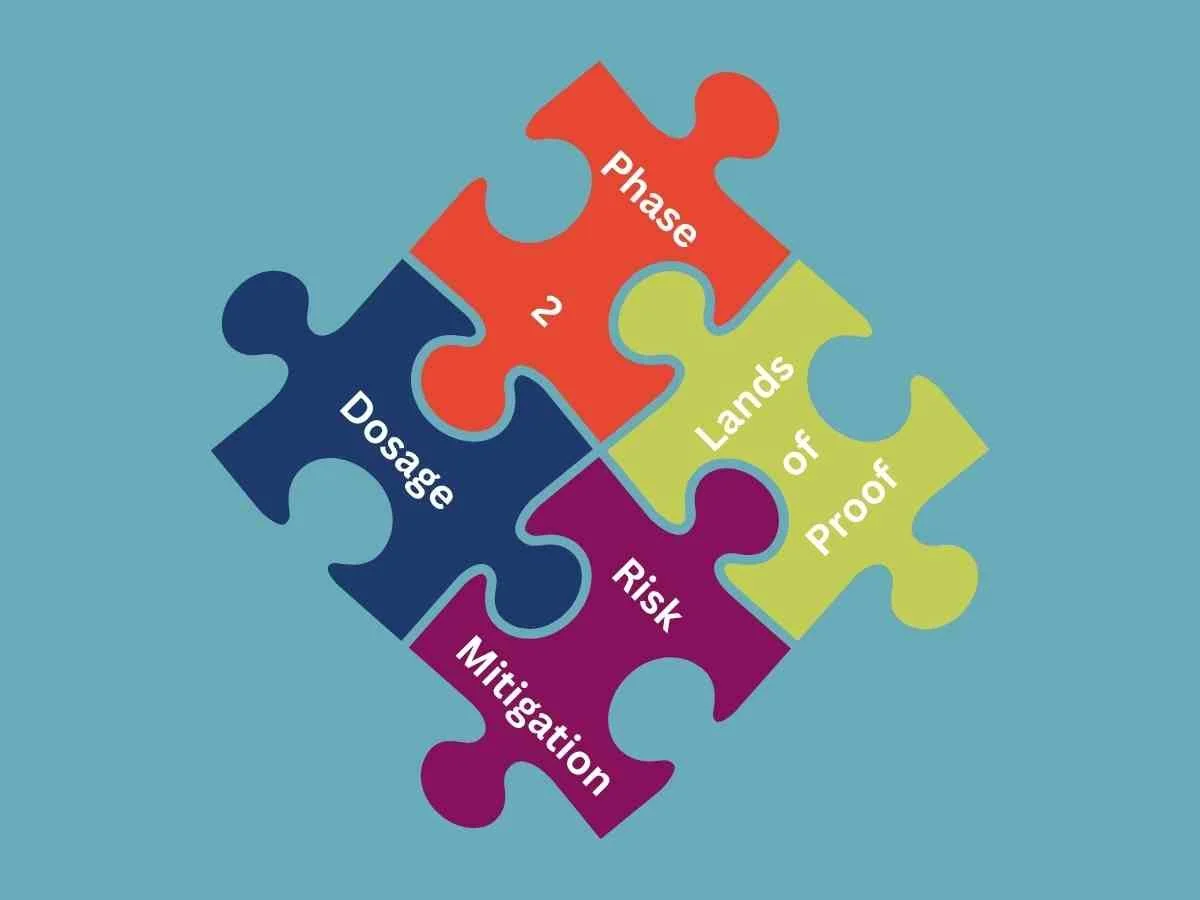
The Real Stakes of Phase 2: You Cannot Afford to Wait
Phase 2 is the ultimate "make or break" moment for drug development and why cutting corners now leads to catastrophic failure later. This Guard Rail blog breaks down the essential risk-mitigation strategies needed to bridge the treacherous gap between initial proof of concept and a successful Phase 3 trial.
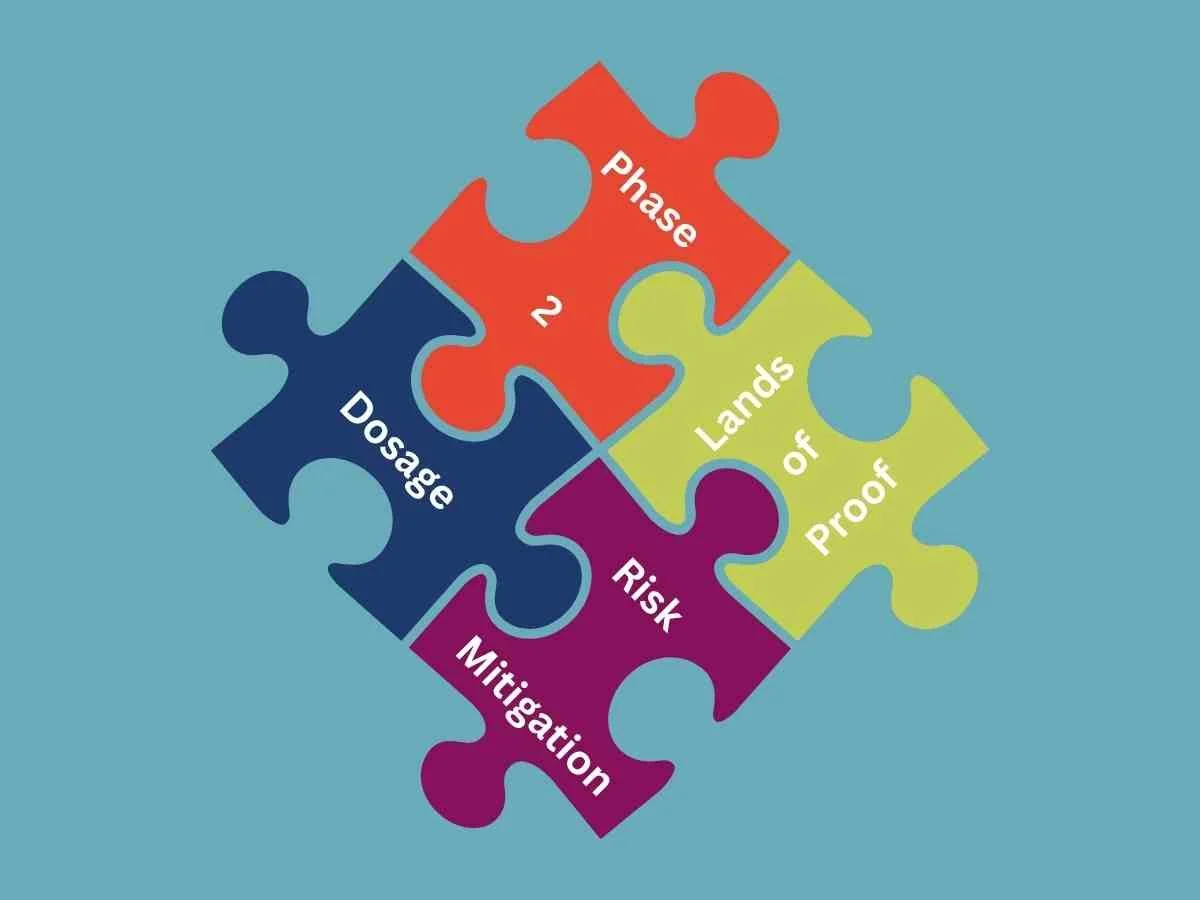
This week, we explore why Phase 2 is the ultimate "make or break" moment for drug development and why cutting corners now leads to catastrophic failure later. This Guard Rail blog breaks down the essential risk-mitigation strategies needed to bridge the treacherous gap between initial proof-of-concept and a successful Phase 3 trial.
By Michael Bronfman
In the world of drug development, Phase 2 is often called the "Lands of Proof." This is the moment when a company moves from testing safety in a few healthy people to seeing whether the drug actually works in patients with the disease. It is an exciting time, but it is also the most dangerous part of the journey.
Many teams make the mistake of thinking they can fix small problems later in Phase 3. They might say, "We will figure out the final dose later," or "We will refine the manufacturing process once we have more data." In the pharmaceutical industry, this "wait and see" approach is a recipe for disaster.
Risk mitigation must happen right now. If you do not resolve your biggest uncertainties during Phase 2, you are not just delaying a problem. You are risking billions of dollars and years of hard work.
The Massive Cost of Failure in Phase 3
The jump from Phase 2 to Phase 3 is a giant leap in terms of cost and complexity. While Phase 2 might involve a few hundred patients, Phase 3 often requires thousands.
If a drug fails in Phase 3 because of a risk that could have been identified earlier, the financial hit is devastating. According to reports from Deloitte, the cost to bring a single drug to market has climbed to over two billion dollars.
Most of that money is spent during the final stage. If you enter Phase 3 with a "weak" dose or a "fuzzy" understanding of which patients benefit most, you are gambling with the future of the company. Fixing a mistake in Phase 2 costs thousands. Fixing that same mistake in Phase 3 costs millions.
Solving the Dosage Puzzle
One of the biggest risks in Phase 2 is choosing the wrong dose. This is known as "dose finding."
If the dose is too low, the drug will not show enough benefit, and the trial will fail. If the dose is too high, the side effects might be too many for the government to approve it.
Many companies rush through this. They pick a dose that looks "good enough" so they can start the big trials faster. However, the Food and Drug Administration (FDA) has become much stricter about this. They want to see that you have tested several different doses to find the "sweet spot."
By spending the extra time in Phase 2 to run a robust dose-ranging study, you build a solid foundation. You go into Phase 3 with total confidence that you are giving patients the best possible chance of success.
Identifying the Right Patient Population
Not every patient with a specific disease reacts to a drug the same way. One of the best ways to mitigate risk is to figure out exactly who your "super responders" are.
During Phase 2, researchers look for biomarkers. These are biological signs in the blood or tissue that suggest a patient will respond well to the treatment.
If you ignore these signs and try to test the drug on everyone in Phase 3, your results might get "watered down." The drug might work great for 20 percent of people but not at all for the other 80 percent. If you mix them all together, the average result might look like the drug does not work.
By using Phase 2 to narrow down the target group, you make your Phase 3 trial much smaller, faster, and more likely to succeed. You can find more information on how patient selection impacts trials HERE.
Manufacturing and Supply Chain Hurdles
It is easy to make a small amount of a drug in a lab. It is very hard to make enough for ten thousand people while keeping the quality exactly the same every single time.
A major risk that teams "kick down the road" is the manufacturing process. They use a "Version 1" process for Phase 2 and plan to switch to a "Version 2" for Phase 3.
The problem is that the FDA considers the manufacturing process to be part of the drug itself. If you change how you make the drug, you have to prove that the "new" drug is the same as the "old" drug. This can lead to massive delays or even require you to redo your studies.
Addressing manufacturing risks during Phase 2 ensures that what you test in the final stages is exactly what will be sold in pharmacies. Consistency is the key to safety and approval.
The Regulatory Conversation
You should never treat the government regulators as a surprise at the end of the race. Risk mitigation involves talking to the FDA or the European Medicines Agency early and often.
Phase 2 is the perfect time for an "End of Phase 2" meeting. This is where you present your data and plan to the regulators for the big trial. If they have concerns about your safety data or your goals, you want to know that now.
Waiting until after Phase 3 to find out the FDA does not like your study design is a nightmare scenario. Early transparency reduces the risk of rejection and builds trust with the people who hold the keys to the market.
Protecting the Patients
Beyond the money and the business goals, the most important reason to mitigate risk is the people. Every person who signs up for a clinical trial is a volunteer who wants to help find a cure.
If we move into Phase 3 with known risks that we chose not to solve, we are putting those volunteers at unnecessary risk. We owe it to the patients to be as certain as possible about the safety and the logic behind the study before we ask thousands of people to participate.
High-quality science in Phase 2 leads to safer trials. When we prioritize risk management early, we protect the integrity of the medical profession and the lives of the people we serve.
Key Actions
To ensure a successful transition out of Phase 2, teams should focus on these three pillars:
Data Certainty: Do not settle for "maybe." Use Phase 2 to get clear answers on dose and efficacy.
Process Stability: Finalize how the drug is made and how it will be delivered before the big spend.
Open Dialogue: Work with regulators to make sure the finish line is clearly defined.
The motto for Phase 2 should always be: Fail fast or fix it now. Dealing with the hard truths today is the only way to ensure a breakthrough tomorrow. Waiting to resolve these issues later is not a strategy; it is a gamble that the industry simply cannot afford.
Don’t leave your clinical legacy to chance—master the "Lands of Proof" before the stakes become insurmountable. Contact Metis Consulting Services today to fortify your strategy, optimize your data, and turn your scientific vision into a regulatory reality.

Clinical Trial Optimization
Clinical trials are the backbone of drug development. They provide the evidence needed to show that a product is safe and effective. They also represent one of the largest investments a pharmaceutical company will make

This week in the Guardrail, we dig deeper into clinical trial optimization. This article breaks down the essential strategies—from patient-centric design to proactive compliance—required to navigate the high-stakes journey from protocol to regulatory approval.
By Michael Bronfman for Metis Consulting Services
February 9, 2026
Clinical trials are the backbone of drug development. They provide the evidence needed to show that a product is safe and effective. They also represent one of the largest investments a pharmaceutical company will make. As development costs rise and competition intensifies, optimizing clinical trials is no longer just a nice-to-have or a good idea; it is essential.
Clinical trial optimization means designing and running studies in a way that protects patients, meets regulatory criteria, controls cost, and delivers clear answers. It is about working smarter, not cutting corners.
Why Optimization Matters More Than Ever
Clinical trials take time. Phase 2 and 3 trials may last several years from the first patient enrolled to the final data analysis. Delays are common and expensive. Missed enrollment targets, protocol amendments, and site performance issues can add months or even years to a program.
Each delay raises cost and reduces the effective patent life of a product. In competitive markets, delays can also mean losing the first-mover advantage. Optimization helps reduce these threats by improving planning, execution, and oversight.
Regulators expect sponsors to design trials that are scientifically sound and ethical. Poorly designed trials waste time and expose patients to unnecessary risk. Optimized trials support both business targets and regulatory compliance.
Strong Protocol Design Is the Foundation
Every optimized trial begins with a strong protocol. The protocol defines the study objectives, endpoints, population, and procedures. Weak protocols are one of the most common causes of trial failure.
Common protocol issues include excessively complex procedures, unclear endpoints, and overly restrictive eligibility criteria. These problems slow enrollment and increase protocol deviations.
Sponsors who involve cross-functional teams early have a higher success rate. Ideally, clinical, pharmacovigilance, regulatory, biostatistics, operations, and quality would all review protocol drafts. Early feedback identifies risks before the trial begins.
The FDA provides guidance on clinical trial design and conduct.
Patient Centric Design Improves Performance
Patients are at the center of clinical research, yet many trials are designed with little consideration for patient burden. Long visit schedules, frequent procedures, and complex instructions can discourage participation.
Optimized trials consider the patient experience. Simplifying visit schedules, decreasing unnecessary procedures, and using explicit communication improve enrollment and retention.
Patient-focused drug development initiatives encourage sponsors to incorporate patient perspectives.
FDA resources on this topic are available here
When patients stay engaged, data quality improves, and timelines are more predictable.
Site Selection and Support Are Critical
Clinical sites play a major role in trial success. Selecting sites based only on past performance or relationships may lead to poor results. Sponsors who use objective criteria such as patient population, access, staffing levels, and infrastructure are more likely to succeed.
Once sites are selected, how is ongoing support managed? Clear training, attentive communication, and realistic expectations help sites perform well.
High-performing sites reduce protocol deviations and data queries. This lowers the monitoring burden and improves inspection readiness.
Enrollment Planning Requires Realism
Enrollment challenges are one of the leading causes of trial delays. Overly optimistic enrollment projections often fail to account for competing trials, complex eligibility criteria, and patient availability.
Optimized enrollment planning uses real-world data where possible. This includes understanding disease prevalence, standard of care, and referral patterns.
Sponsors should also plan for contingencies. Backup sites, flexible enrollment strategies, and regular performance reviews help keep trials on track.
Data Quality Must Not Be an Afterthought
High-quality data is necessary for regulatory approval. Data errors, missing data, and inconsistencies can delay submissions and trigger regulatory questions.
Optimization includes building data quality into trial processes. Clear case report forms, standardized procedures, and timely data review help prevent issues.
Risk-based monitoring approaches focus attention on the most critical data and processes. The FDA provides guidance on monitoring clinical investigations.
These approaches support efficiency while continuing compliance.
Compliance Coordination From the Start
Optimized trials are designed with regulatory expectations in mind. This includes alignment on endpoints, comparators, and statistical analysis plans.
Early interaction with regulators can help clarify expectations and reduce surprises later. Meetings such as pre-IND and end-of-Phase 2 discussions grant valuable feedback.
FDA meeting guidance is also available.
Coordination with European regulators is also important for global programs. EMA guidance on clinical trials is found here.
Designing trials that meet multiple agency expectations lowers the need for additional studies.
Managing Protocol Amendments
Protocol amendments are common but costly. Each amendment adds time, cost, and operational complexity. Frequent amendments may also raise questions during inspections.
Optimized programs focus on reducing avoidable amendments. This starts with a thorough protocol review and feasibility assessment before trial launch.
When amendments are necessary, clear documentation and training are critical. Regulators expect sponsors to understand why changes were made and how they were implemented.
Vendor Supervision and Responsibility
Most clinical trials rely on vendors such as contract research organizations, laboratories, and data management providers.
While vendors perform key tasks, sponsors remain accountable.
Optimization includes strong vendor selection and oversight.
Clear contracts, defined roles, and success indicators help manage expectations.
FDA gives guidance on sponsor responsibilities. Regular oversight meetings and issue tracking help resolve problems early. Inspectors often review vendor oversight during inspections, making this a vital area of focus.
Inspection Readiness Starts During the Trial
Clinical trial optimization supports inspection readiness. Regulators may inspect sites, sponsors, or vendors during or after a trial.
Optimized trials maintain complete and accurate documentation. Training records, monitoring reports, and issue resolution logs should be readily available.
A culture of quality helps teams respond confidently to inspections. Waiting until a submission is filed to prepare for inspection is too late.
Using Lessons Learned Across Programs
Each trial generates valuable lessons. Optimized organizations capture and apply these understandings across programs.
Post-trial reviews can identify what worked and what did not; these insights may advance future protocol design, site selection, and operational planning.
Continuous improvement helps organizations remain competitive in a challenging environment.
Gazing Forward
Clinical trial optimization is an ongoing effort. As expectations evolve and pressures increase, sponsors must persist in refining their plans.
Well-optimized trials protect patients, support regulatory success, and control cost. They also help organizations deliver therapies to patients faster and with greater confidence.
In a market where delays are costly and scrutiny is high, optimization is far more than a best practice. It is a necessity.
Don’t let trial complexities stall your breakthrough. In an industry where every day counts, Metis Consulting Services can help you get to a streamlined, successful clinical program. Contact Metis Consulting Services today to optimize your path to approval and bring life-changing therapies to market faster.