
In Vivo CAR-T Cell Therapy: Rewriting the Rules of Cancer Treatment
This week in the Guardrail, we explore how in vivo CAR-T cell therapy is shifting the paradigm of genetic medicine by reprogramming a patient’s immune system directly inside their body.
By Michael Bronfman
The way we treat cancer is changing fast, and one of the biggest stories in medicine right now is happening inside the human body rather than inside a lab.
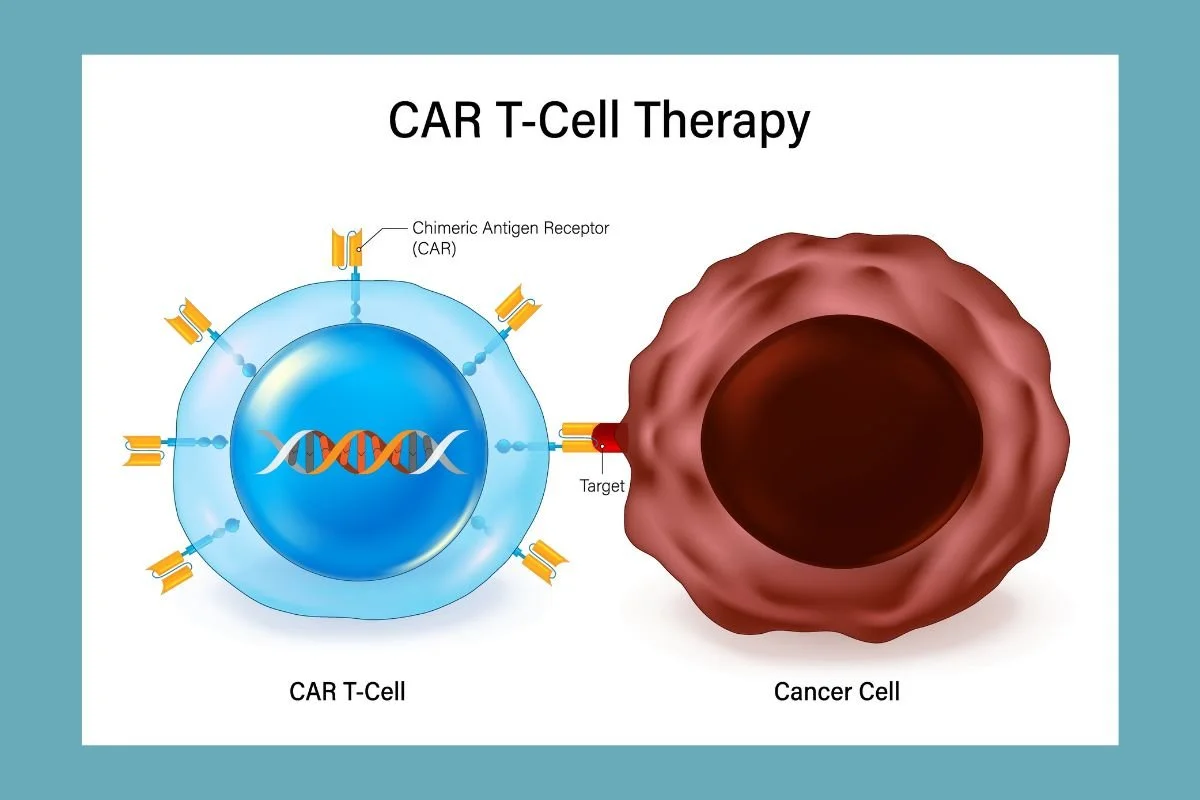
For years, doctors have used a groundbreaking treatment called CAR-T cell therapy to fight stubborn blood cancers. It works by taking a patient's own immune cells, giving them a genetic upgrade, and putting them back into the body to hunt down cancer cells. While this therapy has saved many lives, it is extremely hard to make, takes weeks to process, and costs a fortune.
Now, scientists are testing a new approach called in vivo CAR-T cell therapy. Instead of taking cells out of the body to upgrade them, this new method delivers the genetic instructions directly into the patient with a simple injection. It turns the patient's own body into the laboratory.
If this technology succeeds in human trials, it could make life-saving cancer treatments faster, cheaper, and available to millions of people around the world.
What Is Traditional CAR-T Cell Therapy?
To understand why this new discovery is such a big deal, it helps to look at how traditional CAR-T therapy works.
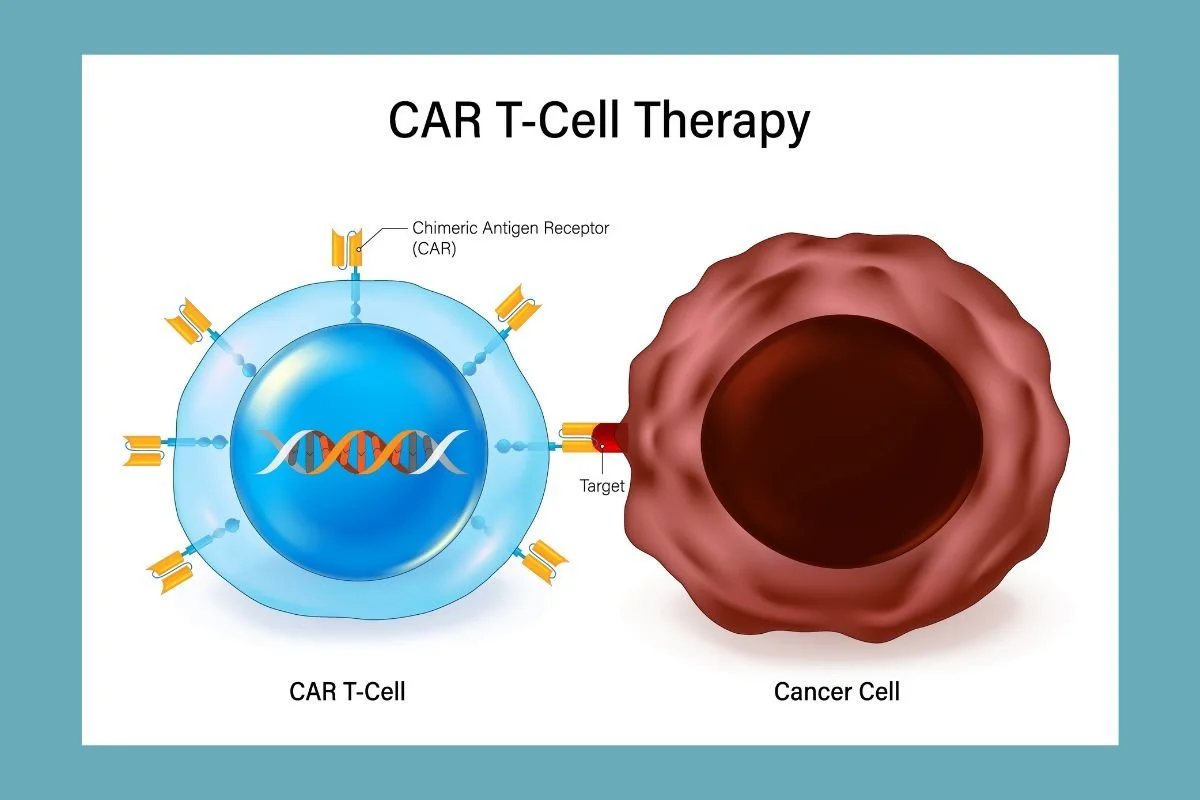
CAR stands for Chimeric Antigen Receptor. T-cells are a type of white blood cell in your immune system. You can think of T-cells as the body's internal security guards. They patrol your bloodstream, looking for infected cells or abnormal cells, and destroy them before they can cause harm.
However, cancer cells are tricky. They often disguise themselves so the immune system cannot see them. To overcome this, scientists figured out a way to retrain T-cells.
Here is the traditional step-by-step process:
Blood Collection: Doctors hook the patient up to a special machine to remove their blood, separate out the T-cells, and return the rest of the blood.
Shipping to a Specialized Lab: The harvested T-cells are frozen and shipped to a high-tech facility known as a Good Manufacturing Practice facility.
Genetic Engineering: In the lab, scientists use a harmless virus to insert a new gene into the T-cells. This gene tells the cells to grow special hooks on their surface called Chimeric Antigen Receptors. These hooks allow the T-cells to lock onto a specific protein found on cancer cells.
Cell Multiplication: The lab grows millions of these upgraded CAR-T cells over several weeks.
Chemotherapy: Before receiving the new cells, the patient goes through chemotherapy to clear out some of their old immune cells and make room for the upgraded ones.
Reinfusion: The new CAR-T cells are shipped back to the hospital and infused into the patient's bloodstream.
Once inside, these engineered T-cells act like guided missiles. They seek out cancer cells, lock onto them with their new receptor hooks, and destroy them.
The Big Problems with Traditional CAR-T
While traditional CAR-T therapy has cleared cancer in patients who had no other options left, the current system has massive drawbacks.
1. Time Limits
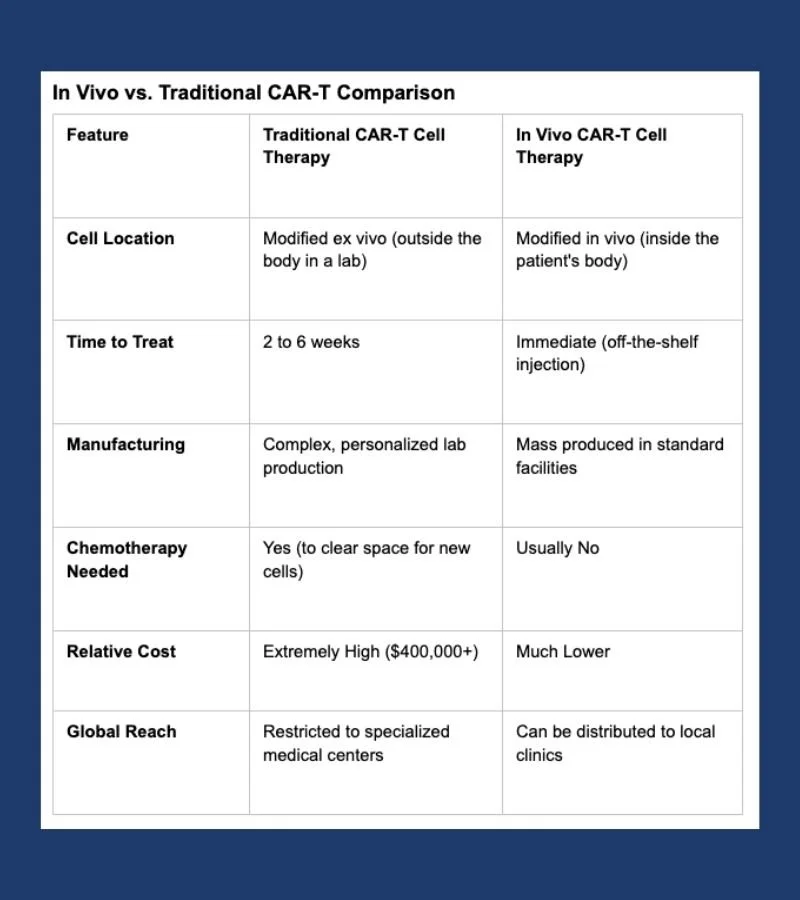
Making CAR-T cells outside the body takes anywhere from two to six weeks. For someone with fast-growing leukemia or lymphoma, waiting weeks for a treatment can be dangerous or even fatal.
2. High Costs
Because every batch of CAR-T cells must be custom-made for one specific individual in a sterile lab, the cost is enormous. A single treatment can cost between four hundred thousand and five hundred thousand dollars, not including hospital stays and extra medical care.
3. Complex Logistics
Shipping living human cells across the country under frozen conditions requires advanced temperature-controlled transport. If anything goes wrong during shipping or manufacturing, the batch can be ruined, forcing the patient to start over.
4. Limited Access
Because the process requires specialized hospitals and advanced manufacturing labs, CAR-T therapy is mostly available in wealthy countries and large academic medical centers. Most people in developing nations or rural areas cannot get access to it.
The In Vivo Breakthrough: How It Works
This is where in vivo CAR-T cell therapy comes in. The phrase in vivo means inside the living body. Instead of taking cells out, modifying them in a lab, and putting them back, in vivo therapy delivers the genetic instructions directly into the patient using a single injection.
Scientists do this with special delivery vehicles called nanoparticles or modified viruses.
Here is how the in vivo process works:
Building the Delivery Vehicle: Scientists create tiny bubbles made of fats, known as lipid nanoparticles, or use modified viral shells. Inside these tiny bubbles, they pack genetic instructions written in mRNA or DNA.
Adding the Navigation System: Scientists attach special targeting molecules to the outside of the nanoparticle. These molecules act like a GPS, ensuring the nanoparticle only attaches to T-cells and ignores other cells like liver or lung cells.
Direct Injection: The patient receives a simple IV drip or injection containing these targeted nanoparticles.
Reprogramming Inside the Body: The nanoparticles travel through the bloodstream, attach to the patient's T-cells, and deliver the genetic instructions.
Cancer Hunting: The T-cells read the instructions, start building chimeric antigen receptors on their surface, and immediately begin hunting down cancer cells inside the body.
This simple shift removes the need for cell extraction, lab manufacturing, complex freezing shipping lines, and heavy chemotherapy prep.
What the Research Shows
Recent preclinical studies have shown promising results using in vivo cell engineering.
Research in animal models demonstrates that mRNA delivered by lipid nanoparticles can successfully target T-cells inside living mice. Within days of injection, the mice generated functional CAR-T cells that successfully targeted and shrank tumors.
Researchers are also exploring precise gene editing tools like CRISPR inside the body. Instead of just adding a new gene temporarily, in vivo gene editing can permanently alter the T-cells or remove genes that cause cellular exhaustion, allowing the immune cells to fight cancer longer.
Scientists are publishing new findings regularly on research platforms like Atlantis Bioscience and medical news outlets like STAT News. These studies highlight how in vivo engineering could cut production times from weeks down to zero, turning a custom surgical procedure into an off the shelf pharmacy medication.
Potential Benefits Beyond Cancer
While cancer treatment is the main focus, in vivo CAR-T cell therapy could treat many other diseases.
Autoimmune Diseases: In conditions like lupus or multiple sclerosis, the immune system mistakenly attacks healthy tissue. Scientists are testing CAR-T cells designed to clear out malfunctioning immune cells, effectively resetting the immune system.
Heart Disease: Researchers have used in vivo CAR-T cells in animal models to target and remove scar tissue in damaged hearts, helping restore heart function after a heart attack.
Infectious Diseases: Modified immune cells could be trained to clear out persistent viral infections like HIV that hide inside human tissues.
Organ Transplants: Engineered regulatory immune cells could prevent organ rejection without requiring lifelong immune-suppressing drugs.
Challenges Ahead
While in vivo CAR-T therapy is exciting, scientists still need to solve several technical challenges before it becomes widely available for human patients.
1. Off-Target Effects
The delivery vehicle must be extremely accurate. If a nanoparticle delivers its genetic payload to the wrong cell type, like liver cells or brain cells, it could cause unintended side effects.
2. Overactive Immune Reaction
When CAR-T cells attack cancer cells, they release signal proteins called cytokines. If too many CAR-T cells activate at once inside the body, it can cause a dangerous condition called cytokine release syndrome, which causes high fevers and dangerous drops in blood pressure. Controlling the speed and strength of in vivo reprogramming is vital for safety.
3. Immune Rejection of Delivery Vehicles
The human immune system might spot the nanoparticles or viral vectors and destroy them before they reach the T-cells. Finding materials that can sneak past the body's defenses without causing an allergic reaction requires careful design.
4. Dosing and Control
With traditional CAR-T, doctors know exactly how many modified cells they put back into the patient. With in vivo therapy, it is harder to predict how many T-cells will pick up the gene instructions and how long those instructions will last.
The Road Ahead
In vivo CAR-T cell therapy represents a major shift in modern medicine. By turning the human body into its own medicine factory, scientists are opening the door to a future where genetic treatments are no longer rare luxury procedures reserved for a few, but standard therapies available at local healthcare clinics.
Clinical trials in humans are beginning to take off, testing different delivery vehicles and gene editing tools. Over the next decade, as researchers refine these methods, in vivo cell engineering could fundamentally reshape how we treat cancer, autoimmune conditions, and chronic heart disease.
With Metis Consulting Services you streamline your strategic roadmap, overcome complex regulatory hurdles, and maximize operational efficiency. Contact Metis Consulting Services today