
High Cholesterol Gone with One Treatment?
Base editing technology is moving beyond rare diseases to potentially eliminate high cholesterol with a single, highly precise genetic intervention. A profound paradigm shift from lifelong daily disease management to permanent, proactive prevention. Read about it this week in the Guardrail, The Power of Gene Editing
By Michael Bronfman
September 14, 2026
Imagine going to the clinic for a single shot and fixing your high cholesterol for the rest of your life. For millions of people worldwide, this sounds almost like magic. However, new medical progress is turning this dream into real science.
In mid 2025, A major pharmaceutical company bought out a smaller biotechnology company called Verve Therapeutics. In order to gain control of some advanced genetic tools. The main focus of this effort is a new experimental drug called VERVE 102.1.1
This drug uses a super precise technology called base editing. Unlike older ways of fixing genes, base editing acts like a tiny spell checker for your DNA. Instead of cutting the DNA strand completely, it neatly changes one single genetic letter. VERVE 102 targets a specific liver gene called PCSK9. By turning off this single gene, the body can clear bad cholesterol from the blood much faster.
As Phase 2 clinical trials expand, scientists and doctors are closely examining how this technology works. They are looking at what makes it safe and how it could completely change how we treat common long-term health conditions.
Understanding the Danger of High Cholesterol
To see why this new treatment is such a big deal, we first need to understand how cholesterol harms the human body.
Your body needs some cholesterol to build healthy cells. But too much of one specific type, called low-density lipoprotein (LDL) cholesterol, creates serious trouble. People often call LDL “bad cholesterol.” When you have high levels of LDL floating through your bloodstream for many years, it builds up inside the walls of your arteries. This buildup turns into hard spots called plaque.
Over time, plaque narrows and stiffens your blood vessels. This condition is known as atherosclerosis. When arteries get clogged, blood cannot flow easily to vital organs. If a piece of plaque breaks open, a blood clot can form quickly. This blockage can cause a sudden heart attack or a stroke. Cardiovascular disease remains the number one cause of death worldwide.
Many people try to lower their bad cholesterol by eating healthy food and exercising regularly. While lifestyle changes are important, they are often not enough. Many people have genes that make their bodies produce far too much cholesterol, no matter what they eat.
For decades, doctors have relied on daily pills called statins. Statins work well for millions of people, but only if they take them every single day. Many patients struggle to take a pill every day for the rest of their lives. Some people experience muscle pain or other side effects from statins. Others take their daily medication, but their bad cholesterol still stays at dangerous levels.
This gap in results is why scientists have been searching for a better, longer-lasting solution.
How PCSK9 Controls Your Cholesterol
To lower cholesterol permanently, scientists had to find the biological switch that controls it in the liver. They found that switch in a protein named PCSK9.
Your liver cells have small receptors on their surface that act like tiny nets. These receptors catch bad LDL cholesterol as it flows through the blood and pull it inside the liver cell to be broken down. After dropping off the cholesterol, the receptor returns to the cell surface to catch more. This recycling system keeps your blood clean.
This is where the PCSK9 protein comes in. PCSK9 binds to those cholesterol receptors and stops them from recycling. Instead of sending the receptor back to the surface, PCSK9 causes the cell to destroy the receptor inside.
When your body makes a lot of PCSK9, you have fewer receptors on your liver cells. Fewer receptors mean bad cholesterol stays in your blood longer.
When your body makes very little PCSK9, your liver cells recycle their receptors over and over again. This pulls huge amounts of bad cholesterol out of your bloodstream.
Years ago, researchers made a surprising discovery while studying people with rare genetic mutations. They found individuals who were born with a broken PCSK9 gene. These people naturally made almost no PCSK9 protein. Surprisingly, they were completely healthy, had extremely low bad cholesterol levels, and almost never developed heart disease.
This discovery proved that humans do not need active PCSK9 to live a healthy life. It gave scientists a clear goal. If they could turn off the PCSK9 gene in adults, they could permanently protect them from heart attacks.
The Evolution of Gene Editing: From Scissors to Spell Checkers
Early attempts to edit human genes used a famous tool called CRISPR-Cas9. Think of original CRISPR as a pair of molecular scissors. It finds a specific spot in your DNA and cuts clear through both strands of the double helix.
While cutting DNA can turn off a faulty gene, “double-strand breaks” bring some risks. When a cell tries to glue the two cut ends of DNA back together, it can sometimes make mistakes. It might accidentally delete a small section of DNA or rearrange pieces erroneously. When treating millions of people for a common illness, doctors need tools that are as safe and precise as possible.
This need for safety led to the innovation of base editing. Developed by researchers like David Liu at Harvard University, base editing is a major leap forward in genetic medicine.2
This need for safety led to the innovation of base editing. Developed by researchers like David Liu at Harvard University, base editing is a major leap forward in genetic medicine.2
Instead of cutting the DNA completely, a base editor works like a pencil and eraser. DNA is made of four chemical bases represented by the letters A, C, G, and T. A base editor travels to a specific spot in the DNA, opens the double strand gently without breaking it, and chemically changes one letter into another.
In VERVE 102, the base editor targets the PCSK9 gene in liver cells. It changes a single A letter to a G letter. This tiny, single-letter change alters the biological instructions just enough to stop the liver cell from producing the PCSK9 protein entirely. Because there are no double-strand cuts, the risk of accidental genetic damage drops significantly.
Inside the Treatment: Delivery via Lipid Nanoparticles
Having a clever genetic editor in a test tube is only half the battle. The biggest challenge in genetic medicine has always been delivery. How do you get the base editor inside millions of liver cells inside a living human body without causing harm?
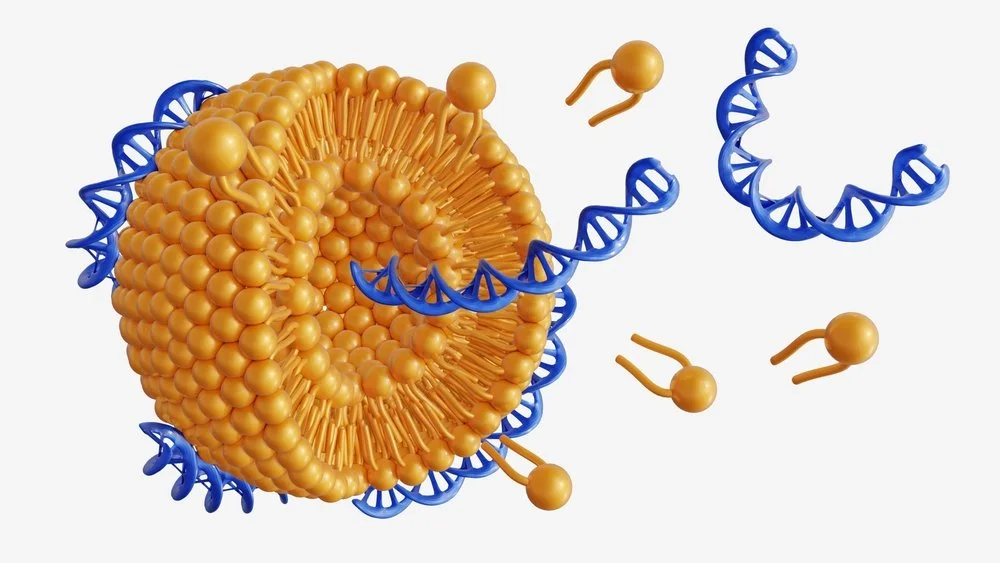
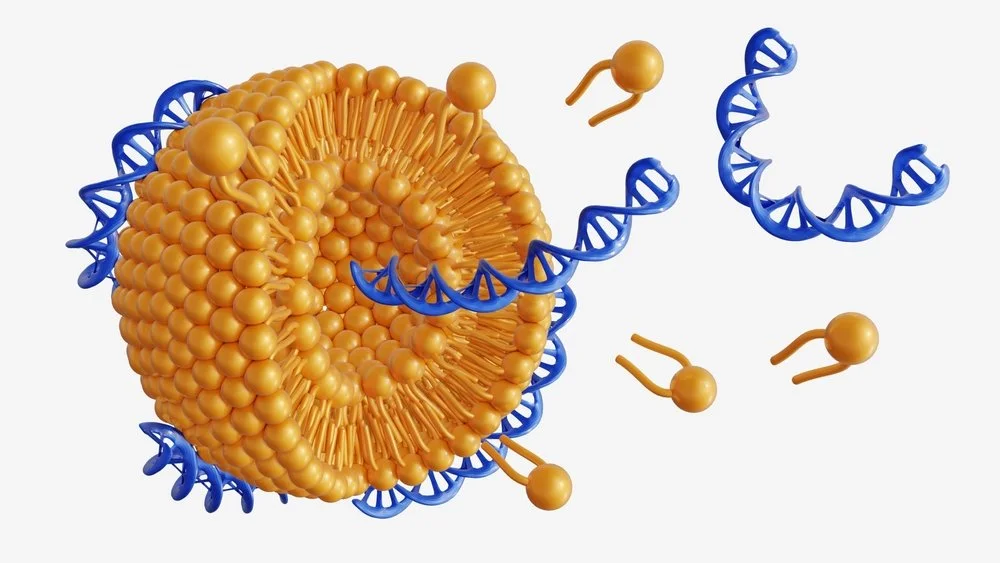
They are solving this by using tiny spheres of fat called lipid nanoparticles, or LNPs. If you received an mRNA vaccine for COVID-19, you are already familiar with lipid nanoparticles. They act like microscopic protective bubbles that carry fragile genetic instructions safely through the bloodstream.
Here is how the treatment works step by step:
- The Dose Preparation: The treatment contains two main components packaged inside the lipid nanoparticle. The first is messenger RNA that tells the cell how to build the base editing protein. The second is a guide RNA that acts like a GPS map, showing the protein exactly where to find the PCSK9 gene. 2.** Simple Infusion:** The patient receives the drug through a simple intravenous, or IV, line in their arm during a standard clinic visit. No surgery, bone marrow removal, or complex hospital stays are required.
- Liver Targeting: The lipid nanoparticles are specially designed with surface molecules that naturally attract them to liver cells. Once injected, they travel through the blood straight to the liver.
- Cell Entry: The liver cells absorb the lipid nanoparticles. Inside the cell, the lipid bubble dissolves, releasing the genetic instructions.
- The Edit: The liver cell uses the mRNA to build the base editor protein. Guided by the guide RNA, the editor enters the cell nucleus, finds the PCSK9 gene, and makes the single-letter change.
- Clean Departure: Once the edit is made, the editor protein and the lipid nanoparticle naturally break down and disappear from the body within a few days. But the change to the DNA remains permanent. Whenever that liver cell divides, its daughter cells inherit the edited, non-working version of the PCSK9 gene.3
Clinical Trial Results and What the Science Shows
The excitement surrounding VERVE 102 comes directly from real clinical data collected in human trials.
Earlier clinical studies testing the first version of this concept showed that base editing could dramatically lower PCSK9 protein levels in humans. However, early delivery methods caused temporary side effects, leading researchers to refine the lipid nanoparticle shell. The updated formulation, VERVE 102, was designed to be gentler on the body while delivering the same powerful genetic edit.
Recent clinical updates show impressive outcomes:
Dramatic Cholesterol Drop: Patients receiving a single high dose of VERVE 102 saw their bad LDL cholesterol levels fall by over 50 to 60 percent.
PCSK9 Shutdown: Measurement of the PCSK9 protein in the blood showed a drop of up to 88 percent, showing that the base editor successfully turned off the targeted gene in most liver cells.
Durable Impact: Follow-up data showed that the reduction in bad cholesterol remained steady over time. Because the edit is made directly to the cell's DNA, the liver continues to produce low cholesterol levels month after month without needing additional doses.
Shifting from Acute Care to Chronic Prevention
For decades, the standard model of medicine has been reactive care. We wait until a person develops high cholesterol or suffers a minor heart event, and then we prescribe a daily pill that they must take for thirty or forty years.
This model has major flaws. First, human behavior is imperfect. Studies show that within one year of being prescribed a daily statin, up to half of all patients stop taking their medication regularly. Life gets busy, prescriptions expire, pills are expensive, and side effects cause people to quit. Every day a patient skips their medication, their risk of a heart attack creeps back up.
Second, chronic care costs healthcare systems a lot. Decades of doctor visits, blood tests, and daily drug refills cost insurance companies, governments, and patients thousands of dollars per year.
Base editing introduces a completely new way of thinking about chronic disease. Scientists call it the "one and done" paradigm. Instead of managing a disease over a lifetime with thousands of pills, a patient receives a single therapeutic intervention that fixes the root cause forever.
If successful in broader Phase 2 and eventual Phase 3 trials, VERVE 102 could transform cardiovascular care from a lifelong burden into a single, proactive medical visit.
Safety and Regulatory Considerations
While the promise of base editing is huge, safety remains the top concern for doctors and regulators alike. When you take a daily pill, you can stop taking it if you experience bad side effects. But when you edit a person's DNA, you cannot hit an undo button. The change is permanent.
Because of this, researchers monitor clinical trial participants very closely for two primary risks:
Off-target Editing
An off-target edit happens if the guide RNA accidentally directs the base editor to the wrong spot in the genome. If the tool alters a healthy, important gene elsewhere in the cell, it could lead to unexpected health problems, including cancer. To prevent this, scientists use advanced computer modeling and deep sequencing to test millions of DNA sites, ensuring the guide RNA only binds to the target gene.
Liver Health and Inflammation
Because the drug delivers lipid nanoparticles directly to the liver, doctors must monitor patients for liver inflammation or temporary spikes in liver enzymes. Clinical trials track blood tests closely after the infusion to verify that the liver remains healthy and functions normally.
Regulatory bodies like the FDA require gene editing candidates to undergo years of careful tracking. Patients in early trials are followed for up to fifteen years to confirm that the editing remains safe and effective over long periods.
Expanding Beyond Cholesterol
Big pharmaceutical companies believe gene editing is ready for common conditions.
In the past, gene therapy was reserved almost exclusively for rare, deadly genetic conditions like sickle cell disease or spinal muscular atrophy. These conditions affect small numbers of people who have no other treatment options. Because the conditions are severe, regulators and patients are willing to accept higher costs and risks. Eli Lilly's acquisition of Verve Therapeutics in mid-2025 signals a major shift away from that model.
High cholesterol affects tens of millions of adults worldwide. By bringing base editing to hyperlipidemia, they are testing whether genetic medicine can scale up to treat common public health problems.
If base editing works safely for high cholesterol, the same platform can be adapted to treat many other long-term health issues:
- High Triglycerides: Editing genes like ANGPTL3 to lower dangerous blood fats.
- Hypertension: Targeting genes involved in blood pressure regulation to permanently lower high blood pressure.
- Type 2 Diabetes: Editing specific liver or pancreas pathways to improve how the body responds to insulin.
- Liver Disease: Turning off genes that cause fat accumulation or scarring in the liver. 4
The Path Ahead
The journey of VERVE 102 through clinical trials is one of the most exciting stories in modern medicine. It represents a shift in how humanity approaches human health. We are moving away from treating symptoms with daily chemicals and moving toward fixing the underlying source code of human disease.
Important questions remain to be answered over the coming years. Will insurance companies cover the upfront cost of a one-time gene editing treatment? How long will the cholesterol-lowering effect last in humans over twenty or thirty years? Will broader trials confirm that side effects remain minimal?
As Phase 2 trials continue to gather data, the scientific world is watching closely. If the results hold true, we may be standing at the beginning of an era where heart attacks become a preventable worry of the past, defeated by a single, precise genetic edit.
Navigating complex regulatory expectations, quality systems, and clinical trial oversight is vital, as gene therapies and advanced precision technologies scale toward mass markets. Contact Metis Consulting Services
Footnotes:
You can read more about how lipid nanoparticles deliver therapies by visiting the National Institutes of Health website.
To explore ongoing research in genetic science and biotechnology, you can visit the World Health Organization website.
To learn more about how clinical trials are designed and monitored for safety, check out the educational resources on the US Food and Drug Administration website.

What Advances in Medicine and Healthcare Look Like: And Why We Must Keep Striving for More
We delve into the cutting edge of medical innovation, highlighting advancements in precision medicine, the revolutionary potential of mRNA and next-generation vaccines, and the transformative power of regenerative medicine and gene editing.

Written by Michael Bronfman, June 18, 2025
Welcome back to the Guard Rail! Metis Consulting Services’ Weekly Blog.
We delve into the cutting edge of medical innovation, highlighting advancements in precision medicine, the revolutionary potential of mRNA and next-generation vaccines, and the transformative power of regenerative medicine and gene editing. It also explores how digital health and artificial intelligence are changing the delivery and monitoring of care. And why continuous striving for more is so important, as is our continued commitment to pushing the boundaries of what's possible. In the past century, medicine has undergone a truly remarkable transformation, shaping how we live, age, and survive. Diseases that once claimed millions of lives are now largely under control, and concepts once confined to science fiction, like organ transplantation and mRNA vaccines, are now routine. This article reminds us that these incredible achievements are not endpoints, but rather stepping stones.
Let’s dig in,
The Ever-Expanding Frontier of Medical Progress
Advances in medicine and healthcare come in many forms: new drugs, improved diagnostics, better delivery systems, and increasingly personalized care. The 21st century has ushered in an era of biomedical innovation characterized by speed, precision, and complexity. Yet, many of the most transformative advances are those still in progress or just beyond the horizon.
1. Precision Medicine
Precision medicine has evolved from a buzzword into a foundational approach to healthcare. By tailoring treatment to an individual's genetic makeup, environment, and lifestyle, we are beginning to deliver more effective and less harmful therapies. In oncology, for instance, biomarker-driven therapies now allow oncologists to match cancer patients with targeted drugs for specific genetic mutations. Drugs like trastuzumab (Herceptin) for HER2-positive breast cancer or osimertinib (Tagrisso) for EGFR-mutant lung cancer are just the beginning.
In the future, precision medicine could redefine treatment not just in cancer but in cardiovascular disease, neurodegenerative disorders, autoimmune conditions, and rare genetic diseases. Combined with AI and real-world data, it offers a future where treatments are not just reactive but preemptive.
2. mRNA and Next-Generation Vaccines
The COVID-19 pandemic showcased the power of mRNA technology. In less than a year, mRNA vaccines were designed, tested, and deployed at scale, protecting millions from a novel virus. But this was only the tip of the iceberg.
mRNA platforms are now being explored for a range of infectious diseases:Zika, malaria, influenza, as well as for personalized cancer vaccines and autoimmune conditions. Unlike traditional vaccines, mRNA-based therapies can be rapidly adjusted and manufactured, making them ideal tools for a world facing increasingly complex public health threats.
3. Regenerative Medicine and Gene Editing
Stem cell therapies and regenerative medicine offer the tantalizing possibility of repairing damaged tissues or organs. From restoring sight in retinal diseases to regenerating heart muscle after a heart attack, regenerative medicine is becoming more real every year.
Meanwhile, CRISPR and other gene-editing technologies are poised to revolutionize the treatment of genetic disorders. In 2023, the first CRISPR-based therapy for sickle cell disease and beta-thalassemia gained regulatory approval. As the technology matures, the list of treatable genetic conditions will grow, possibly eradicating inherited diseases at their source.
4. Digital Health and AI
From wearable biosensors to smartphone-enabled diagnostics, digital health is changing how care is delivered and monitored. Artificial intelligence enhances radiology, pathology, and even clinical decision-making by detecting patterns invisible to the human eye. Remote monitoring tools allow for chronic conditions like diabetes and hypertension to be managed at home, increasing adherence and reducing hospitalizations.
Large language models (LLMs) and AI assistants are beginning to support physicians with documentation, diagnosis, and even treatment recommendations. While these tools require careful validation and oversight, they also promise to alleviate clinician burnout and democratize access to medical expertise.
Why Keep Striving for More?
While the current landscape of healthcare innovation is impressive, resting on these laurels would be a mistake. Here is why:
1. Unmet Medical Needs Still Abound
For all our advances, there remain countless diseases without effective treatments. Alzheimer's disease continues to ravage millions, and current therapies only modestly slow progression. Pancreatic cancer has a 5-year survival rate of just 12%. Rare diseases, affecting an estimated 300 million people worldwide, remain largely untreated or undiagnosed due to limited commercial incentive and research funding.
Infectious disease threats, both familiar (tuberculosis, HIV) and new, (Nipah virus, antimicrobial resistance) persist and evolve. The rise of antibiotic resistance is especially concerning, with the World Health Organization labeling it a "silent pandemic" that could kill 10 million people annually by 2050 if left unchecked.
2. Health Inequities Persist
Medical advances often reach the privileged before they reach the vulnerable. From access to diagnostics and medicines to disparities in healthcare delivery, equity remains a persistent challenge. We must strive for more innovation and broader access to its benefits.
Digital health, telemedicine, and decentralized clinical trials have shown promise in expanding access. However, innovation must be coupled with policy, infrastructure, and global health initiatives that prioritize underserved populations to truly close the gap.
3. Climate Change and New Public Health Threats
The climate crisis is reshaping health landscapes. Heatwaves, natural disasters, and changing disease vectors are increasing the burden of respiratory illness, mental health conditions, and vector-borne diseases. Innovations in public health surveillance, mobile health clinics, and environmental diagnostics will be essential to mitigate these risks.
Moreover, as the COVID-19 pandemic proved, we must be prepared for future pandemics. Continued R&D into vaccine platforms, diagnostic agility, and global response frameworks is non-negotiable.
4. The Pace of Science Is Accelerating—We Can't Afford to Fall Behind
Biomedical science today is not incremental—it is exponential. Tools like CRISPR, AI, spatial omics, and quantum computing are accelerating discovery at unprecedented speed. If we stop investing in innovation, we won't merely stagnate; we will fall behind a rapidly advancing frontier.
Public and private research funding must match this acceleration. Delays in translating research into practice can mean years of suffering for patients waiting for a cure, or even a diagnosis.
How We Can Continue Advancing
So, how do we ensure that innovation continues, not just in volume but in impact?
1. Sustain Research Funding
Innovation doesn't happen in a vacuum. It requires sustained, strategic investment in basic science, translational research, and early-stage biotech development. Governments, philanthropic organizations, and private investors all play a role.
In the U.S., NIH and NSF funding remain essential drivers of global biomedical leadership. In Europe, initiatives like Horizon Europe support cross-border collaboration. Around the world, new research hubs are emerging in Asia, the Middle East, and Africa, signaling a more globalized innovation ecosystem.
2. Support Regulatory Agility
Medical innovation is only useful if it reaches patients. Regulatory bodies like the FDA, EMA, and MHRA must continue evolving to balance speed with safety. Adaptive trial designs, real-world evidence, and conditional approvals can get life-saving therapies to patients faster without compromising rigor.
Regulators must also engage with emerging technologies early—such as AI and gene editing—so that frameworks evolve alongside innovation rather than lagging behind.
3. Strengthen Public-Private Collaboration
Some of the most significant medical breakthroughs—like the COVID-19 vaccines—have emerged from partnerships between academia, industry, and government. We need more of this.
Collaboration is critical, whether it is developing antibiotics, advancing rare disease research, or launching digital health platforms. When aligned around patient needs, these partnerships can combine the agility of startups, the rigor of academia, and the scale of industry.
4. Foster Ethical Innovation
With new capabilities come new responsibilities. As we edit genes, collect personal health data, and automate medical decisions, we must build systems that protect individual rights, ensure transparency, and prioritize patient trust.
Ethical frameworks, patient involvement, and inclusive trial design must be built into innovation from the ground up—not added on after the fact.
A Call to Keep Pushing Forward
It's easy to marvel at the milestones we've achieved in healthcare and medicine. From genome sequencing to CAR-T therapy, the progress is undeniable. This is not a time to become complacent. Innovation in medicine is not a luxury, it is a necessity. Every disease left untreated, every patient without access, and every preventable death is a reminder of why we must keep striving for more. The future of healthcare is not just about curing diseases, it is about creating systems that are smarter, more equitable, and more resilient.
Pharma and biotech leaders, clinicians, regulators, investors, and policymakers all have a part to play. By supporting science, embracing collaboration, and championing the patient's voice, we can ensure that the next chapter of medicine is even more transformative than the last.
In the end, the reason we keep pushing is simple: because our lives are worth it.