
Prime Editing: Changing How We Fix Broken Genes
This week in the Guardrail, we explore how next-generation gene editing is moving beyond rougher cellular cuts toward surgical precision.
By Michael Bronfman
September 7, 2026
Think of it like a search-and-replace tool for human DNA.
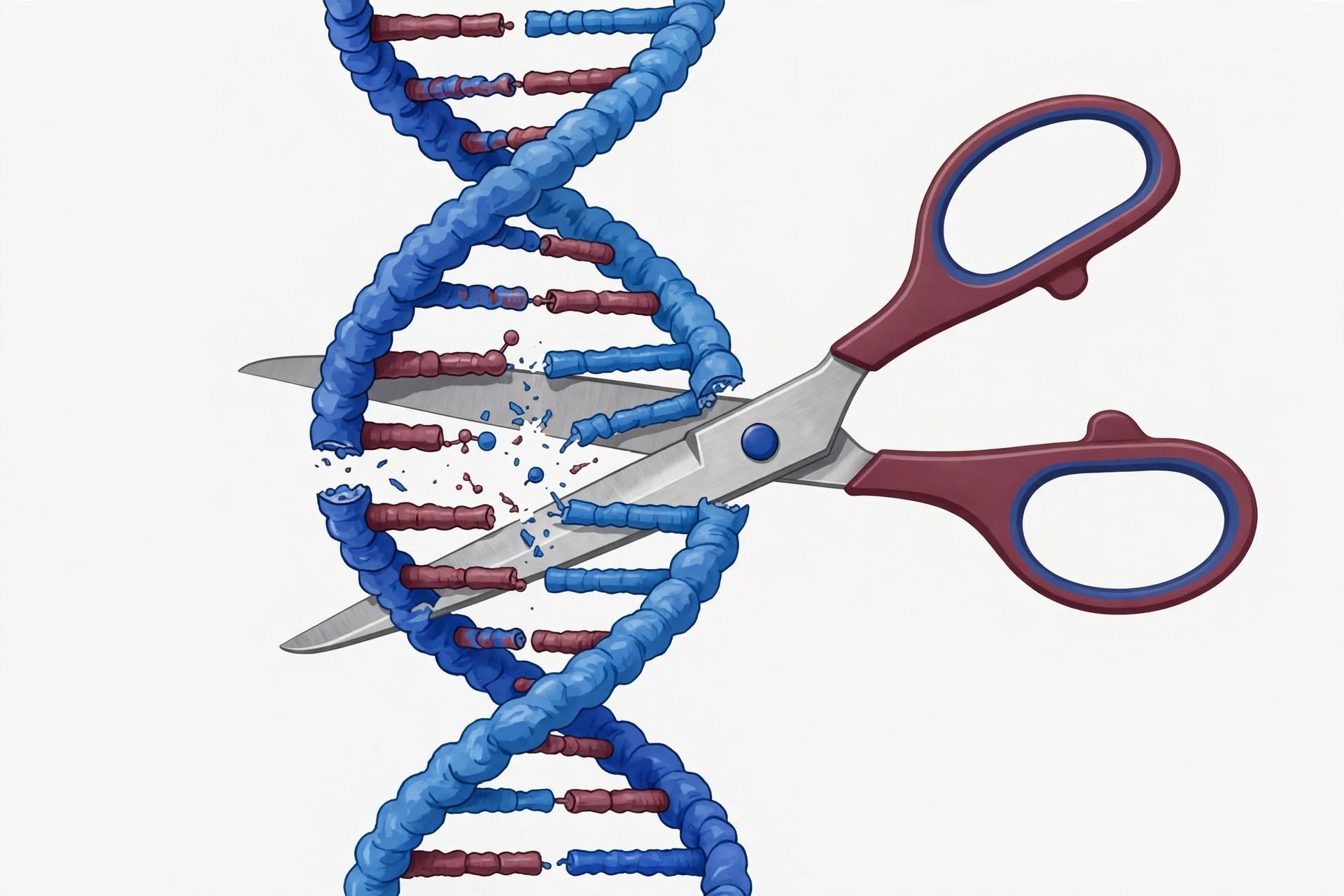
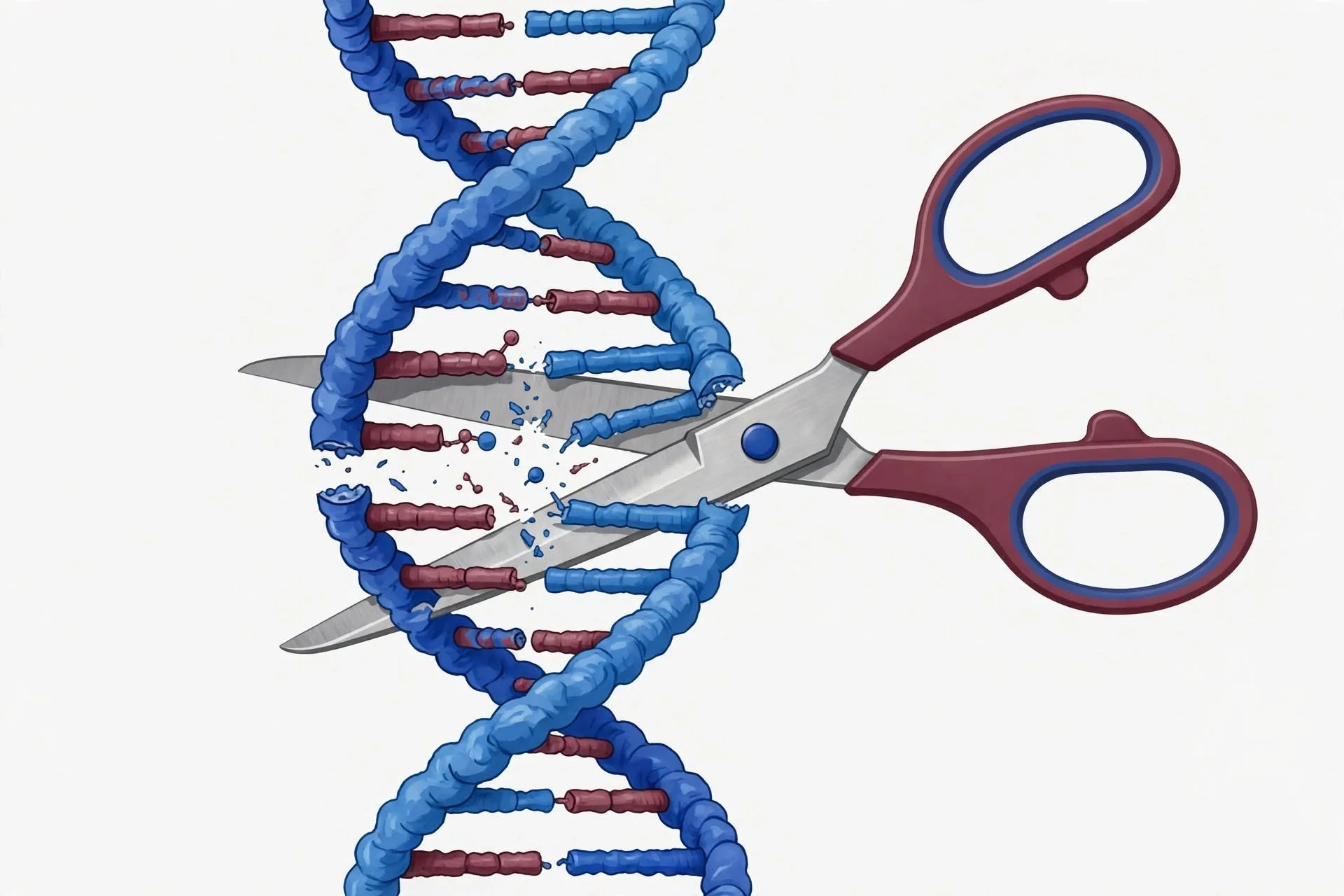
For years, genetic medicine relied on older CRISPR tools. Older CRISPR works like molecular scissors. It cuts both strands of human DNA at a specific spot. Then, the cell tries to patch the broken DNA back together. This process can create mistakes. It can cause unwanted cuts in other parts of the genome. These mistakes are called off-target effects.
Prime editing is different. It does not cut both strands of the DNA double helix. Instead, it cuts only one single strand. This makes the editing process much safer and more precise.
Right now, prime editing is moving into a major human testing phase. Researchers are running clinical trials to see how well it works inside the human body. Early trial data focuses on diseases that affect the liver and the lungs.
How Prime Editing Works
To understand prime editing, it helps to review the main parts of the cell system.
The Target Site
Every cell carries DNA. DNA holds the instructions for life. These instructions are written in four chemical letters. They are A, T, C, and G. Sometimes, a single letter is wrong. That small error can cause a severe genetic disease.
The Search Tool
Prime editing uses a modified protein to find the exact location of the error. The system includes a custom guide sequence. This guide moves through the cell and locks onto the matching spot in the genome.
The Replace Tool
Once the tool finds the target, an enzyme goes to work. This enzyme is a reverse transcriptase. It reads new genetic instructions carried by the prime editing guide. Then, it writes those new letters directly into the target single strand of DNA. The cell integrates this corrected sequence, fixing the original error.
What is the Difference between Prime Editing and Older CRISPR Tools?
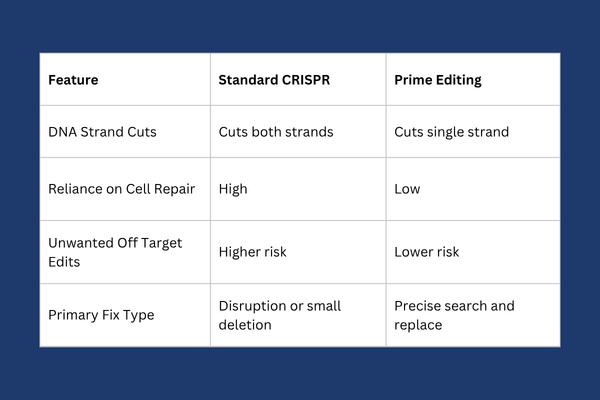
Standard CRISPR acts like a rough-cut tool. It is great for breaking a target gene so it stops working. However, standard CRISPR is less effective at making tiny, precise repairs.
Prime editing acts more like a word processor. It allows scientists to insert new DNA sequences, delete bad sequences, or swap individual chemical letters without causing double-strand breaks.
Key Medical Applications
Scientists are testing prime editing across several major therapeutic areas.
Liver Diseases
The liver is an ideal target for initial genetic treatments. Liver cells readily take up therapeutic delivery vehicles like lipid nanoparticles. Conditions such as alpha-1 antitrypsin deficiency cause toxic proteins to build up in liver cells. Prime editing can target the exact point mutation that causes the bad protein. By correcting the single-letter mistake, liver cells can start making normal, healthy proteins.
Lung Diseases
Lung tissue presents distinct challenges, but new delivery tools are making progress possible. Conditions like cystic fibrosis stem from errors in specific genes that regulate salt and fluid balance in lung tissue. Prime editing can swap out these faulty genetic sequences in lung stem cells. This can restore normal mucus flow and clear airway pathways.
Blood Disorders
Sickle cell disease and beta thalassemia stem from single-letter errors in the hemoglobin gene. Prime editing can rewrite those specific letters back to their healthy form. Because this fix avoids double-strand DNA breaks, it reduces the risk of dangerous chromosome rewiring in blood stem cells.
The Path Through Clinical Trials
Taking a new genetic therapy from the lab to patients requires careful clinical evaluation.
Preclinical Testing: Scientists test the editor in human cells grown in dishes and in animal models. They measure editing efficiency and check for off-target cuts across the whole genome.
Phase 1 Human Trials: A small group of patients receives the treatment. The main goal here is safety. Doctors monitor patients closely to ensure the immune system does not overreact to the editing tools.
Phase 2 Human Trials: Researchers test the therapy in a larger group of patients. They measure efficacy. For liver and lung diseases, doctors test if the organ begins functioning normally and if disease symptoms improve.
Phase 3 Human Trials: Large trials compare the new prime editing therapy against current standards of care. If successful, the therapy moves toward regulatory approval.
Challenges to Overcome
While prime editing holds enormous promise, several technical hurdles remain.
Delivery Mechanisms
Getting the prime editing tools inside the correct human cells remains a key challenge. Researchers use lipid nanoparticles or modified viral vectors to transport the editors. Ensuring these delivery systems reach the lung or liver without causing unwanted inflammation is a major focus of ongoing trials.
Editor Size
Prime editing systems are larger than basic CRISPR systems. The combined molecular machinery includes the nickase protein, the reverse transcriptase enzyme, and the extended guide RNA strand. Packing all these components into a single delivery vector requires advanced engineering.
Editing Efficiency
In some cell types, prime editing works with high efficiency. In non-dividing cells, the efficiency rates can drop. Researchers are tweaking the guide RNA structures and protein enzymes to boost edit success rates across all human tissue types.
Prime editing expands the capabilities of modern genetic medicine by refining how scientists interact with the human genome. Traditional gene editing frameworks often rely on creating double-strand breaks in the DNA backbone. While these early methods successfully disrupt harmful genetic pathways, they rely heavily on unpredictable cellular repair mechanisms that can introduce unwanted insertions, deletions, or structural chromosomal rearrangements. Prime editing avoids these outcomes by acting as a targeted search-and-replace system.
The architecture of a prime editor combines a modified Cas9 protein with a reverse transcriptase enzyme and a custom prime editing guide RNA. The modified Cas9, known as a nickase, cuts only a single strand of the target DNA helix rather than severing both strands completely. The engineered guide RNA performs two vital roles simultaneously: it directs the protein complex to a specific sequence within the genome and provides the fresh template sequence for the repair. Once the guide locates its matching target site and the single strand is nicked, the attached reverse transcriptase reads the new instructions written on the guide RNA and directly synthesizes the corrected DNA strand at the target site. The cell then incorporates this pristine sequence while replacing the original erroneous sequence, correcting single-letter mutations, small deletions, or precise insertions without relying on random cellular repair pathways.
Moving this technology into human clinical applications requires addressing significant biological and engineering demands, particularly surrounding delivery and tissue specificity. In vivo applications depend on delivering large molecular machinery into non-dividing or specialized adult cells. For targeted therapies focusing on the liver and lungs, researchers utilize lipid nanoparticles and viral vectors designed to protect the fragile RNA components until they cross the cellular membrane. Once inside the cytoplasm, the machinery translates into functional proteins, enters the nucleus, and executes the precise rewrite. Clinical studies monitor therapeutic efficacy alongside off-target activity across non-target tissues, ensuring that the prime editor operates solely within designated cellular populations.
Beyond single-organ applications, the broader potential of prime editing includes complex hematologic conditions, muscular dystrophies, and neurodegenerative disorders. Many human genetic diseases stem from point mutations—single nucleotide changes within a sequence of billions of base pairs. Traditional editing methods struggled to repair these point mutations cleanly without leaving behind unwanted genomic scars. By offering pinpoint accuracy, prime editing establishes a foundation for curative therapies that correct root causes rather than managing lifelong symptoms. Ongoing advancements in protein engineering continue to shrink the physical size of the reverse transcriptase domain, improve editing efficiency in quiescent cell types, and optimize guide RNA stability, bringing precise genome surgery closer to standard clinical practice.
For comprehensive background on genome editing protocols and clinical developments, explore research resources available through the National Institutes of Health at https://www.nih.gov.
Looking Ahead
Prime editing represents a major leap forward for genetic medicine. By avoiding double-strand cuts and offering true “search and replace” capability, it opens the door to treating thousands of inherited genetic conditions.
Over the next few years, clinical data from ongoing liver and lung trials will show how safely and effectively this tool operates in humans. If these trials succeed, prime editing could become the new gold standard for precise genomic medicine.
Prime editing is changing how scientists fix broken genes. For years, genetic medicine relied on older CRISPR tools. These older tools work like molecular scissors. Older CRISPR cuts both strands of human DNA at a specific spot. Then, the cell tries to patch the broken DNA back together. This process can create mistakes. It can cause unwanted cuts in other parts of the genome. These mistakes are called off-target effects.
Prime editing is different. It does not cut both strands of the DNA double helix. Instead, it cuts only one single strand. This makes the editing process much safer and more precise.
Right now, prime editing is moving into a major human testing phase. Researchers are running clinical trials to see how well it works inside the human body. Early trial data focuses on diseases affecting the liver and lungs.
Streamline your clinical development, navigate regulatory hurdles, and bring groundbreaking therapies from the lab to the clinic faster. Contact Metis Consulting Services now.