
European Union Pharmaceutical Industry Package
In December 2025, negotiators reached a historic political agreement on a major overhaul of drug laws known as the EU pharma package. As these massive new rules roll out across Europe, pharmaceutical companies face a complicated double reality. They must adapt to a unified European market while simultaneously managing messy, localized differences from country-specific ethics boards and regional testing requirements.
This week in the Guardrail, we dive into the sweeping changes brought by the landmark EU pharma package agreement and its impact on global drug development. Learn how balancing unified European regulations with intricate local hurdles is redefining pharmaceutical strategy as we advance through 2026.
By Michael Bronfman
July 13, 2026
Imagine trying to launch a new smartphone, but every single city you sell it in has a completely different rule about how the battery must work, how the screen must be tested, and what information needs to be printed on the box. You would spend all your time filling out paperwork instead of actually building great technology.
This exact challenge happens every day in the medical world. It is known as global regulatory divergence, which is a fancy way of saying that different countries have vastly different laws for approving and monitoring new life-saving medicines.
For decades, international organizations have tried to create global regulatory harmonization, which means getting health authorities across the globe to agree on a single, shared rulebook. When rules match, safe medicines can reach sick patients much faster.
However, achieving this balance is an ongoing tug-of-war. A massive example of this shift is happening right now in Europe. In December 2025, negotiators reached a historic political agreement on a major overhaul of drug laws known as the EU pharma package. As these massive new rules roll out across Europe, pharmaceutical companies face a complicated double reality. They must adapt to a unified European market while simultaneously managing messy, localized differences from country-specific ethics boards and regional testing requirements.
The EU Pharma Package: A Balanced Approach to Innovation
The newly agreed-upon European rules represent the most significant update to continental drug laws in over twenty years. The policy balances two urgent goals: getting critical treatments to patients much faster and providing strong, predictable rewards to companies that invest billions of dollars into medical discoveries. The continent is modernizing the evaluation of medicines throughout the entire life cycle of a drug.
A major feature of this update is its handling of regulatory data protection. When a pharmaceutical company invents a brand-new medicine, they receive a specific window of time during which competitors cannot copy their laboratory data to make cheap, generic versions. The new framework modernizes this timeline by offering extended data and market protection terms under specific conditions.
If a company creates a drug that treats a totally unaddressed disease, or if they launch the drug across every single European member state simultaneously, they can earn extra months of exclusive market control. This clever setup uses market access as a reward, encouraging companies to launch their newest treatments in smaller or less wealthy nations instead of just focusing on the biggest, richest markets.To explore the official steps and structural timelines of this historic legal rewrite, visit the European Medicines Agency Legislation Reform Portal.
Managing Supply Obligations and Preventing Shortages
Another major pillar of the new European rules targets a problem that has plagued hospitals for years: medicine shortages. We have all seen news stories about pharmacies running out of basic antibiotics or critical cancer therapies. The updated European rules address this by creating strict, legally binding rules for managing supply obligations.
Pharmaceutical companies are now required to monitor their supply chains with extreme precision. If a factory faces a production delay, the company must alert health authorities months in advance. They must also maintain emergency reserve stocks of critical medicines.
While these rules protect public health, they add a heavy layer of administrative work for drug developers. Companies can no longer just focus on science; they must build highly advanced data-tracking systems to prove to European regulators that their supply chains are secure and resilient.
Local Divergence: The Secret Layer of Review Delays
Even though the master rules are becoming unified across the European continent, real-world drug development often trips over a quieter, localized hurdle. A major central agency like the European Medicines Agency might give a new drug a green light, but a company cannot automatically hand that medicine to a patient.
Before any clinical trial can begin or any new therapy can be integrated into a local hospital, the project must pass through country-specific ethics committees. These local boards review studies to ensure human participants are treated fairly and that local cultural and legal boundaries are respected.
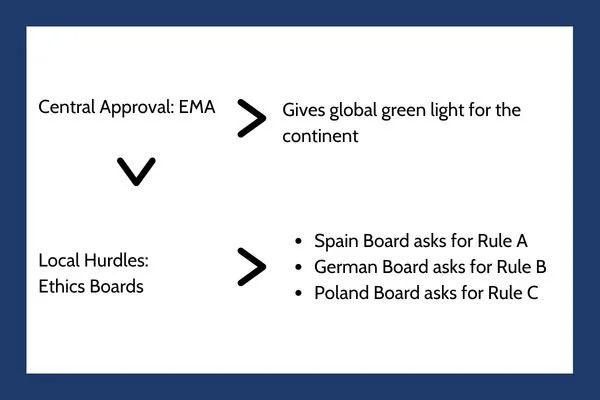
This is where true divergence shows its face. An ethics board in Germany might have a completely different requirement for patient data privacy compared to an ethics committee in Spain or Italy. One country might demand that patient consent forms be written in a highly specific linguistic style, while another might require extra blood tracking tests that the original master protocol did not include.
These local variations create a hidden labyrinth of review layers. If a pharmaceutical firm does not anticipate these regional differences, they will face sudden, cascading delays that can stall a global drug launch for months.
Navigating Local Intelligence and Change Management
Because local rules can vary so wildly, pharmaceutical companies are shifting how they plan their global operations. They are relying heavily on early local regulatory intelligence. This means that years before a drug is even ready for final approval, experts are on the ground in individual countries tracking the specific, unwritten preferences and shifting habits of regional boards.
To see how these international compliance standards are managed digitally across different regions, you can check the systems designed by PSC Software Compliance Systems. This type of specialized data tracking helps companies log changing regional requirements in real time, ensuring that an update made to a study protocol in one nation does not accidentally break a compliance rule in another.
Having local intelligence is only half the battle. A company must also possess effective change management systems. When an ethics committee in one country demands a sudden modification to a clinical trial or a manufacturing process, that change can trigger a massive chain reaction.
The company must update its laboratory records, notify packaging plants, alter digital labels, and inform clinical investigators worldwide. Without a rock solid change management strategy, a single localized request can cause a total operational breakdown across the entire global pipeline.
The Landscape of Drug Discovery Trends
As we advance through 2026, these regulatory shifts are fundamentally altering modern drug discovery trends. In the past, scientists would discover a molecule, test it in an isolated lab, and hand it off to a legal team to deal with compliance later. That old, disconnected model is no longer sustainable.
Today, regulatory strategy is baked directly into the earliest phases of scientific research. If a research team knows that Europe offers massive incentives for treating unmet medical needs, they will deliberately steer their laboratory focus toward rare, untreatable conditions.
Similarly, because supply chain tracking is now a strict legal requirement, discovery teams are choosing chemical ingredients that are easy and reliable to source globally, avoiding rare components that might trigger a supply chain alert later. The legal framework is actively shaping the molecular science of modern medicine.
Harmonization and Divergence in a Connected World
The ultimate goal for global health remains a world where a safe medicine can be developed once and deployed everywhere without unnecessary friction. Steps like the European pharma package prove that large-scale harmonization is possible, turning a collection of independent countries into a predictable, unified marketplace for healthcare innovation.
Yet, the persistence of local ethics boards, regional legal updates, and country-specific demands reminds us that complete uniformity is an illusion. True success in modern pharmaceuticals requires a delicate balance of macro and micro strategies.
Companies must design their master plans to align with sweeping global agreements, while keeping their operational teams agile enough to respect and adapt to local differences. By mastering this complex balancing act, the medical community can ensure that brilliant scientific discoveries do not get trapped in bureaucratic paperwork, but instead find their way into the hands of the patients who need them most.
Don't let the complex labyrinth of localized compliance, supply chain obligations, and shifting ethics board requirements stall your global drug launch. Contact Metis Consulting Services today

Understanding the New ICH-M14 Safety Guidelines
Today, the pharmaceutical industry is moving toward a massive transformation. A historic change occurred when a global organization called the International Council for Harmonization officially adopted a new framework named the ICH M14 guideline. This framework changes the rulebook for drug safety.

In the Guardrail this week: Explore the pharmaceutical industry's massive paradigm shift from isolated clinical trials to real-world data.
By Michael Bronfman
July 6, 2026
Imagine walking into a doctor's office, picking up a prescription, and knowing that the medicine you are about to take is being monitored by a global web of digital information. For decades, the gold standard for testing medicines has been the traditional clinical trial. In those trials, scientists test a new drug on a small, highly selected group of people under perfect conditions. This process works well, but it does not always show how a drug performs in the messy, complicated real world, where people forget to take pills, have multiple health conditions, or mix different prescriptions.
Today, the pharmaceutical industry is moving toward a massive transformation. Medical tracking is shifting from isolated labs to everyday life, powered by real-world data. This data includes everything from electronic health records kept by hospitals to insurance claims and tracking apps. When researchers analyze this everyday data, they generate real-world evidence that provides a clearer picture of how drugs affect diverse populations.
A historic change occurred when the global organization, the International Council for Harmonization, officially adopted a new framework, the ICH M14 guideline. This framework changes the rulebook for drug safety. It elevates everyday medical information into a form of regulatory currency, meaning health authorities now treat this tracking data with the same respect as traditional laboratory research. This shift changes the future of medicine, creating new ways to develop treatments while presenting major challenges regarding data privacy and access.
Understanding the New Safety Guidelines
To understand why this is such a major shift, it helps to look at how medicine tracking used to work across different borders. In the past, if a pharmaceutical company wanted to demonstrate that a drug was safe in both the United States and Europe, it often had to run separate observational studies in each region. Different countries had different rules about what made data reliable, how statistical math should be done, and how reports should be written. This fragmentation slowed down safety checks and made life-saving drugs take longer to reach patients who needed them.
The new global standard solves this problem. This agreement brings the world's major health authorities onto the same page, including the United States Food and Drug Administration and the European Medicines Agency. The official policy is detailed directly at ich.org, which explains how countries are unifying their rules. By creating a single set of expectations, a study built in one country can now be accepted by regulators worldwide.
This framework specifically targets non-interventional studies. These are research projects where scientists do not give patients a new drug or alter their treatment. Instead, researchers simply look backward or watch from a distance, studying how a medicine behaves as people use it naturally. Because these studies rely on information that already exists in hospital databases or pharmacy logs, having a strict global standard ensures nobody cuts corners or manipulates the findings.
Why Pre-Specification is the Key to Trust
One of the biggest concerns with observational research is a practice known as data dredging or cherry picking. Imagine a researcher looking through millions of patient records without a clear plan. If they look long enough, they might find a random pattern that makes a drug look incredibly safe or dangerously harmful, even if that pattern is just a coincidence.
The new framework eliminates this risk by mandating protocol pre-specification. This means that before scientists even look at the patient data, they must write down an exact plan detailing what they are looking for, how they will define a side effect, and how they will handle their math. This plan is locked in place so researchers cannot change their questions halfway through the study to get the results they want.
This approach builds public trust and satisfies strict regulators. When pharmaceutical companies submit their findings, they must prove they followed their blueprint perfectly. This level of planning turns casual healthcare records into high-quality scientific proof that can justify keeping a drug on the market or expanding its use to new groups of patients, such as children or elderly populations who are often left out of original clinical trials.
The Elements of Modern Evidence Packages
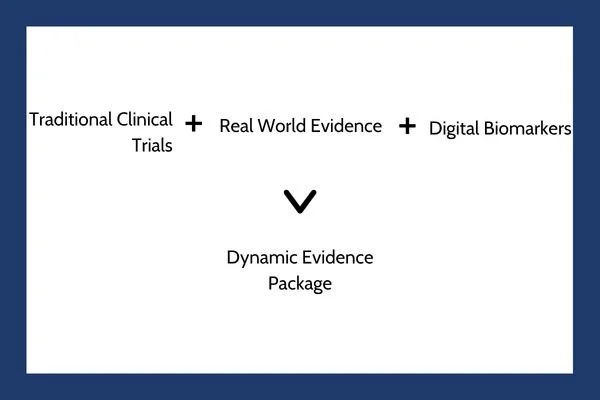
As these strict standards take hold, the way pharmaceutical companies present their discoveries is changing. The industry is moving away from simple stacks of paper toward dynamic evidence packages. These modern files combine multiple streams of information into a single master profile for a medicine.
A modern evidence package brings together three main components:
Clinical Trial Data: The traditional, highly controlled laboratory tests that prove a drug can work under ideal circumstances.
Real World Evidence: The continuous tracking of millions of patients using the medication in everyday situations to see how it performs across different ethnicities, ages, and lifestyles.
Digital Biomarkers: Measurable data collected from smartwatches, continuous glucose monitors, and wearable fitness trackers that show how a patient responds to a drug hour by hour in real time.
When these three streams merge, regulators get a rich picture of a drug's true impact. For example, a heart medication might show perfect numbers in a traditional lab trial. However, the wearable smart sensors might show that patients feel dizzy for an hour right after taking it, while hospital records might show fewer long term heart attacks. This complete view helps doctors make better decisions and helps pharmaceutical companies spot risks or secondary benefits much faster than before.
The Barriers of Real World Information
While this data-rich future sounds amazing, it faces significant real-world roadblocks. The first major hurdle is that most healthcare data was never designed for scientific research. When a doctor types notes into an electronic medical record or a hospital submits an insurance claim, their primary goal is to treat the patient and get paid, not to run a clinical study.
This reality creates massive problems with missing or messy data. A doctor might forget to record how much a patient smokes, or a hospital might change the way they code a specific disease mid-year. If researchers try to run high-level statistical analyses on broken information, they will get inaccurate results. Turning raw hospital paperwork into fit-for-use data requires an immense amount of cleaning, sorting, and verifying, which takes time and expensive technology.
The second massive obstacle involves access restrictions and data silos. Medical information is highly personal, and laws like the Health Insurance Portability and Accountability Act in the United States protect patient confidentiality. Because of these vital privacy laws, hospital systems, insurance firms, and tech giants often keep their data locked tightly inside their own networks.
Breaking down these walls without compromising patient privacy is incredibly difficult. If a pharmaceutical company cannot access a wide enough pool of data, their study will not represent the whole population. This leaves them unable to meet the strict global standards required by modern regulators.
The Role of Pharmacoepidemiology in Public Health
The science driving this entire movement is pharmacoepidemiology, the study of the uses and effects of drugs in large populations. This field acts as an early warning system for public health. When a new medicine hits the market, it might have been tested on only a few thousand individuals. If a dangerous side effect occurs in only one out of every fifty thousand people, a traditional clinical trial will likely miss it entirely.
Through large-scale tracking, scientists can monitor millions of prescriptions simultaneously. If a sudden spike in kidney issues appears among patients taking a specific arthritis medication, researchers can spot the trend within weeks instead of years. The new standard gives these scientists a clearer roadmap for designing these studies, ensuring their alerts are based on rigorous math rather than false alarms.
For an in-depth look at how these safety networks operate, the European Network of Centers for Pharmacoepidemiology and Pharmacovigilance provides resources showing how global networks cooperate to trace medicine safety across whole continents. This coordinated surveillance saves lives by ensuring that when a drug risk is discovered anywhere in the world, safety warnings are updated immediately everywhere.
How Health Authorities are Implementing the Standard
As we move through 2026, nations are actively weaving this framework into their daily operations. The transition requires regulatory agencies to rewrite their local playbooks to support the shared global model.
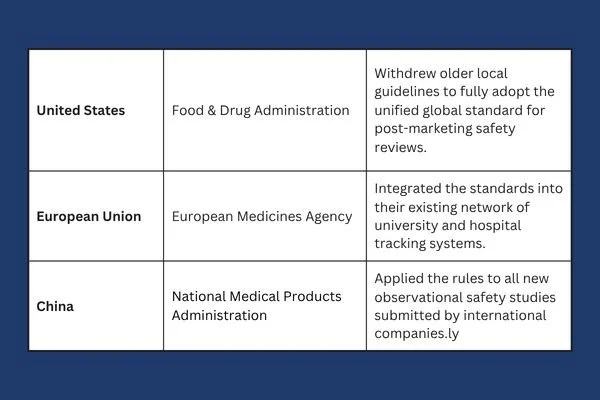
This level of cooperation is rare in international trade, but it shows how vital real world tracking has become. To explore the exact implementation details and view the official updates for American medicine, you can read the documentation here. This page shows how older local frameworks are being replaced to make room for this new way of reviewing drug safety.
The Future of Drug Discovery Trends
Looking ahead, this standard will alter more than just post market safety tracking; it will transform how drugs are discovered and developed from the very beginning. Historically, bringing a single drug to market has taken over a decade and cost billions of dollars. Much of that time was spent waiting for traditional trial results.
By using everyday tracking data as a recognized regulatory asset, companies can now design smarter trials. Scientists can study existing patient databases to discover which specific genetic groups respond best to an experimental treatment before they ever recruit a human volunteer. This approach reduces trial sizes, cuts costs, and protects human participants from taking experimental therapies that are unlikely to help their specific condition.
Furthermore, this framework opens the door for adaptive trials. In these modern studies, researchers can modify an ongoing trial based on incoming real world information, adding new patient groups or adjusting dosages safely with the blessing of regulators. The boundary between the research lab and the everyday clinic is fading away, creating a continuous loop of medical learning.
Balancing Innovation with Ethical Protection
As data becomes the lifeblood of modern medicine, the pharmaceutical industry must handle its new power with caution. Collecting digital footprints from hospital visits, insurance bills, and wrist sensors requires a steadfast commitment to patient ethics. People must be certain that their personal health struggles will never be sold, leaked, or used against them by employers or commercial firms.
The new global standard addresses this by demanding high levels of data transparency and strict data management rules. Companies must explicitly detail how they protect patient identities, strip out personal tracking markers, and secure their databases from cyber threats. Innovation is only valuable if patients feel secure using the systems that monitor them.
The transition to treating real-world information as an official currency marks a massive step forward for human health. It acknowledges that clinical trials, while vital, are just the opening chapter of a drug's true story. By turning everyday experiences into reliable science, the global medical community ensures that the medicines of tomorrow will be safer, more effective, and customized for the real world we all live in.
If your organization needs to convert messy healthcare data into high-quality, audit-ready scientific evidence that meets major global health authorities' requirements, we can help. Contact Metis Consulting Services today
Moving Beyond the Sandbox: How to Build Inspection-Ready AI in Regulated Life Sciences
For years, AI was just a tool for simple tasks like drafting emails. Those days of casual use are over. Regulators are tightening expectations, demanding strict AI governance, perfect traceability, and full integration with quality compliance systems. These rules are no longer optional best practices.
As global regulators rapidly tighten enforcement on pharmaceutical companies, this week we look at the high-stakes gap between flashy AI pilots and the rigorous, audit-ready validation required in the life sciences sector. Manufacturers must have systems in place for bulletproof governance to survive their next inspection.
By Michael Bronfman
June 30, 2026
Many pharmaceutical companies live in a frustrating middle ground. You can see it in boardrooms and IT departments everywhere. Teams enthusiastically say, “We are experimenting with artificial intelligence!” Yet when asked whether that same technology is ready for an official regulatory inspection, the room falls silent.
The gap between a cool pilot project and a fully validated, inspection-ready system is where most life sciences companies currently find themselves.
For years, teams treated artificial intelligence as a collection of non-product tools used for simple tasks. It might have been used to summarize long documents or draft email templates. But the days of casual experimentation are officially over. Regulatory bodies are tightening their expectations. They are demanding strict AI governance, perfect traceability, and complete integration with quality compliance systems. They are no longer leaving these rules to optional best practices.
Artificial intelligence systems inform labeling, product performance claims, drug dosing, patient safety, or quality decisions; they face a tough reality. The entire solution must fulfill rigorous quality, validation, and lifecycle controls. Generic pilots fail to scale because they lack the foundation required to survive a regulatory audit. Life sciences organizations must shift to purpose-built artificial intelligence that incorporates strict governance controls, unalterable audit trails, and validated results to succeed.
The Shift in Regulatory Reality
Why do generic pilots fail?
To understand this, look at how global authorities view technology. The Food and Drug Administration released major updates that signal a strong enforcement posture for advanced software used in regulated spaces. The agency treats high-risk artificial intelligence with the same seriousness as physical medical devices or critical manufacturing tools.
Traditional software validation worked well for static systems. In the past, computer systems validation followed a predictable path. A developer wrote code, a quality team tested that it did exactly what it was supposed to, and the software never changed unless an engineer manually updated it.
Artificial intelligence contradicts this old way of thinking. Advanced models are dynamic. They are built to learn, observe patterns, and develop over time. Because these systems can evolve based on the information they process, standard testing methods are inadequate. Software cannot be tested once and assumed to behave exactly the same way a year from now.
Regulators are fully aware of this challenge. They are looking closely at:
Design Controls: How the model was built, chosen, and structured.
Model Validation: Proof that the mathematical formulas produce accurate, repeatable results.
Data Authenticity: Complete certainty that the information feeding the model is clean and unaltered.
Risk Management: Clear plans for handling unexpected errors.
If an inspector walks into your facility today and sees an advanced tool helping your quality team make decisions, they will ask tough questions. They will want to know how you verify the output. They will want to see how you track changes in the system. If your only answer is that a vendor told you the tool works, you are facing a major compliance risk.
Why Generic AI Pilots Fail to Scale
It is incredibly easy to build a successful pilot project. A small team can upload historical quality data into a popular, generic large language model. Within an afternoon, the tool can review past records and suggest draft standard operating procedures or summarize corrective and preventive action reports. The team celebrates, declares the project a success, and plans to roll it out to the whole company.
Then, they meet the quality assurance department.
Generic artificial intelligence applications are built for mass productivity, not the high-stakes world of life sciences. When you try to push a basic pilot into a Good x Practice environment, the system usually falls apart for several reasons.
The Opaque Decision Process
Generic models operate like a black box. A user submits a question, and the tool provides an answer, but no one can trace the exact path the software took to reach that conclusion. In a regulated environment, an untraceable answer is a non-compliance finding waiting to happen. If you cannot prove how your software reached a conclusion about a batch failure or a clinical trial data point, you cannot use that conclusion.Missing Explicit Intended Use
Validation cannot be generic. You cannot validate an advanced tool for general office work and then use it to triage quality investigations. Every application must have a clearly defined intended use statement. This statement must outline the exact process the tool supports, who the users are, what source systems feed it data, and how the output impacts human health or product quality. Generic tools are not built to restrict themselves to a single, tightly controlled workflow.Model Drift and Information Degradation
When an advanced model interacts with new data, its internal weights can shift. Over time, the system's accuracy can degrade or change, a phenomenon termed as model drift. Generic applications do not include built-in alerts that notify you when the software becomes less accurate. Missing continuous tracking protocols, a tool that worked perfectly during a pilot in January might give flawed recommendations during an inspection in November.Poor Data Lineage and Security
Where does the information go when you type it into a generic tool? Does the vendor use your proprietary molecule data to train their public models? Many basic applications lack clear data lineage. They cannot prove who had access to the data, how it was modified, or where it is stored. This violates fundamental data validity principles that require all records to be fully traceable and secure.
The Core Pillars of True AI Governance
Transitioning from an experimental sandbox to a validated environment requires a formal governance structure. Organizations must stop treating advanced tools as simple IT upgrades and start treating them as highly regulated assets. True governance rests on five core pillars.
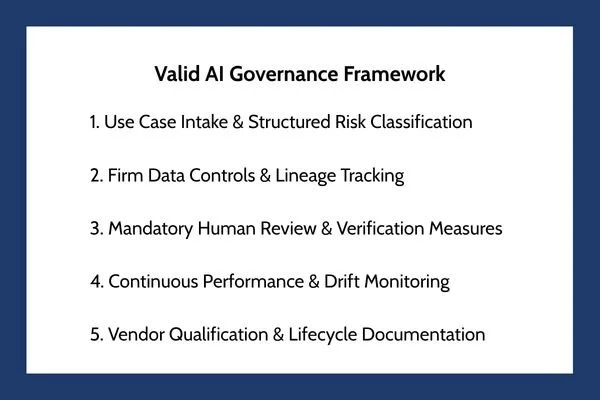
Pillar 1: Use Case Intake and Risk Classification
You should not give every department open access to activate advanced tools whenever they want. A mature company implements a formal intake process. Before a single line of code is written or a vendor software is purchased, the business must capture the exact purpose, ownership, and expected benefit of the tool.
The tool must be classified by risk once captured. A helpful framework divides applications into three buckets:
High Risk: Systems that support clinical decision making, patient safety, quality control inspections, or deviation management. These require absolute validation rigor, design controls, and intense testing.
Medium Risk: Tools used for operational forecasting, supply chain streamlining, or trend analysis. These require clear procedural controls and standard validation.
Low Risk: Systems used for simple productivity, basic grammar corrections, or internal meeting scheduling. These require basic security reviews but minimal validation.
By tying your compliance controls directly to the risk level, you avoid over-documenting low-risk tools while assuring high-risk applications are bulletproof.
Pillar 2: Data Controls and ALCOA+ Principles
Every piece of information used by an advanced system must comply with strict data-integrity guidelines. This means all data must be attributable, legible, contemporaneous, original, and accurate. It must also be complete, consistent, enduring, and available.
Purpose-built solutions enforce these principles by creating strong data boundaries. They restrict the software so it can only access approved, verified source systems. They block the tool from pulling random information from the public internet. Furthermore, the system must keep an immutable audit trail. Every single prompt, every generated response, and every user validation must be permanently stamped with a time, date, and user identity.
Pillar 3: Mandatory Human Review
No advanced system should operate completely on autopilot when product quality or human lives are on the line. Governance frameworks ought to mandate a qualified human reviewer to check the work.
The software acts as an assistant, not the final judge. If the tool drafts a response to a quality deviation, a trained quality professional must review the source data, verify the accuracy of the draft, and officially sign off on the record. The system must store this human verification as part of the permanent compliance history.
Pillar 4: Continuous Performance Monitoring
Because advanced software can shift over time, you need a preemptive strategy to catch errors before they reach an auditor. This involves formulating clear metrics for model exactness, sensitivity, and fault rates.
Organizations must run regular challenge tests. These tests feed the system known data sets to verify that it still produces the expected results. If the performance drops below some threshold, it must trigger an automatic alert. The tool is then taken offline or restricted until a change control process evaluates the issue and revalidates the configuration.
Pillar 5: Thorough Vendor Qualification
Most companies do not build advanced language models from scratch. They partner with IT providers or integrate specialized software into their operations. However, regulators hold you responsible for your vendors' compliance.
You must thoroughly audit your technology partners. You need to inspect their security measures, bias detection protocols, and change control processes. If a vendor pushes an unannounced software update that alters how the model reasons, your validated status could vanish instantly. You must use vendors that offer complete honesty and give you control over when updates are applied.
Applying Computer Software Assurance to Advanced Systems
The thought of validating a dynamic, learning model can terrify traditional quality assurance teams. If you try to apply old, paperwork-heavy computer systems validation methods to advanced software, you will quickly find yourself buried in endless documentation. A typical project could take eight months to complete, destroying your competitive advantage.
Fortunately, the regulatory domain has evolved. The finalized computer software assurance guidance provides a modern framework that aligns perfectly with advanced technology.
Computer software assurance flips the script on validation. Instead of spending eighty percent of your time writing exhaustive test scripts and twenty percent on critical thinking, this system tells you to spend most of your time on risk analysis and critical thinking. It allows teams to focus their testing energy on the specific functions that directly impact product quality and patient safety.
When you apply this approach to advanced technology, validation becomes manageable. Instead of testing every likely response the tool could ever generate, you focus on the workflow's configuration. You test the boundaries, the data connectors, the human review steps, and the failure modes.
Organizations that utilize this risk-based framework see massive improvements. Validation timelines can drop from several months to just a matter of weeks. This allows life sciences companies to deploy powerful, automated solutions quickly without sacrificing a single shred of regulatory compliance.
How Purpose Built Compliance Platforms Solve the Problem
Living in the gap between a pilot and a validated system is dangerous and expensive. It wastes time, frustrates engineers, and leaves your business exposed to severe regulatory penalties. The solution is to step away from generic tools and adopt systems built from the ground up for regulated environments.
This is where specialized platforms make a massive difference. For instance, companies planning to manage their complex operations turn to dedicated provider ecosystems like PSC Software. Instead of trying to force a consumer application to comply with strict global laws, organizations leverage platforms designed with compliance as a core feature.
When you look at the product offerings within the life sciences ecosystem, you can see how purpose-built tools bridge the gap. For example, managing the intense training demands of a regulated workforce requires absolute precision. Neither a manual spreadsheet nor a standard corporate training tool can withstand the pressure of an audit. Using an automated option like the ACE LMS software solution ensures that every training event, standard operating procedure update, and employee qualification is tracked inside an unalterable audit trail. This level of control perfectly aligns with the information-consistency standards required for advanced automation.
Traditional validation paperwork can slow an organization to a crawl. Converting to a digital, paperless environment using tools like ACE Validation's paperless GxP software allows teams to unify their compliance activities. With document control, corrective actions, and validation records live in a single, connected digital ecosystem, implementing and monitoring advanced technology becomes simple, enabling effortless tracking of data lineage, transparent management of system changes, and a clear, organized history for any inspector who walks through your door.
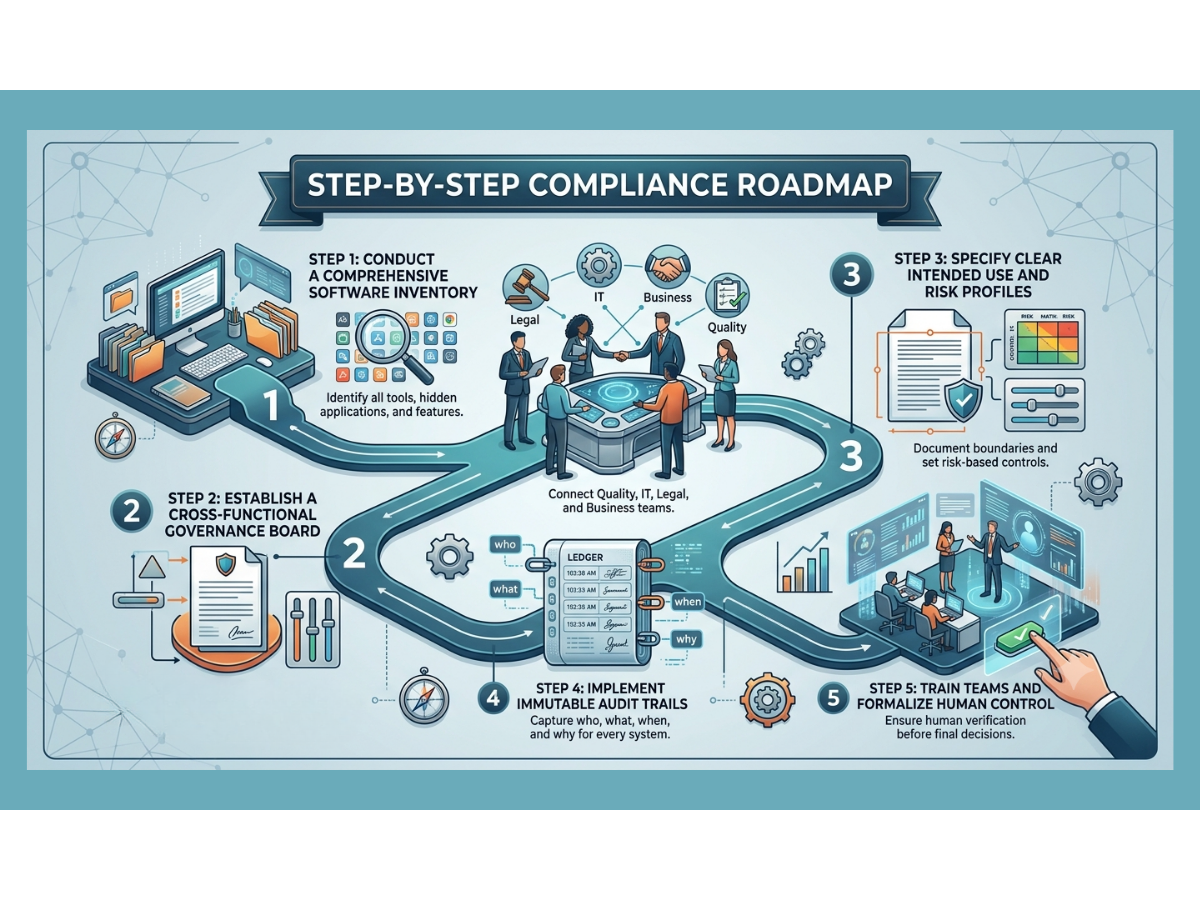
A Practical Roadmap to Inspection Readiness
If your organization wants to close the gap and build artificial intelligence systems that are truly inspection-ready, you must follow a clear, step-by-step roadmap.
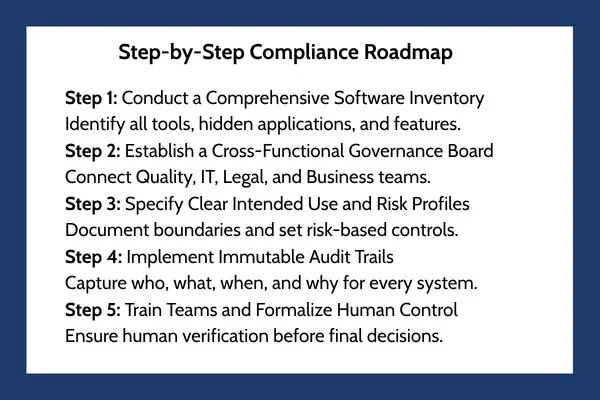
Step 1: Inventory All Advanced Tools
You cannot govern what you do not know exists. Conduct a thorough audit across your business to discover every tool currently in use. Look for hidden applications where employees might be pasting company data into public websites. Document every vendor-supplied feature that claims to use smart automation.
Step 2: Create an Internal Governance Board
Bring together leaders from quality assurance, information technology, legal, and operational business units. This group will serve as the gatekeepers for all automation projects. They will review new use cases, assign risk classifications, and confirm that no project moves forward without a clear validation plan.
Step 3: Draft Clear Intended Use Statements
For every approved tool, write a detailed statement explaining exactly what the software is allowed to do and what it is strictly prohibited from doing. Document the data sources, the human review workflows, and the exact records the system will generate.
Step 4: Enforce Technical Data Controls
Work with your IT team or software vendors to confirm that every system has strong access controls, data encryption, and unalterable audit trails. Verify that the system layout prevents automatic model updates without requiring formal change control.
Step 5: Establish Continuous Monitoring Standards
Create a schedule for regular performance reviews. Define your drift thresholds and write clear standard operating procedures for what the team must do if the software shows signs of declining accuracy.
Final Thoughts
Artificial intelligence offers incredible potential for the pharmaceutical industry and can help us analyze massive data sets, spot manufacturing deviations early, and streamline heavy documentation workloads. But these benefits mean absolutely nothing if the technology cannot survive a regulatory inspection.
The era of playing around with casual pilots is over. Regulatory bodies are stepping up enforcement, and the companies that succeed will be those that treat automation with the discipline it deserves. By shifting away from generic tools and deploying purpose-built software, sound risk frameworks, and complete data lineage, you can confidently move your technology out of the sandbox and into a fully validated, inspection-ready reality.
Bridge that gap between AI innovation and regulatory reality. Contact Metis Consulting Services today. We are experts who can streamline your computer software assurance, fortify your governance structure, and ensure your technology is fully validated and completely inspection-ready.

The Big Shift in Medicine: Why Tracking Every Pill Just Became Law
As of late 2025, every individual package of brand-name or generic medicine moving through the United States must be tracked at the unit level. This shift transforms how biotechnology and pharmaceutical firms manage operations. For companies like DES Pharma, building a bulletproof, highly visible supply chain is no longer solely a smart business strategy—it is the law.

This week in the Guardrail, explore how the final enforcement of the Drug Supply Chain Security Act (DSCSA) is reshaping the pharmaceutical landscape. We break down why full unit-level serialization is no longer just a smart operational strategy, but a strict legal. mandate
By Michael Bronfman
June 22, 2026
Visualize walking into a pharmacy to pick up a life-saving prescription. You hand over your script, the pharmacist hands you a small bottle, and you take your dose without a second thought. You trust that the medicine inside that bottle is exactly what the label says it is. You trust that it is not a fake, that it has not been tampered with, and that it was kept at the right temperature from the moment it was made in a lab to the moment it reached your hands.
For a long time, keeping that promise required a massive, invisible network of security. Today, that network just got a lot tighter.
Over the last year, the United States prescription drug industry crossed a major historical finish line. A federal law called the Drug Supply Chain Security Act, or DSCSA, moved into its final stage of full enforcement. For years, companies along the medicine highway had special hall passes, known as exemptions, that gave them extra time to prepare their technologies.
Those hall passes are officially gone.
As of late 2025, every single package of brand-name or generic medicine moving through the United States must be tracked at the individual unit level. This sea change is completely modifying how biotechnology and pharmaceutical firms manage their operations. For companies like DES Pharma, building a bulletproof, highly visible supply chain is no longer solely a smart business strategy. It is the law.
Understanding the Drug Supply Chain Security Act
Let us look at what the supply chain actually is. The medicinal supply chain is the entire journey a medicine takes. It starts as raw chemical ingredients, turns into a finished pill or liquid at a manufacturing plant, travels to massive storage warehouses, moves to local distributors, and finally lands at hospitals, clinics, and neighborhood pharmacies.
Before the DSCSA was passed by Congress, tracking medicine was mostly done by pallet or by the giant cardboard shipping box. If a manufacturer shipped a crate containing one thousand bottles of allergy medicine, they tracked the crate.
The DSCSA changed the rules by demanding unit-level serialization. This means every single individual bottle, blister pack, or vial gets its own unique identity. It is like giving every single bottle of medicine its own digital passport.
The Missing Piece: What is a Serialized Barcode?
Every package now carries a special 2D data matrix barcode. This barcode contains four critical pieces of information:
The National Drug Code, which identifies the medicine.
A unique serial number, which is a randomized string of characters identifying that exact package.
The batch or lot number shows exactly when and where it was mixed.
The expiration date.
When a company scans this barcode, they are not just ringing up a sale. They are connecting to a massive, secure digital network to verify that this exact bottle was made by the real manufacturer and has not been stolen, copied, or altered.
The Expiration Timeline: How the Hall Passes Ran Out
This high-tech tracking system transition did not happen overnight. The government knew that forcing thousands of companies to change their software, buy expensive scanners, and retrain workers simultaneously would cause chaos. The Food and Drug Administration (FDA) established a rolling timeline of exemptions to give companies a temporary break while they upgraded their systems.
Those timelines finally hit their absolute deadlines in 2025:
May 2025: Manufacturers and Repackagers
The first big wave hit the creators. Pharmaceutical manufacturers, the companies that actually formulate the drugs, and repackagers, the companies that take bulk medicine and put it into patient-ready bottles, lost their exemptions. They had to ensure that 100% of the products leaving their facilities were perfectly serialized and that the digital data matched the physical boxes.
August 2025: Wholesale Distributors
Next came the middle management of the medicine world. Wholesale distributors buy large quantities of drugs from hundreds of manufacturers and consolidate them into mixed shipments for pharmacies. In August, their extra time ran out. Distributors can no longer accept any medicine that lacks the proper digital passport, nor can they ship it to pharmacies without passing along that digital data.
November 2025: Dispensers and Pharmacies
The puzzle’s final piece fell into place at the end of the year. Large dispensers, including major hospital networks, supermarket pharmacies, and national drugstore chains, lost their exemptions. Pharmacies received a box of medicine today, but the electronic tracking data does not match the box's barcode, so the medicine cannot be sold. It must be set aside and investigated as a suspect product.
Now that these deadlines have passed, the entire United States pharmaceutical industry is operating under full unit-level enforcement. The safety net is officially active.
Why Serialization Matters for Biotechnology and Pharma Firms
For a mature pharmaceutical giant with billions in revenue, setting up these tracking systems is expensive but manageable. For younger biotechnology and pharmaceutical firms actively developing new therapies, these rules represent a major hurdle that can make or break their future.
When a biotech firm advances a product through regulatory approval, it is operating in a high-risk race against time. They are trying to prove to the FDA that their new molecule is safe and effective. This process entails multiple stages of clinical trials, in which real patients test the treatment under strict observation.
In this environment, supply chain resilience is absolutely essential. A single mistake anywhere in the logistics chain can cause a catastrophic domino effect.
Delayed IND Clearances
Before a company can even begin testing a new drug in humans, it must file an Investigational New Drug application, or IND. The FDA reviews this application to ensure the drug is safe enough to test in volunteers. If the biotech firm cannot prove exactly where its raw ingredients came from, or if its initial test batches do not follow strict tracking and serialization guidelines, the FDA will issue a clinical hold. This delays the IND clearance, stalling the research for months and costing millions of dollars.
Stalled BLA and NDA Reviews
Once a drug successfully completes all clinical trials, the company files a Biologics License Application (BLA) for complex biological drugs, such as vaccines, or a New Drug Application (NDA) for traditional chemical drugs. This is the final job application for the medicine.
During this review, the FDA considers more than just scientific experiments. They inspect the entire manufacturing process and the supply chain plan. Under the newly enforced DSCSA rules, if a company cannot demonstrate a flawless, fully compliant serialization system, the FDA will simply stall the BLA or NDA review. The drug cannot launch, investors lose confidence, and patients who desperately need the new treatment are left waiting.
The Hidden Dangers: Supply Chain Risks That Threaten Drug Development
Achieving compliance with the law is only half the battle. Biotechnology firms must also protect their supply chains from physical disruptions. Because modern medicine is incredibly complex, the journey from raw ingredients to finished product is fragile. Three major risks keep pharma executives awake at night:
1. Single Supplier Failures
Specialized medicines require rare, highly specific chemical ingredients or biological components. Often, there is only one factory in the entire world that makes a particular specialized ingredient. If that single supplier experiences a factory fire, a power outage, or a regulatory violation that forces them to shut down, the entire global production of that drug grinds to a halt. Biotech firms must diversify their sources so that one accident does not destroy years of research.
2. Raw Material Shortages
Global supply chains are interconnected. Making single vials of medicine requires chemists to do more than just add the active drug ingredient. They need medical-grade glass vials, specialized rubber stoppers, chemical stabilizers, and precise labels. Factory production freezes occur from basic item shortages just as easily as a shortage of the drug itself.
3. Cold Chain Breaches
Many modern biotechnology products, especially biologics and gene therapies, are made from living organisms or sensitive proteins. These medicines are highly fragile. They must be kept within strict, freezing temperature ranges from the moment they are created until they are injected into a patient. This temperature-controlled procedure is called the cold chain.
If a shipping container sits on a hot airport runway for 2 hours due to a logistics delay, the temperature inside might rise. This is a cold chain breach. The proteins inside the medicine can break down, rendering the expensive drug completely useless or, worse, dangerous. Under DSCSA serialization, tracking data must often be paired with temperature monitoring to demonstrate that the medicine remained safe throughout its entire journey.
How Serialization Strengthens Supply Chain Resilience
While the new tracking regulations require significant effort and expensive technology, they are not purely a bureaucratic burden. Serialization actually provides pharmaceutical companies with the exact tools they need to fix their supply chain weaknesses.
Prior to serialization, a manufacturer discovered that faulty machines accidentally contaminated a batch of medicine, and the manufacturer issued a massive, sweeping recall. They would have to tell pharmacies across the country to pull thousands of boxes off their shelves, even if only a few dozen boxes were actually defective. This caused massive drug shortages and cost millions of dollars.
With unit-level serialization, the game changes completely. Every bottle has its own digital identity. A manufacturer pinpoints the exact 25 bottles affected by a specific machine error. They will track those specific serial numbers to the exact warehouses or pharmacies where they are currently sitting.
Manufacturers issue highly targeted recalls, stopping those specific dangerous bottles from reaching patients while allowing the rest of the safe medicine to stay on the market. This exact control protects patient safety while preventing unnecessary drug shortages.
The Way Ahead for Firms Like DES Pharma
For progressive organizations like DES Pharma, directing this new era entails a proactive strategy. Waiting for problems to arise is a recipe for failure. Companies must integrate their serialization data directly into their daily business choices.
First, firms must build deep digital relationships with their contract manufacturing organizations and logistics providers. Every partner in the chain must use software that communicates smoothly with each other, passing serialization data back and forth without errors.
Second, companies need to invest in end-to-end visibility. By using data generated by DSCSA tracking, companies can monitor their products moving across the globe in real time. This allows logistics staff to spot delays before they become disasters, rerouting shipments around bad weather or port strikes to keep clinical trials on schedule.
To learn more about how regulatory changes modify drug development, you can review the official guidelines on the Food and Drug Administration homepage atFDA.gov. For a deeper look at the history of these tracking laws and how they have been rolled out over the past decade, check out the full overview from theRegulatory Affairs Professionals Society.
The Ultimate Benefit: A Safer World for Patients
At the end of the day, all of these complex rules, high-tech barcodes, and strict government deadlines exist for one simple reason: to protect human lives.
The global pharmaceutical supply chain has long been a target for criminal organizations trying to flood the market with counterfeit, stolen, or illegally imported medicines. In some parts of the world, fake medicines are a massive crisis, causing untold harm to patients who think they are taking real cures.
By eliminating exemptions and enforcing full unit-level serialization nationwide, the FDA and the pharmaceutical industry have built an incredibly strong fortress. It is now nearly impossible for a counterfeit box of medicine to enter the legitimate supply chain, because it will not have a valid, pre-registered digital passport waiting in the national network.
The 2025 transition period was a trying time for many companies as they adjusted to the new, stricter reality. However, the result of that hard work is a highly secure, highly resilient network. For biotechnology firms advancing the next generation of cures, and for the families waiting to receive them, this new era of full serialization means greater safety, fewer shortages, and absolute trust in every single dose.
Navigating complex regulatory timelines and building a resilient, fully visible supply chain requires expert guidance. Seamlessly integrate your serialization data, secure your operations, and ensure your life-saving therapies reach the patients who need them most. Contact Metis Consulting Services today.
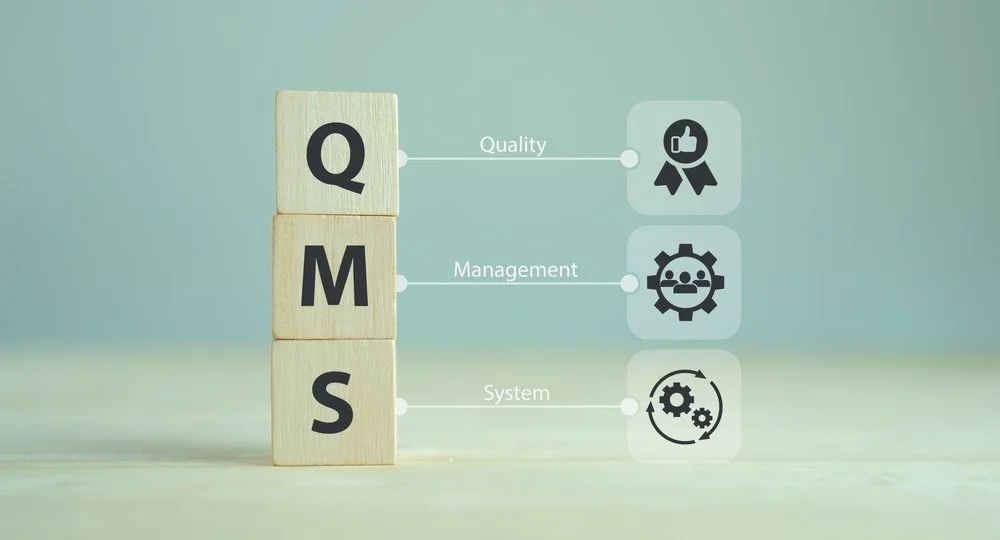
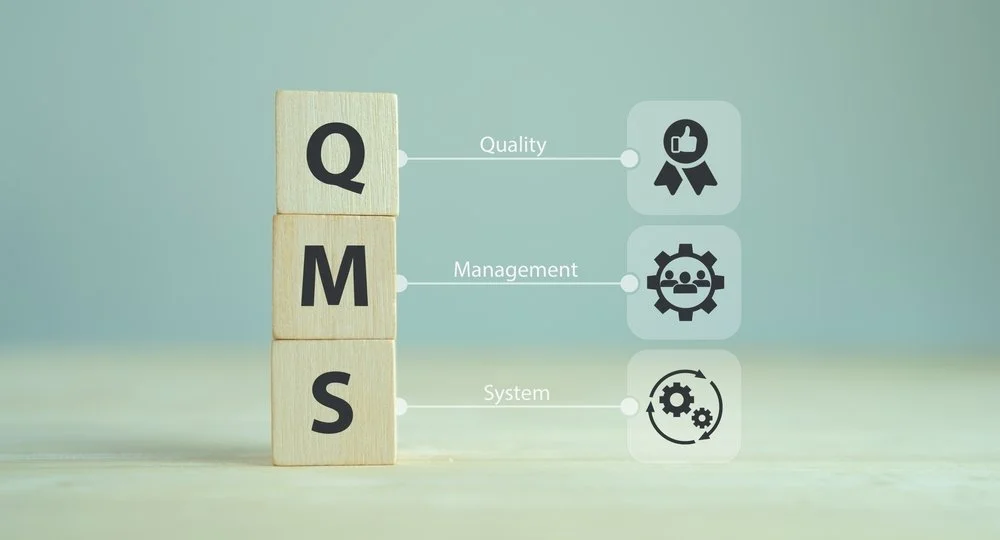
Quality Management System Regulation
By Michael Bronfman
June 15, 2026
Imagine a large medical factory building complicated machinery like heart pacemakers or robotic surgical arms. For close to thirty years, if that company wanted to sell its products inside the United States, they had to follow a specific book of government safety rules. If they also wanted to sell those exact same medical tools in Europe, Canada, or Japan, they had to open an entirely separate set of books to satisfy international rules. Engineers and quality inspectors spent thousands of hours filling out two different piles of paperwork for the exact same medical device.
This double system caused massive confusion and slowed down the arrival of life-saving technology to hospitals. This waste of energy finally came to an end on February 2, 2026. On that historic day, the United States Food and Drug Administration officially changed the law. They threw away their old factory rulebook and adopted the primary international standard used by the rest of the civilized world.
This massive shift is called the Quality Management System Regulation. It completely overwrites the older rules that medical engineers had memorized for decades. By taking the global gold standard for medical manufacturing and making it the official law of the land, the United States government has transformed how medical tools, biotech gear, and drug delivery systems are designed and built.
What is the New Rule for Device Makers
To truly understand this event, you have to look at the specific codes that govern medical manufacturing. For generations, the old rules lived inside a document known as 21 CFR Part 820. This was the traditional American Quality System Regulation. While it kept patients safe, it used unique language and isolated requirements that did not match the rest of the planet.
The new law unifies these separate worlds. The government accomplished this through a legal process called incorporation by reference. Instead of writing hundreds of pages of brand new American text, the Food and Drug Administration simply stated that the official global standard is now the foundational law of the United States.
The global standard they adopted is named ISO 13485. This is an international agreement created by manufacturing experts from dozens of countries. The specific details of this global transition can be explored directly on the Official FDA Quality Management System Regulation Page, which hosts the formal announcements and legal text. By linking American law directly to this global framework, a company can now design a single quality system that satisfies regulators in Washington, London, Tokyo, and Paris all at the exact same time.
The Death of the Old System and Birth of the New
This policy change is not a minor update or a cosmetic face lift. It is a complete structural teardown of the old regulatory architecture. The government has withdrawn the vast majority of the old text that factories used to build their inspection programs.
[Old System: 21 CFR Part 820] ──> Gaps Closed ──> [New System: QMSR] ▲ │ [Global Standard: ISO 13485]
This rewrite introduces major operational changes:
The Old Title is Gone: The phrase Quality System Regulation has been replaced by Quality Management System Regulation, signaling a shift toward total management responsibility.
The Inspection Method has Shifted: For decades, government inspectors used a tool called the Quality System Inspection Technique to grade factories. That manual has been retired completely.
New Audit Rules Apply: Inspectors now utilize an updated compliance program labeled 7382.850, which matches international factory audit methods.
No More Golden Exceptions: Under the older rules, companies could keep their internal management review notes and supplier audits private from everyday investigators. Under the new law, that shield has been dropped, and regulators have full access to those high level self evaluations.
How This Shifts the Focus to Holistic Risk Management
The most vital conceptual change in this new era is how companies must handle risk. In the old American system, risk analysis was treated like a single step in the blueprint phase. Engineers would brainstorm what might go wrong with a device before they built it, write a safety report, and then check that box off their list.
The international model changes that completely. It requires a holistic risk management approach. Under this framework, safety analysis is not a single event; it is a continuous loop that must influence every single corner of the factory throughout the entire life cycle of the product.
[Supplier Evaluation] ──> [Manufacturing Process] ──> [Customer Complaints] │ │ │ ▼ ▼ ▼ [Continuous Risk Review] ──> [Design Updates] ──> [Continuous Risk Review]
This means managers must look at risks when they choose a battery supplier, when they train a new assembly line worker, and when they review customer phone calls. If a machine detects a small flaw in a part on the factory floor, management cannot just replace the part. They must mathematically calculate if that small flaw could ripple outward and affect patient health months down the road. Every decision made inside the company must be driven by data and focused on minimizing risk to the end user.
The Massive Impact on Combination Products
While this transition is a big deal for pure device companies like wheelchair or scalpel manufacturers, it is an even bigger deal for biotech firms that create combination products. A combination product is a medical asset that merges a drug, a device, or a biological product into one single package.
[Drug Component] (Liquid Asthma Medicine) + ──> [Combination Product] (Inhaler) [Device Component] (Plastic Spray Nozzle)
Think about a modern insulin pen, a pre filled medicine syringe, or a high tech asthma inhaler. These products are incredibly complex because they must follow both drug manufacturing laws and device manufacturing laws simultaneously. The rules for coordinating these dual systems live inside an official regulation called 21 CFR Part 4.
To prevent this transition from breaking the biotech industry, the government made careful conforming edits to these combination product laws. If a biotech company uses a device-centered quality system to build their inhaler, they must now prove they meet the new international standard while still satisfying specific drug testing laws, such as verifying the purity of the liquid medicine. To review how these intersecting guidelines function under the new law, developers can consult the FDA Quality Management System Regulation FAQ Document for direct clarity on how these systems overlap.
Navigating the Gaps Between International and Domestic Law
Even though the United States has adopted the international standard, there are still a few unique American legal requirements that the global rulebook does not cover. The global standard is designed for any country, but the United States has specific acts of Congress that cannot be overridden by an international committee.
To solve this problem, the government built a hybrid framework. The new law incorporates the global standard but inserts special clauses to close the remaining gaps. For instance, American laws regarding medical device tracking, unique device identification stickers, and formal reports of product recalls still remain fully active.
[The New Unified QMSR Framework] │ ┌──────────────────────────┴──────────────────────────┐ ▼ ▼[ISO 13485 Core Rules] [FDA Specific Additions]- Continuous Risk Management - Unique Device Tracking (UDI)- Global Vendor Audits - Formal Recall Reports- Executive Quality Oversight - Strict Patient Privacy Control
If an international clause ever conflicts with a specific text inside the Federal Food, Drug, and Cosmetic Act, the American law wins the argument. Manufacturers must be careful not to assume that a standard international certificate means they are completely safe from an American inspection. They must ensure their factory systems cover both the core international rules and the extra American additions.
Step-by-Step Implementation Plan for Manufacturers
For companies that have not yet fully transitioned their facilities to match this global overhaul, the path forward requires a methodical blueprint. Industry trade groups and government compliance officers suggest a four-step strategy to modernize quality systems without disrupting active assembly lines.
Conduct a Comprehensive Gap Analysis. Requires cross-department review. Compare every current manufacturing procedure against the specific clauses of the international standard to find blind spots, particularly around corporate management responsibility and vendor risk screening.
Rebuild Internal Quality System Architecture, updating core blueprints. Rewrite standard operating manuals to remove outdated terminology and integrate continuous risk assessment protocols into everyday purchasing, engineering, and shipping tasks.
Establish Expanded Supplier Monitoring Programs. Evaluate the outside supply chain. Create strict evaluation scorecards for third-party vendors, ensuring that the factory can audit component creators and trace the safety records of raw materials back to their source.
Execute Enterprise-Wide Compliance Training, Building a culture of safety, Train factory floor operators, line inspectors, and executive managers on the new standard, establishing a workplace culture where every employee actively looks for and reports hidden product risks.
The Broader Impact on Biotech Supply Chains
This regulatory shift ripples far beyond the walls of the primary medical device factory. It fundamentally alters the relationship between device makers and their outside component suppliers. Under the old system, if a company bought a plastic tube or a digital sensor from an outside vendor, they often just tested the part when it arrived at the warehouse door.
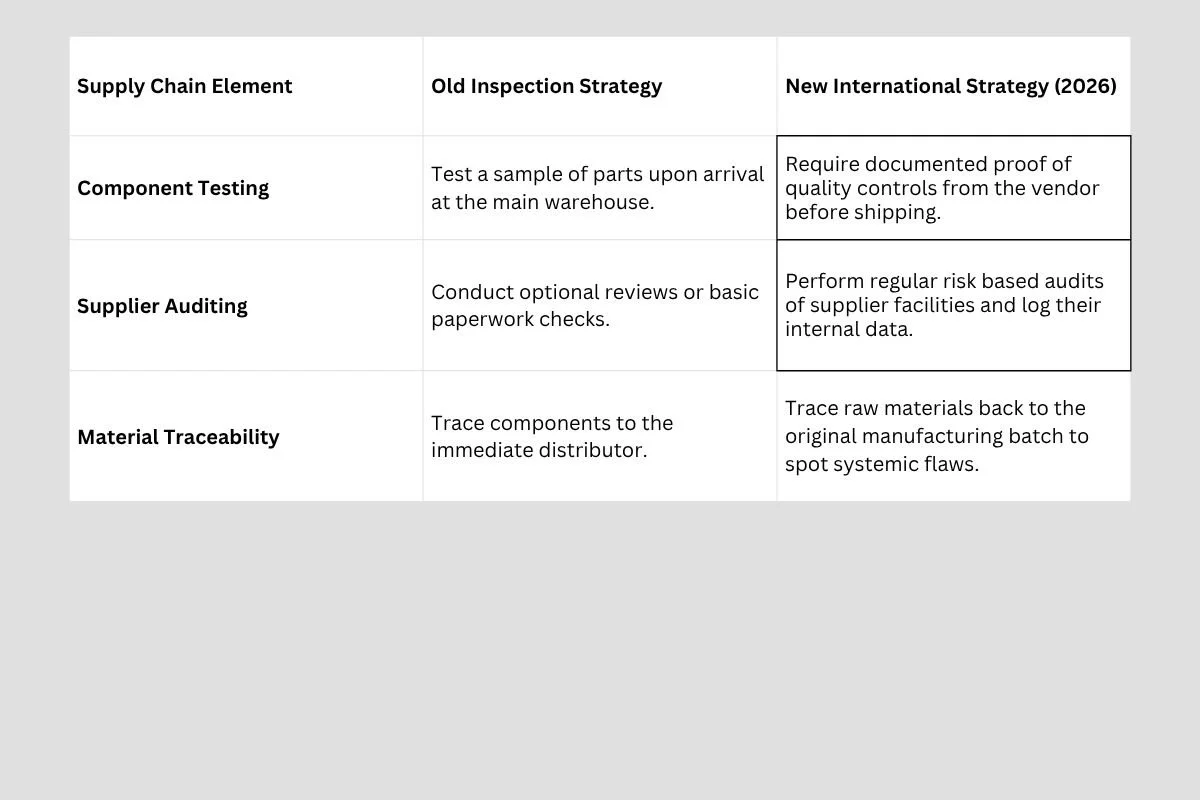
The new international focus requires extreme control over the entire supply chain. Device makers are now legally responsible for the quality systems of their suppliers. If a biotech firm buys an active electronic chip for a modern diagnostic machine, they must evaluate the chip maker's ability to maintain clean facilities and steady standards.
The new international focus requires extreme control over the entire supply chain. Device makers are now legally responsible for the quality systems of their suppliers. If a biotech firm buys an active electronic chip for a modern diagnostic machine, they must evaluate the chip maker's ability to maintain clean facilities and steady standards. This means component suppliers who want to work with major medical device firms must upgrade their own operations. Small machine shops and digital sensor makers must adopt rigorous tracking habits if they want to remain part of the global healthcare economy.
The Long Term Benefits for Patients and Industry
While this quality system overhaul demands significant upfront investment, training time, and software updates, the long-term benefits for global health are immense. By clearing away conflicting regulations, the industry can redirect massive amounts of capital from administrative paperwork directly into laboratory research and development.
For patients, this means that groundbreaking health tech developed anywhere on Earth can move through the regulatory evaluation process faster than ever before. A smart hospital monitor built in Germany can now be introduced to American clinics without months of administrative delays.
Furthermore, because the new system forces companies to look at risk continuously, the medical tools arriving at patient bedsides will be inherently safer and more resilient. The transition to this unified system marks a triumph for common-sense regulation. It proves that the global medical community can cooperate across borders to build a streamlined, safe, and innovative future for human care.
Ready to Navigate the New Era of Medical Device Compliance?
Streamline your global operations, and confidently accelerate your life-saving technologies to market.
Don't let compliance gaps slow down your innovation; contact Metis Consulting Services today