
In Vivo CAR-T Cell Therapy: Rewriting the Rules of Cancer Treatment
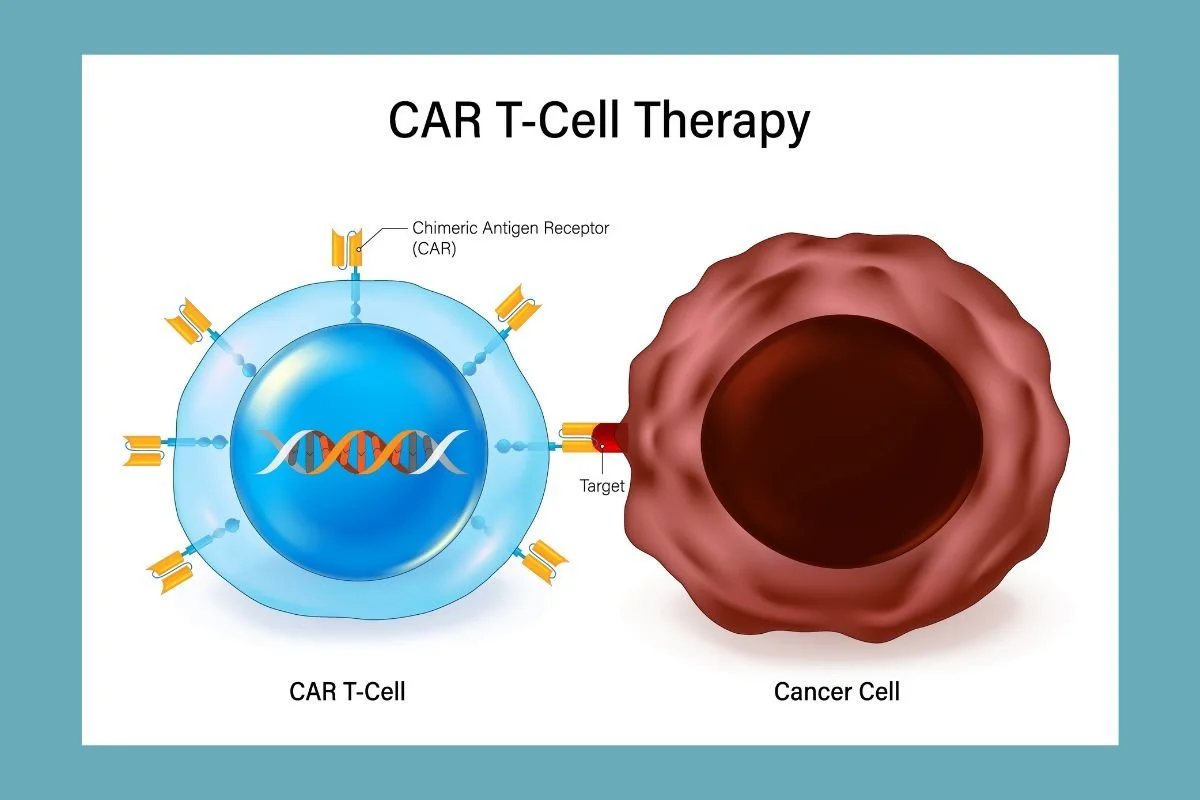
This week in the Guardrail, we explore how in vivo CAR-T cell therapy is shifting the paradigm of genetic medicine by reprogramming a patient’s immune system directly inside their body.
By Michael Bronfman
The way we treat cancer is changing fast, and one of the biggest stories in medicine right now is happening inside the human body rather than inside a lab.
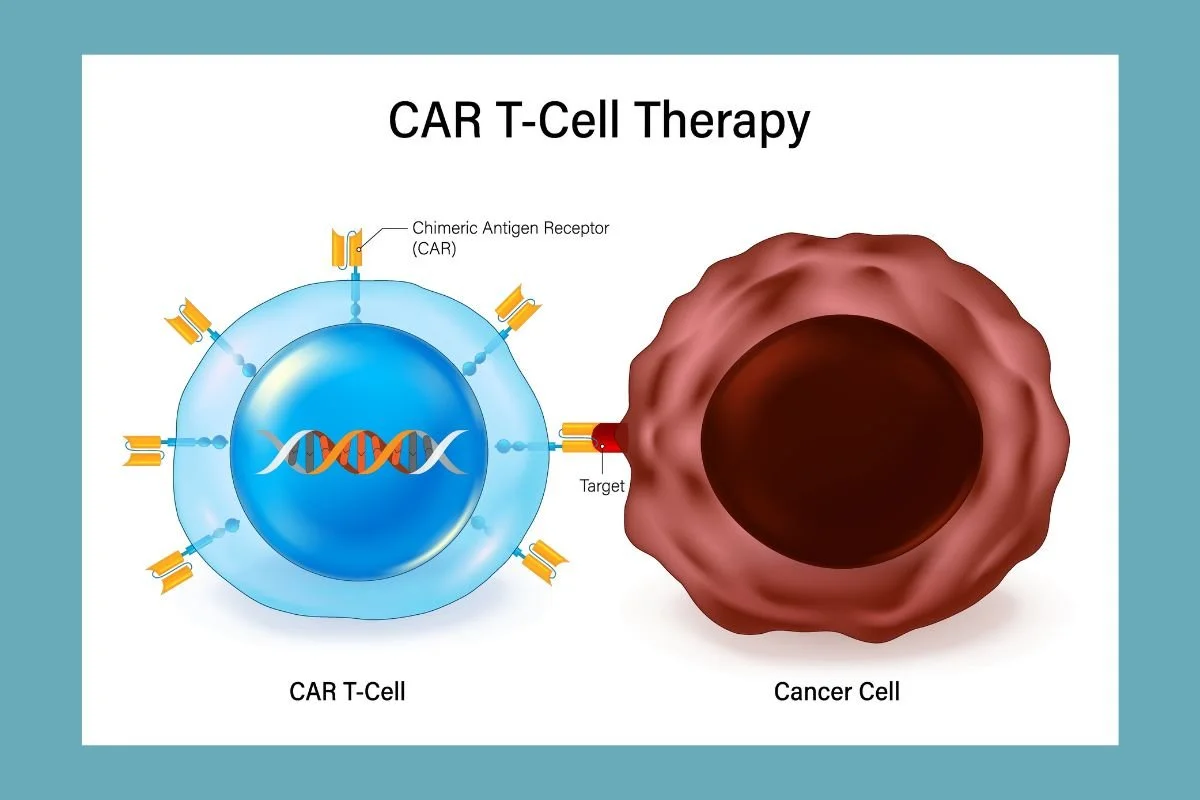
For years, doctors have used a groundbreaking treatment called CAR-T cell therapy to fight stubborn blood cancers. It works by taking a patient's own immune cells, giving them a genetic upgrade, and putting them back into the body to hunt down cancer cells. While this therapy has saved many lives, it is extremely hard to make, takes weeks to process, and costs a fortune.
Now, scientists are testing a new approach called in vivo CAR-T cell therapy. Instead of taking cells out of the body to upgrade them, this new method delivers the genetic instructions directly into the patient with a simple injection. It turns the patient's own body into the laboratory.
If this technology succeeds in human trials, it could make life-saving cancer treatments faster, cheaper, and available to millions of people around the world.
What Is Traditional CAR-T Cell Therapy?
To understand why this new discovery is such a big deal, it helps to look at how traditional CAR-T therapy works.
CAR stands for Chimeric Antigen Receptor. T-cells are a type of white blood cell in your immune system. You can think of T-cells as the body's internal security guards. They patrol your bloodstream, looking for infected cells or abnormal cells, and destroy them before they can cause harm.
However, cancer cells are tricky. They often disguise themselves so the immune system cannot see them. To overcome this, scientists figured out a way to retrain T-cells.
Here is the traditional step-by-step process:
Blood Collection: Doctors hook the patient up to a special machine to remove their blood, separate out the T-cells, and return the rest of the blood.
Shipping to a Specialized Lab: The harvested T-cells are frozen and shipped to a high-tech facility known as a Good Manufacturing Practice facility.
Genetic Engineering: In the lab, scientists use a harmless virus to insert a new gene into the T-cells. This gene tells the cells to grow special hooks on their surface called Chimeric Antigen Receptors. These hooks allow the T-cells to lock onto a specific protein found on cancer cells.
Cell Multiplication: The lab grows millions of these upgraded CAR-T cells over several weeks.
Chemotherapy: Before receiving the new cells, the patient goes through chemotherapy to clear out some of their old immune cells and make room for the upgraded ones.
Reinfusion: The new CAR-T cells are shipped back to the hospital and infused into the patient's bloodstream.
Once inside, these engineered T-cells act like guided missiles. They seek out cancer cells, lock onto them with their new receptor hooks, and destroy them.
The Big Problems with Traditional CAR-T
While traditional CAR-T therapy has cleared cancer in patients who had no other options left, the current system has massive drawbacks.
1. Time Limits
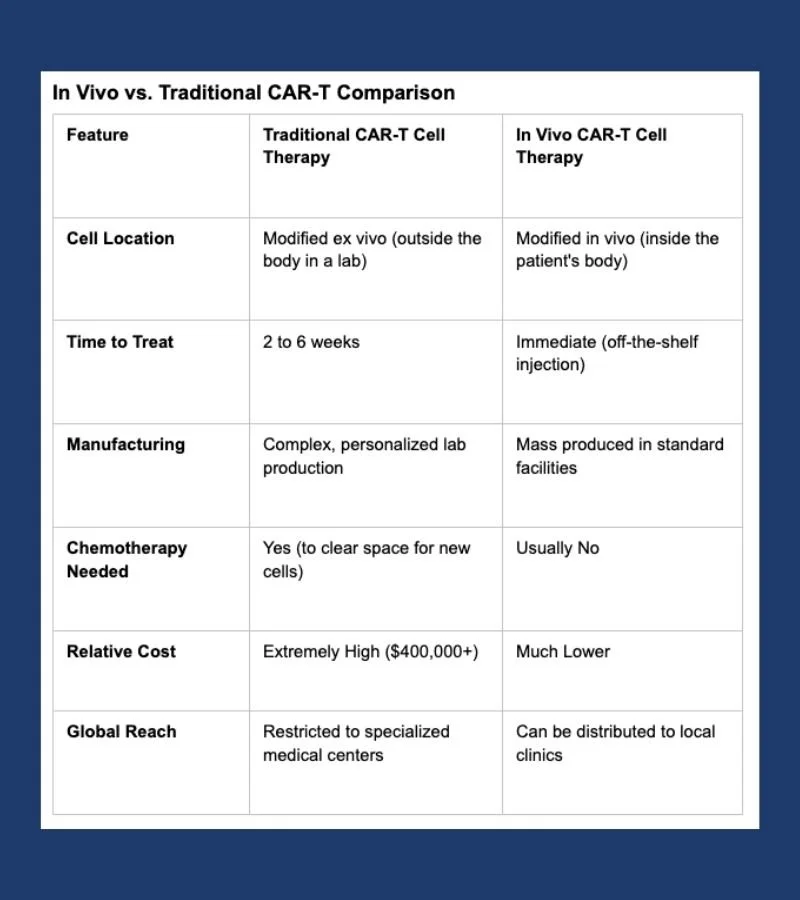
Making CAR-T cells outside the body takes anywhere from two to six weeks. For someone with fast-growing leukemia or lymphoma, waiting weeks for a treatment can be dangerous or even fatal.
2. High Costs
Because every batch of CAR-T cells must be custom-made for one specific individual in a sterile lab, the cost is enormous. A single treatment can cost between four hundred thousand and five hundred thousand dollars, not including hospital stays and extra medical care.
3. Complex Logistics
Shipping living human cells across the country under frozen conditions requires advanced temperature-controlled transport. If anything goes wrong during shipping or manufacturing, the batch can be ruined, forcing the patient to start over.
4. Limited Access
Because the process requires specialized hospitals and advanced manufacturing labs, CAR-T therapy is mostly available in wealthy countries and large academic medical centers. Most people in developing nations or rural areas cannot get access to it.
The In Vivo Breakthrough: How It Works
This is where in vivo CAR-T cell therapy comes in. The phrase in vivo means inside the living body. Instead of taking cells out, modifying them in a lab, and putting them back, in vivo therapy delivers the genetic instructions directly into the patient using a single injection.
Scientists do this with special delivery vehicles called nanoparticles or modified viruses.
Here is how the in vivo process works:
Building the Delivery Vehicle: Scientists create tiny bubbles made of fats, known as lipid nanoparticles, or use modified viral shells. Inside these tiny bubbles, they pack genetic instructions written in mRNA or DNA.
Adding the Navigation System: Scientists attach special targeting molecules to the outside of the nanoparticle. These molecules act like a GPS, ensuring the nanoparticle only attaches to T-cells and ignores other cells like liver or lung cells.
Direct Injection: The patient receives a simple IV drip or injection containing these targeted nanoparticles.
Reprogramming Inside the Body: The nanoparticles travel through the bloodstream, attach to the patient's T-cells, and deliver the genetic instructions.
Cancer Hunting: The T-cells read the instructions, start building chimeric antigen receptors on their surface, and immediately begin hunting down cancer cells inside the body.
This simple shift removes the need for cell extraction, lab manufacturing, complex freezing shipping lines, and heavy chemotherapy prep.
What the Research Shows
Recent preclinical studies have shown promising results using in vivo cell engineering.
Research in animal models demonstrates that mRNA delivered by lipid nanoparticles can successfully target T-cells inside living mice. Within days of injection, the mice generated functional CAR-T cells that successfully targeted and shrank tumors.
Researchers are also exploring precise gene editing tools like CRISPR inside the body. Instead of just adding a new gene temporarily, in vivo gene editing can permanently alter the T-cells or remove genes that cause cellular exhaustion, allowing the immune cells to fight cancer longer.
Scientists are publishing new findings regularly on research platforms like Atlantis Bioscience and medical news outlets like STAT News. These studies highlight how in vivo engineering could cut production times from weeks down to zero, turning a custom surgical procedure into an off the shelf pharmacy medication.
Potential Benefits Beyond Cancer
While cancer treatment is the main focus, in vivo CAR-T cell therapy could treat many other diseases.
Autoimmune Diseases: In conditions like lupus or multiple sclerosis, the immune system mistakenly attacks healthy tissue. Scientists are testing CAR-T cells designed to clear out malfunctioning immune cells, effectively resetting the immune system.
Heart Disease: Researchers have used in vivo CAR-T cells in animal models to target and remove scar tissue in damaged hearts, helping restore heart function after a heart attack.
Infectious Diseases: Modified immune cells could be trained to clear out persistent viral infections like HIV that hide inside human tissues.
Organ Transplants: Engineered regulatory immune cells could prevent organ rejection without requiring lifelong immune-suppressing drugs.
Challenges Ahead
While in vivo CAR-T therapy is exciting, scientists still need to solve several technical challenges before it becomes widely available for human patients.
1. Off-Target Effects
The delivery vehicle must be extremely accurate. If a nanoparticle delivers its genetic payload to the wrong cell type, like liver cells or brain cells, it could cause unintended side effects.
2. Overactive Immune Reaction
When CAR-T cells attack cancer cells, they release signal proteins called cytokines. If too many CAR-T cells activate at once inside the body, it can cause a dangerous condition called cytokine release syndrome, which causes high fevers and dangerous drops in blood pressure. Controlling the speed and strength of in vivo reprogramming is vital for safety.
3. Immune Rejection of Delivery Vehicles
The human immune system might spot the nanoparticles or viral vectors and destroy them before they reach the T-cells. Finding materials that can sneak past the body's defenses without causing an allergic reaction requires careful design.
4. Dosing and Control
With traditional CAR-T, doctors know exactly how many modified cells they put back into the patient. With in vivo therapy, it is harder to predict how many T-cells will pick up the gene instructions and how long those instructions will last.
The Road Ahead
In vivo CAR-T cell therapy represents a major shift in modern medicine. By turning the human body into its own medicine factory, scientists are opening the door to a future where genetic treatments are no longer rare luxury procedures reserved for a few, but standard therapies available at local healthcare clinics.
Clinical trials in humans are beginning to take off, testing different delivery vehicles and gene editing tools. Over the next decade, as researchers refine these methods, in vivo cell engineering could fundamentally reshape how we treat cancer, autoimmune conditions, and chronic heart disease.
With Metis Consulting Services you streamline your strategic roadmap, overcome complex regulatory hurdles, and maximize operational efficiency. Contact Metis Consulting Services today

Understanding the New ICH-M14 Safety Guidelines
Today, the pharmaceutical industry is moving toward a massive transformation. A historic change occurred when a global organization called the International Council for Harmonization officially adopted a new framework named the ICH M14 guideline. This framework changes the rulebook for drug safety.

In the Guardrail this week: Explore the pharmaceutical industry's massive paradigm shift from isolated clinical trials to real-world data.
By Michael Bronfman
July 6, 2026
Imagine walking into a doctor's office, picking up a prescription, and knowing that the medicine you are about to take is being monitored by a global web of digital information. For decades, the gold standard for testing medicines has been the traditional clinical trial. In those trials, scientists test a new drug on a small, highly selected group of people under perfect conditions. This process works well, but it does not always show how a drug performs in the messy, complicated real world, where people forget to take pills, have multiple health conditions, or mix different prescriptions.
Today, the pharmaceutical industry is moving toward a massive transformation. Medical tracking is shifting from isolated labs to everyday life, powered by real-world data. This data includes everything from electronic health records kept by hospitals to insurance claims and tracking apps. When researchers analyze this everyday data, they generate real-world evidence that provides a clearer picture of how drugs affect diverse populations.
A historic change occurred when the global organization, the International Council for Harmonization, officially adopted a new framework, the ICH M14 guideline. This framework changes the rulebook for drug safety. It elevates everyday medical information into a form of regulatory currency, meaning health authorities now treat this tracking data with the same respect as traditional laboratory research. This shift changes the future of medicine, creating new ways to develop treatments while presenting major challenges regarding data privacy and access.
Understanding the New Safety Guidelines
To understand why this is such a major shift, it helps to look at how medicine tracking used to work across different borders. In the past, if a pharmaceutical company wanted to demonstrate that a drug was safe in both the United States and Europe, it often had to run separate observational studies in each region. Different countries had different rules about what made data reliable, how statistical math should be done, and how reports should be written. This fragmentation slowed down safety checks and made life-saving drugs take longer to reach patients who needed them.
The new global standard solves this problem. This agreement brings the world's major health authorities onto the same page, including the United States Food and Drug Administration and the European Medicines Agency. The official policy is detailed directly at ich.org, which explains how countries are unifying their rules. By creating a single set of expectations, a study built in one country can now be accepted by regulators worldwide.
This framework specifically targets non-interventional studies. These are research projects where scientists do not give patients a new drug or alter their treatment. Instead, researchers simply look backward or watch from a distance, studying how a medicine behaves as people use it naturally. Because these studies rely on information that already exists in hospital databases or pharmacy logs, having a strict global standard ensures nobody cuts corners or manipulates the findings.
Why Pre-Specification is the Key to Trust
One of the biggest concerns with observational research is a practice known as data dredging or cherry picking. Imagine a researcher looking through millions of patient records without a clear plan. If they look long enough, they might find a random pattern that makes a drug look incredibly safe or dangerously harmful, even if that pattern is just a coincidence.
The new framework eliminates this risk by mandating protocol pre-specification. This means that before scientists even look at the patient data, they must write down an exact plan detailing what they are looking for, how they will define a side effect, and how they will handle their math. This plan is locked in place so researchers cannot change their questions halfway through the study to get the results they want.
This approach builds public trust and satisfies strict regulators. When pharmaceutical companies submit their findings, they must prove they followed their blueprint perfectly. This level of planning turns casual healthcare records into high-quality scientific proof that can justify keeping a drug on the market or expanding its use to new groups of patients, such as children or elderly populations who are often left out of original clinical trials.
The Elements of Modern Evidence Packages
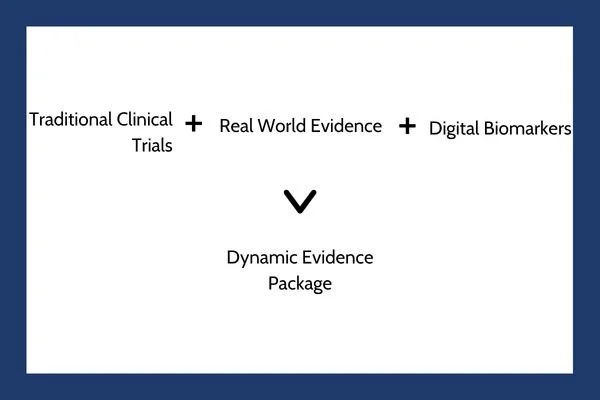
As these strict standards take hold, the way pharmaceutical companies present their discoveries is changing. The industry is moving away from simple stacks of paper toward dynamic evidence packages. These modern files combine multiple streams of information into a single master profile for a medicine.
A modern evidence package brings together three main components:
Clinical Trial Data: The traditional, highly controlled laboratory tests that prove a drug can work under ideal circumstances.
Real World Evidence: The continuous tracking of millions of patients using the medication in everyday situations to see how it performs across different ethnicities, ages, and lifestyles.
Digital Biomarkers: Measurable data collected from smartwatches, continuous glucose monitors, and wearable fitness trackers that show how a patient responds to a drug hour by hour in real time.
When these three streams merge, regulators get a rich picture of a drug's true impact. For example, a heart medication might show perfect numbers in a traditional lab trial. However, the wearable smart sensors might show that patients feel dizzy for an hour right after taking it, while hospital records might show fewer long term heart attacks. This complete view helps doctors make better decisions and helps pharmaceutical companies spot risks or secondary benefits much faster than before.
The Barriers of Real World Information
While this data-rich future sounds amazing, it faces significant real-world roadblocks. The first major hurdle is that most healthcare data was never designed for scientific research. When a doctor types notes into an electronic medical record or a hospital submits an insurance claim, their primary goal is to treat the patient and get paid, not to run a clinical study.
This reality creates massive problems with missing or messy data. A doctor might forget to record how much a patient smokes, or a hospital might change the way they code a specific disease mid-year. If researchers try to run high-level statistical analyses on broken information, they will get inaccurate results. Turning raw hospital paperwork into fit-for-use data requires an immense amount of cleaning, sorting, and verifying, which takes time and expensive technology.
The second massive obstacle involves access restrictions and data silos. Medical information is highly personal, and laws like the Health Insurance Portability and Accountability Act in the United States protect patient confidentiality. Because of these vital privacy laws, hospital systems, insurance firms, and tech giants often keep their data locked tightly inside their own networks.
Breaking down these walls without compromising patient privacy is incredibly difficult. If a pharmaceutical company cannot access a wide enough pool of data, their study will not represent the whole population. This leaves them unable to meet the strict global standards required by modern regulators.
The Role of Pharmacoepidemiology in Public Health
The science driving this entire movement is pharmacoepidemiology, the study of the uses and effects of drugs in large populations. This field acts as an early warning system for public health. When a new medicine hits the market, it might have been tested on only a few thousand individuals. If a dangerous side effect occurs in only one out of every fifty thousand people, a traditional clinical trial will likely miss it entirely.
Through large-scale tracking, scientists can monitor millions of prescriptions simultaneously. If a sudden spike in kidney issues appears among patients taking a specific arthritis medication, researchers can spot the trend within weeks instead of years. The new standard gives these scientists a clearer roadmap for designing these studies, ensuring their alerts are based on rigorous math rather than false alarms.
For an in-depth look at how these safety networks operate, the European Network of Centers for Pharmacoepidemiology and Pharmacovigilance provides resources showing how global networks cooperate to trace medicine safety across whole continents. This coordinated surveillance saves lives by ensuring that when a drug risk is discovered anywhere in the world, safety warnings are updated immediately everywhere.
How Health Authorities are Implementing the Standard
As we move through 2026, nations are actively weaving this framework into their daily operations. The transition requires regulatory agencies to rewrite their local playbooks to support the shared global model.
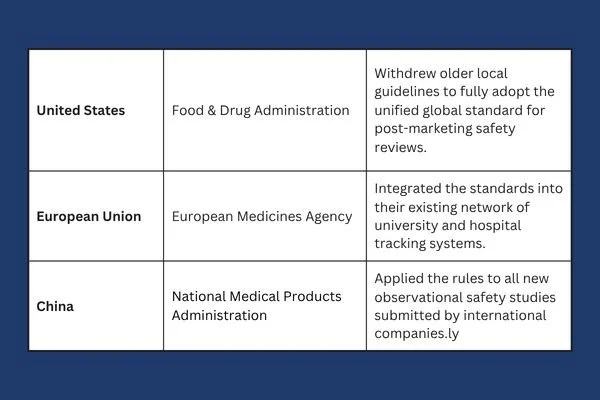
This level of cooperation is rare in international trade, but it shows how vital real world tracking has become. To explore the exact implementation details and view the official updates for American medicine, you can read the documentation here. This page shows how older local frameworks are being replaced to make room for this new way of reviewing drug safety.
The Future of Drug Discovery Trends
Looking ahead, this standard will alter more than just post market safety tracking; it will transform how drugs are discovered and developed from the very beginning. Historically, bringing a single drug to market has taken over a decade and cost billions of dollars. Much of that time was spent waiting for traditional trial results.
By using everyday tracking data as a recognized regulatory asset, companies can now design smarter trials. Scientists can study existing patient databases to discover which specific genetic groups respond best to an experimental treatment before they ever recruit a human volunteer. This approach reduces trial sizes, cuts costs, and protects human participants from taking experimental therapies that are unlikely to help their specific condition.
Furthermore, this framework opens the door for adaptive trials. In these modern studies, researchers can modify an ongoing trial based on incoming real world information, adding new patient groups or adjusting dosages safely with the blessing of regulators. The boundary between the research lab and the everyday clinic is fading away, creating a continuous loop of medical learning.
Balancing Innovation with Ethical Protection
As data becomes the lifeblood of modern medicine, the pharmaceutical industry must handle its new power with caution. Collecting digital footprints from hospital visits, insurance bills, and wrist sensors requires a steadfast commitment to patient ethics. People must be certain that their personal health struggles will never be sold, leaked, or used against them by employers or commercial firms.
The new global standard addresses this by demanding high levels of data transparency and strict data management rules. Companies must explicitly detail how they protect patient identities, strip out personal tracking markers, and secure their databases from cyber threats. Innovation is only valuable if patients feel secure using the systems that monitor them.
The transition to treating real-world information as an official currency marks a massive step forward for human health. It acknowledges that clinical trials, while vital, are just the opening chapter of a drug's true story. By turning everyday experiences into reliable science, the global medical community ensures that the medicines of tomorrow will be safer, more effective, and customized for the real world we all live in.
If your organization needs to convert messy healthcare data into high-quality, audit-ready scientific evidence that meets major global health authorities' requirements, we can help. Contact Metis Consulting Services today

Navigating FDA Oversight in an Era of Advanced Digital Tools

By Michael Bronfman, July 14, 2025
The pharmaceutical industry is undergoing a transformation. Across the drug development lifecycle, from early discovery through clinical trials and into postmarket monitoring, companies increasingly rely on sophisticated digital tools. These tools analyze complex data, personalize treatments, and speed up development. However, as these digital systems begin to inform decisions traditionally in the hands of clinicians or regulators, the U.S. Food and Drug Administration (FDA) is adapting its regulatory framework accordingly.
For biotech professionals, this means that digital tools are no longer optional supports, they are deeply intertwined with product strategy and regulatory planning. This post explores how digital technologies are reshaping the regulatory landscape, what it means for pharma companies, and the practical steps organizations must take to thrive.
1. Digital Innovation in Pharma: Opportunity and Responsibility
The industry is leveraging digital capabilities in areas such as:
Target identification and compound screening: using pattern recognition systems to highlight promising molecule targets.
Clinical trial efficiency: tools that help select study sites, recruit patients, or monitor data in real time.
Image analysis in diagnostics: supporting clinical insights through automated interpretation of scans or pathology slides.
Postmarket surveillance: identifying safety signals and performance trends from real-world data.
Patient engagement platforms: improving compliance, remote monitoring, and decentralized trial models.
These tools can significantly reduce time and cost, improve decision-making, support personalized approaches, and with increased impact comes increased scrutiny.
Regulators now expect the same rigor, transparency, and oversight for digital tools as for manual tools.
2. The FDA’s Strategic Response
The FDA has long recognized the growing role of technology in clinical care and has been refining its regulatory oversight:
SaMD Framework (Software as a Medical Device): Software that diagnoses, treats, or manages patient care falls under medical device regulations. The FDA applies standards for safety, effectiveness, and Quality.
Proposal for Iterative Updates (2019): The agency introduced methods for handling software that adapts post-approval, suggesting that plans be in place to anticipate upgrades.
Action Plan (2021):
This plan emphasized:
1. Clear documentation of tool design and data use
2. Risk and bias evaluation
3. Transparency and explainability
4. Postmarket monitoring
5. Collaboration with global regulators and external experts
Digital Health Advisory Committee (established 2023): Brings together external leaders to advise the FDA on emerging digital health trends, including data platforms and analysis tools.
Taken together, these efforts show the FDA is no longer reactive—it’s taking steps to guide the shift toward intelligent, data-driven healthcare responsibly.
3. Why This Matters to Pharma Companies
When digital tools are used to inform diagnosis, treatment, or clinical decisions, they are treated as regulated medical products, not simple IT solutions. This has several consequences:
Raised Standards for Evidence and Validation:
Digital tools must now deliver clear, reproducible performance:
Auditable data lineage: where data comes from, how it was processed
Testing in real-world settings and across diverse patient groups
Bias assessments to ensure performance isn’t limited to specific subpopulations
Explainable outputs so clinicians and patients trust the insights
These developing supportive tools in trials must meet these requirements.
Managing Tools that Evolve Over Time
Unlike a tablet with a fixed formula, software can be updated. The FDA expects companies planning to:
Define what changes are permissible
Assess the impact and validate updates
Communicate effectively with regulators and end users
This is often captured in a Predetermined Change Control Plan (PCCP). Whether it’s a predictive model or diagnostic classifier, understanding the change process and its controls becomes essential.
Implications for Clinical Trials
When digital tools:
Support trial operations (by speeding recruitment or monitoring risk) they must be shown not to skew results or introduce bias.
Serve as the trial’s intervention (e.g., diagnostics or decision support systems) they need their own efficacy and safety data, potentially requiring standalone validation or randomized comparisons.
This dual role calls for early regulatory planning and deep engagement with trial design teams.
Increased Focus on Post-Market Oversight
The FDA now expects:
Ongoing monitoring after product launch
Collection of real-world performance data
Alert systems for declining tool performance or unexpected failures
Protocols for updating the tool and notifying regulators or users.
This mirrors pharmacovigilance demands and supports long-term patient safety.
4. What Pharma Executives Should Watch
In the coming months and years, several developments will shape digital tool regulation:
Final Edited Guidance on Adaptive Tools
We can expect finalized positions covering:
Permissible software updates
Required audit trails
Performance metrics and thresholds
Monitoring and reporting protocols
Aligning technology roadmaps to these expected updates will smooth regulatory
Reviews.
Global Harmonization Efforts
Agencies such as EMA (Europe) and IMDRF (international) are converging on:
Data governance
Model transparency
Security and privacy safeguards
Pharma firms operating cross-border must design systems that comply across jurisdictions.
Evolving Quality Standards
Expect new additions to quality standards, including Good Machine Learning Practices
(GMLP) and guidance on digital quality systems, covering:
Metadata and dataset versioning
Traceability of analysis and results
Risk management for software failure
Early adoption helps avoid later compliance issues.
Liability and Responsibility Issues
As intelligent tools play bigger roles, questions arise:
Who is responsible if a tool provides flawed guidance?
What disclaimers or training must accompany tools?
How are clinicians involved in oversight?
Proactive definition of roles, responsibilities, and risk management processes now can help minimize legal exposure.
Prioritizing Trust and Interpretability
Stakeholders increasingly demand:
Intuitive, explainable interfaces
Clear output and user instructions
Evidence that supports clinical decision-making
Transparent tools are more trusted—and more likely to sail through regulatory evaluation.
5. Action Plan for Pharma Leaders
To stay ahead, companies should take these definitive steps:
Form a Cross-Functional Digital Oversight Committee
Include regulatory, clinical, IT, data science, legal, and quality assurance leaders from the start.
Classify All Digital Initiatives Early
Identify which tools may require regulatory filings, versus those that support internal operations.
Create Clear Documentation Standards
Maintain logs of:
Data sources and preprocessing steps
Model tests and performance evaluations
Change histories and validation results
Incident logs and monitoring updates
Engage Regulators Early
Use the FDA’s QSubmission (presubmission) process to preview plans, especially for trailblazing tools.
Build Post-Deployment Infrastructure
Plan upfront for:
Routine performance audits
Data pipelines for real-world monitoring
Reporting processes for updates or safety concerns
Train Users and Maintain Accountability
Educate clinicians and trial sites on:
The tool’s purpose and scope
How outputs should and shouldn’t be used
When to escalate concerns or deviations
Include user accountability protocols to reinforce oversight.
6. Case Examples: Learning from the Field
While specific details vary, high-level examples illustrate these principles:
Digital diagnostics used in trial site selection:
Validated on diverse patient data, with ongoing monitoring to ensure fair representation.
Automated image analysis used for tumor response:
Incorporated early feedback from the FDA but included plans for updates, accuracy validations, and clarity documentation.
Remote patient monitoring device:
Treated as a regulated device—complete with device history record, software verification benchmarks, and firmware update protocols.
These mature implementations underscore the necessity of structured design, planning, and oversight through the entire tool lifecycle.
Aligning Digital Ambition with Regulatory Expectations
Pharmaceutical companies today are stepping up digital innovation, fueled by data advances and software capabilities, and the balance of opportunity and risk now includes a regulatory dimension: advanced tools are no longer optional, they are regulated.
To lead responsibly:
Treat digital tools as core products
Build in line with regulatory principles
Document everything comprehensively
Continue oversight through deployment and updates
Embracing this approach protects compliance and fosters market adoption and trust.
The Path Forward
Pharma’s digital transformation is accelerating. When executed with foresight and regulatory alignment, digital tools can enhance safety, speed, and efficacy. They must be built with process, governance, and accountability at their core. By mapping development to regulatory frameworks, designing for continuous oversight, and integrating quality systems from the start, companies can harness innovation while meeting the expectations of regulators, clinicians, and patients.
The coming years will not be about whether your organization uses digital tools, but rather how responsibly, transparently, and effectively those tools are designed and managed. Those who plan accordingly will set the standard, and those who hesitate risk falling behind.
If you are looking for guidance and advice on how to take your organization to the forefront of this technology, and how to embrace it. Email us at Hello@metisconsultingservices.com or check out our website www.metisconsultingservices.com
Our experts will help you navigate the future of Pharmaceutical and Medical Device manufacturing.

Are You Ready for the ICH E6(R3) Rollout?
By Michael Bronfman, July 7, 2025

At Metis Consulting Services, we are acutely aware that a countdown has begun for a monumental shift in the clinical trial landscape. On July 23, 2025, the International Council for Harmonisation (ICH) E6(R3) Guideline for Good Clinical Practice (GCP) officially comes into effect, ushering in a new era for how clinical trials are conceived, executed, and overseen globally. This fundamental reimagining of GCP, driven by years of stakeholder collaboration and the rapid evolution of technology and scientific approach, is very exciting. This week in "The GuardRail" Michael Bronfman writes below about the pressing question it raises: Are sponsors, Contract Research Organizations (CROs), technology providers, and regulatory teams truly prepared for the profound implications of E6(R3) on compliance strategies, trial design, risk management, and the very future of clinical research?
Implications for Clinical Trials, Sponsors, CROs, and the Future of GCP
The global pharmaceutical and biotech industries are bracing for a major regulatory shift: the official rollout of the ICH E6(R3) Guideline for Good Clinical Practice (GCP) on July 23, 2025. After years of revision, stakeholder consultations, and a changing technological and scientific landscape, E6(R3) marks a significant evolution in how clinical trials are designed, conducted, and overseen.
Are sponsors, contract research organizations (CROs), technology providers, and regulatory teams truly ready for what’s ahead? What are the real-world implications of this transition from compliance strategies and trial design to risk management, digital transformation, and global harmonization?
In this post, we break down:
What’s changing with ICH E6(R3)
What sponsors and CROs must do to prepare
How the update reflects the future of GCP
Risks and opportunities across the pharma value chain
What Is ICH E6(R3)? A Quick Recap
The International Council for Harmonisation (ICH) first adopted E6 in 1996, introducing a unified standard for Good Clinical Practice. While the 2016 ICH E6(R2) revision improved transparency and oversight, particularly regarding CROs and quality management systems, it still fell short of addressing modern trial complexity and the digitization of data collection.
ICH E6(R3), by contrast, was developed with flexibility, scalability, and technological evolution in mind. It is also structured in two parts:
Principles and Annex 1 (finalized and adopted): Applicable to interventional clinical trials.
Annex 2 (in development): Will address non-traditional designs like decentralized trials (DCTs), adaptive trials, and real-world data (RWD) use.
The overarching aim is to ensure that clinical trials are fit for purpose, ethically sound, scientifically valid, and operationally efficient for our current global, digitized environment.
What’s Changing? Key Shifts in E6(R3)
The ICH E6(R3) revision doesn’t just tweak processes; it reimagines them. Here are the most critical changes:
1. Quality by Design (QbD) Becomes Non-Negotiable
QbD, the proactive identification and mitigation of risks that threaten participant safety and data integrity, is now a foundational principle. It shifts trial design from a reactive to a predictive approach.
2. Risk-Based Thinking at Every Level
Building on R2’s quality management system, R3 makes risk-based monitoring (RBM) and risk assessment integral to planning, conduct, and oversight, rather than just operational monitoring.
3. Modernization of Sponsor–CRO Oversight
R3 places a clearer, shared responsibility on sponsors and CROs to ensure fit-for-purpose vendor oversight, with less prescriptive language and a greater emphasis on principles and proportionality.
4. Fit-for-Purpose Documentation
E6(R3) rejects the “more is better” mentality. Documentation should demonstrate ethical conduct and data integrity, not create unnecessary administrative burden.
5. Emphasis on Participant-Centricity
Informed consent, trial burden, and participant engagement are brought to the forefront, which supports the shift toward decentralized and hybrid trial models.
6. Technology-Agnostic Principles
Rather than prescribing specific tools, E6(R3) enables the use of digital technologies, eSource, eConsent, and DCT models, provided they uphold core GCP principles.
Timeline:
While July 23, 2025, marks the official adoption date, regulators and industry stakeholders understand that implementation is a process. Regulators such as the FDA, EMA, PMDA, and others are expected to release region-specific guidance on integration into their frameworks. However, organizations conducting global trials should prepare now to meet harmonized expectations across jurisdictions.
Implications Across the Pharma Landscape
1. For Sponsors: New Responsibilities, New Strategies
Sponsors can no longer treat GCP compliance as a check-the-box activity. E6(R3) demands:
End-to-end risk assessments: not just site monitoring, but risk identification in protocol design, vendor selection, and data flow.
Cross-functional collaboration: Medical, regulatory, data management, and clinical ops must break silos.
Fit-for-purpose technology: From eConsent to central monitoring dashboards, tools must enable, not burden, quality.
Forward-looking sponsors will view R3 not as a hurdle, but as a framework for smarter trial design and cost-effective compliance.
2. For CROs: Oversight, Not Just Execution
CROs are no longer “just vendors.” Under R3, vendors share responsibility for risk management, data integrity, and participant safety. Key implications:
Clearer contracts and delegation of duties
Risk-sharing models in quality oversight
Stronger internal QMS to align with R3 principles
Expect CRO audits and partnership models to evolve as sponsors seek R3-aligned vendors with proactive quality systems and digital maturity.
3. For Sites: Less Paper, More Empowerment
While R3 doesn’t directly regulate sites, the ripple effects are clear:
A reduced administrative burden if sponsors streamline documentation expectations.
More support for site-centric technology like eISF, eSource, and remote monitoring.
Clearer definitions of roles and expectations.
Sites that embrace digital workflows and risk-based cooperation will thrive in the new paradigm.
4. For Technology Providers: It’s Time to Grow Up
Tech vendors must move from “tools” to compliance partners. E6(R3) does not mandate specific platforms, but sponsors will seek:
Validation and audit-ready documentation
Interoperability with existing systems (e.g., EDC, CTMS, eTMF)
Support for RBM and real-time oversight
Those who deliver not just features but fit-for-purpose, compliant solutions will rise above the noise.
Strategic Considerations: How to Prepare Now
With less than a month to go, it’s not too late, and preparation must be strategic.
1. Assess Your Current GCP Framework
Use the ICH E6(R3) principles as a benchmark. Ask:
Do we have a documented, cross-functional risk management plan in place?
Is our QMS aligned with the spirit (not just the letter) of GCP?
Are our SOPs technology-agnostic but principle-driven?
2. Upskill Your Teams
Clinical, data, regulatory, QA, and vendor management teams must understand E6(R3) in both theory and practice. Invest in:
Targeted training
Risk assessment workshops
Change management programs
3. Engage with Regulators and Peers
Leverage regulator-hosted webinars, ICH training, and industry forums. Align with evolving expectations before inspection time comes.
4. Run Pilot Projects
Test R3 principles in live trials now:
Apply QbD in protocol design
Practice proportional documentation
Use RBM dashboards
This helps teams build confidence before full adoption.
The Broader Vision: Future-Proofing GCP
E6(R3) is not only a regulatory upgrade; it is a cultural reset. It reflects the convergence of ethics, science, and technology in a world where:
Clinical trials are decentralized and global
Data is streaming in from wearables, apps, and EMRs
Patients are participants, not subjects
In this landscape, rigid rules give way to flexible principles, allowing innovation while safeguarding quality.
The broader implication? Sponsors and CROs that fully internalize E6(R3) will be best positioned to:
Embrace decentralized, real-world, and adaptive trial models
Reduce trial costs through smarter design and oversight
Deliver faster, more ethical, more reliable results to regulators and participants
Conclusion: Ready or Not, R3 Is Here
The July 23, 2025, ICH E6(R3) rollout is not a finish line; it is a starting point. For sponsors, CROs, and clinical technology providers, R3 represents a long-overdue shift toward smarter, more scalable, and participant-centric trial operations.
While the transition will require investment and cultural change, the benefits, ranging from improved trial quality to regulatory readiness and operational efficiency, are significant.
The question is not “Will we comply?” It is “How can we lead?”
Suggested CTA for Pharma Companies
If you have not already begun aligning your SOPs, vendor oversight models, and risk management strategies with ICH E6(R3), the time to start is now. A proactive approach will help ensure both compliance and a competitive advantage in a rapidly changing research environment.
If you are interested in starting a conversation about how you or your organization can lead in this environment, email us at: hello@metisconsultingservices.com or visit our website at www.metisconsultingservices.com